Two Labradors live in my house, and both of them have strong opinions about where they sleep. Duke is a 75-pound black Lab who chews first and asks questions later. Penny is an 11-year-old rescue with hip dysplasia who has taught me more about foam than any marketing page ever did. Between the two of them I have retired enough beds to fill a dumpster, and I have learned that a Labrador crate bed setup is not one purchase. It is a stack of layers, and every layer has a different job.
This comparison covers four pieces of that stack: an orthopedic memory foam bed, a waterproof crate liner, and two heated pads in two different sizes. Nobody paid me to write it, and no brand gets to change a verdict after the fact.
Related: Orthopedic Dog Beds For Senior Labs
The short answer: buy the liner first, because it protects everything under it. Buy the orthopedic bed second, once your Lab is past the chewing phase. Add a heated pad only if you have a senior dog, a short-coated dog in a cold house, or a dog who comes in stiff after a winter run.
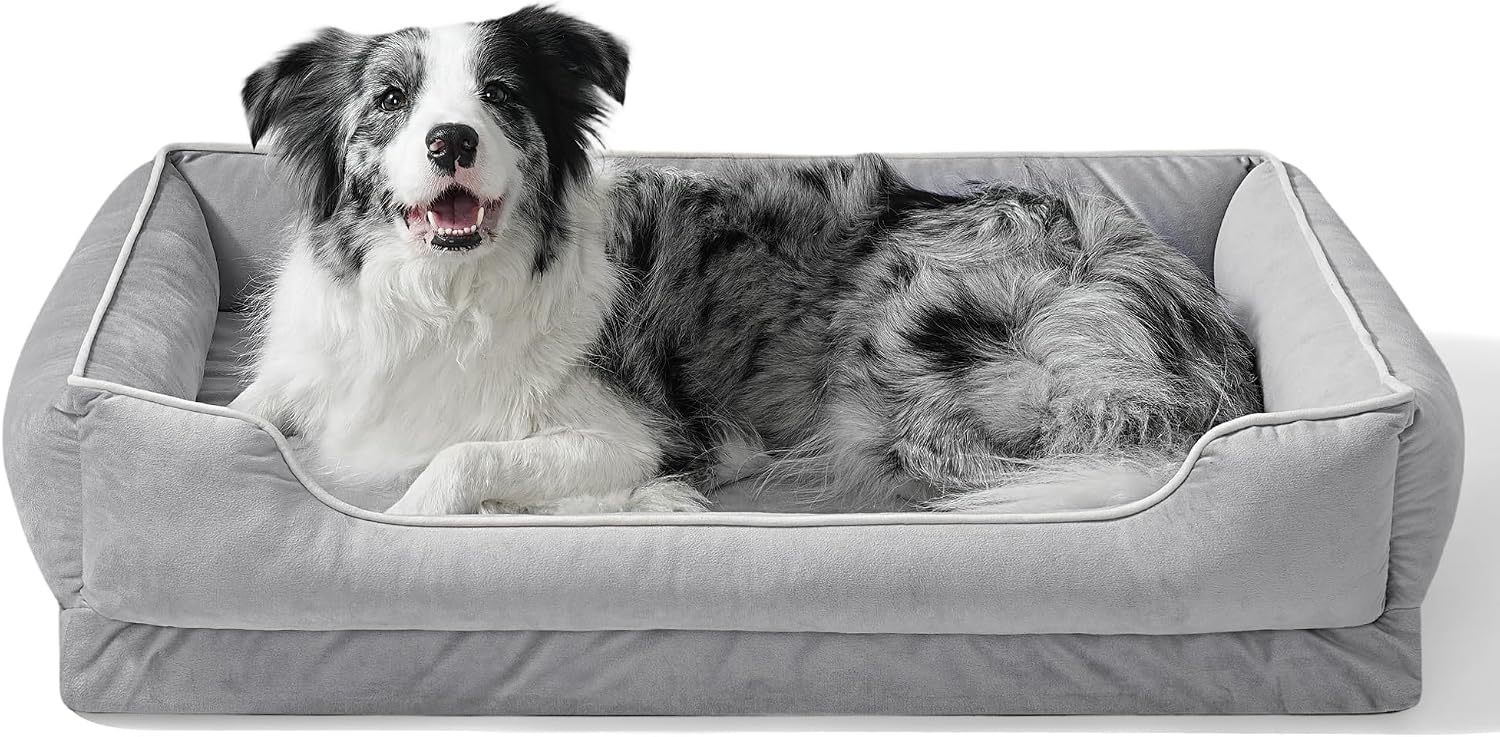
FAIRYPET Orthopedic Dog Bed
Memory foam with a cover that comes off for washing, plus a nonskid bottom that stays put when a Lab launches off it
No foam density published in pounds per cubic foot, and Dutch velvet is a chew magnet for a dog under 3
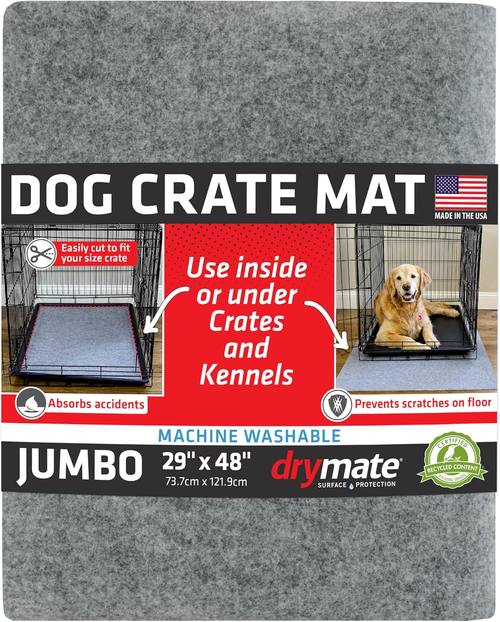
Drymate Dog Crate Mat Liner
Absorbs urine, waterproof backing, non-slip, and cut to fit odd crate sizes. USA made at 29 by 48 inches
Thin by design, so it adds zero joint support. It is a liner, not a bed
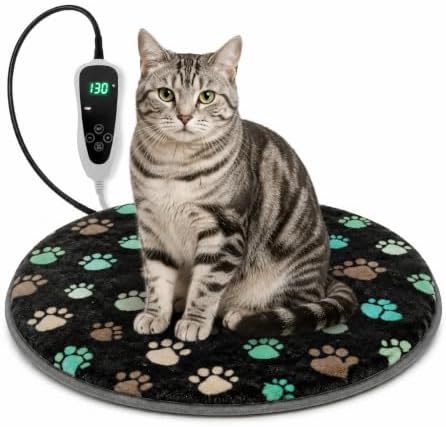
GOLOPET Large Dog Heating Pad 36x24
Sized to a standard crate footprint, with a normally open function named right in the listing
36 inches is tight for a Lab who sleeps like a starfish, and the cord is still a chew target
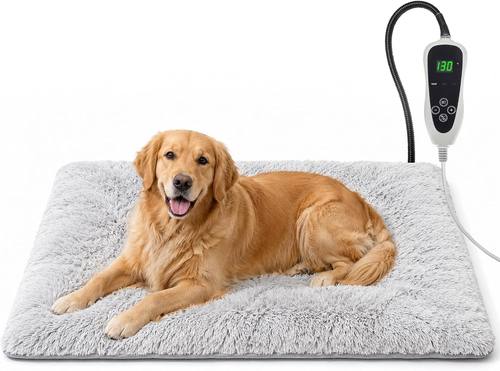
GOLOPET Extra Large Dog Heating Pad 47x30
47 by 30 covers a sprawler, with a smart thermostat switch, power line protection tube, and MET plus UL dual certification
Big footprint, and no certification makes a cord safe from a determined chewer
Prices and availability were captured from Amazon Creators API and may change.
How I judge anything that goes in a Lab's crate
I spent ten years as a trainer before I did this full time, and the kennel owners I worked with destroyed gear faster than any family home. That is where I learned to read a product the way I read a dog: behavior first, claims later.
Four things get checked before anything earns floor space at my house. First, foam density in pounds per cubic foot, the number that decides whether a bed is still a bed in two years or a pancake in six months. Anything that will not publish that number gets flagged, not automatically rejected, but flagged. Second, the cover. Can it come off, and will the zipper survive 20 washes? I have broken 14 zippers in my own testing, and the failure is almost always the pull, not the teeth. Third, the bottom. A nonskid base matters more than people think, because a 75-pound Lab launching off a bed on hardwood turns a sliding bed into a projectile. Fourth, the chew timeline. How long does this material last against a dog who treats fabric as a personal challenge?
The orthopedic bed: FAIRYPET
The FAIRYPET bed is the piece most people picture when they think about a Labrador crate bed setup. Memory foam, a removable cover you can wash, Dutch velvet on the outside, a nonskid bottom, and a sofa shape that fits inside a crate. It comes in grey and it is built for medium to large dogs, which in Lab terms means it holds Duke without folding in half.
What it gets right: the cover comes off. That is not a small thing. A senior Lab with hip dysplasia is also a senior Lab who occasionally has an accident, and a bed you cannot wash becomes a bed you throw away. The nonskid bottom is the second win, because Penny pushes herself up with her front legs, and a bed that slides out from under her is a bed she will stop using. Dutch velvet is genuinely soft, and for an older dog with a thin coat and bony elbows, softness is not a luxury.
What it gets wrong, or at least what I cannot verify: there is no foam density published in pounds per cubic foot. That is the number I want most, because memory foam ranges from roughly 1.5 to 4 pounds per cubic foot, and the low end flattens under a 75-pound dog within a season. Without the number I am guessing, and I do not like guessing with a dog's hips. The velvet is also a liability for a dog under 3. Plush fabric is an invitation during the shark phase, and a chewed cover means foam on the floor and a vacuum full of crumbs.
My verdict: this is a bed for a Lab past the chewing phase, or for a calm adult who has never eaten a couch cushion. It is not the bed I would hand a 9-month-old puppy, no matter how good the listing looks.
The liner: Drymate crate mat
The Drymate liner is the least glamorous thing in this article and the one I would buy first. It is a thin mat with an absorbent top and a waterproof backing, sized 29 by 48 inches, and it is cut to fit, which means you can trim it to an odd crate pan or a crate that never matched a standard size.
Its job is not comfort. Its job is to stand between your dog and your floor. Under a crate, it catches the drips, the water bowl splash, and the accident from a puppy who is still figuring out the schedule. Under a bed, it catches the senior dog leaks that show up around year ten and never really stop. The non-slip backing keeps it from bunching when your Lab spins three times before lying down, and the whole thing goes in the washing machine, which is the only feature that truly matters in a house with two dogs.
Where it loses: it is thin, and thin means zero joint support. A dog with hip dysplasia gets nothing from a liner. It is also a liner, not a chew toy, so do not expect it to survive a puppy who decides the corner is delicious. Use it for what it is: a floor saver, a crate pan protector, and the cheapest way to protect a rental deposit.
Two heated pads, two jobs
This is where most people go wrong. They buy a heated pad because their Lab looks cold, then discover the size was wrong, the cord became a chew toy, or the pad did not behave the way they assumed. The two GOLOPET pads in this comparison solve different problems.
The GOLOPET Large pad at 36 by 24 inches is the crate-sized option. It carries a normally open function in its name, and that is a spec worth understanding before you buy rather than after, because it describes how the pad behaves by default, not how warm it gets. Penny is 55 pounds and curls into a tight ball on cold mornings, so 36 by 24 is plenty for her, and it tucks under a bed cover or into a crate without hogging the whole footprint.
The GOLOPET Extra Large pad at 47 by 30 inches is the one for Duke. He sprawls like a starfish and needs the extra length, and this is also the pad I would put on the floor next to a desk for a dog who naps through a workday. On paper it is the better-engineered of the two. A smart thermostat switch means the pad is managing its own temperature instead of running flat out until you happen to notice. The power line protection tube is the feature I care about most, because a Lab and a loose cord are a bad combination and any protection around that cord is worth having. MET and UL dual certification is the kind of third-party stamp I actually look for on anything that plugs in and touches a dog, and the cover is waterproof, which matters when the dog using it is old enough to have accidents.
Where both pads lose: they have cords. Duke has chewed through a lamp cord, a vacuum cord, and one very expensive extension cord, and a heated pad cord is no different to him. Unplug it when you leave the house. Do not put one in a crate with a puppy who is still in the shark phase. And do not expect a heated pad to fix hip dysplasia, because it will not. It makes a stiff dog more comfortable on a cold morning, and that is the entire claim.
The size trade-off is real, too. A bigger pad means a bigger footprint and more cord to route, and if it lives under a bed cover you may never see the thermostat switch again. A smaller pad is easier to hide and covers less of a dog who sleeps stretched out.
Sizing is where most people get it wrong
The word "large" on a dog product is a suggestion, not a measurement. I measure nose to tail and add 12 inches, every time. Duke is 75 pounds and takes up more floor than a twin mattress when he stretches out, and any bed shorter than his full length gets slept on halfway, with his head hanging off the edge and his hips taking the pressure.
That is also why the 29 by 48 liner is the size that matters for a standard crate footprint, and why a 36-inch pad is a crate pad while a 47-inch pad is a floor pad. Match the layer to the space, not to the label. If you have a Lab who sleeps like a starfish, the extra inches are not a luxury, they are the difference between a bed being used and a bed being ignored.
The cost per day math
I cannot do this arithmetic for you, because prices move and I will not quote a number that is stale by the time you read it. Do it yourself: take the price, divide by the number of days you honestly expect the thing to last, and compare that to what you are spending now.
The pattern I have watched for years holds up. A cheap bed that dies in four months costs more per day than a good bed that lasts three years. That is arithmetic, not opinion. The mistake most Lab owners make is buying the cheap option twice and then buying the good one anyway, which means they paid for both. The liner is the exception to the rule, because it is doing a job no bed can do, and it is the layer that saves the floor, the crate pan, and your deposit.
What I would skip
Skip the heated pad if your Lab is under 3. A young Lab will chew the cord, and you will spend a vet visit on a dog who swallowed a plug. Skip any plush or velvet bed for a dog in the shark phase, including the FAIRYPET, no matter how much you like the look. Skip anything that says indestructible on the box, because I have tested that claim more than once and it has never held.
Buy the liner now. Buy the orthopedic bed when your dog stops chewing. Add the heated pad when your dog turns eight, or when a winter morning makes the first walk look like a negotiation.
Bottom line
The Drymate liner goes down first, under the crate or under the bed, and it is the one layer every Lab owner should own. The FAIRYPET bed goes on top for a Lab past the chewing phase, with the honest caveat that I want a foam density number before I would call it a two-year bed for a heavy dog. The 36 by 24 GOLOPET pad is the crate-sized heat source for a compact senior like Penny, and the 47 by 30 pad is the one for a sprawler like Duke, where the thermostat switch and the cord protection tube are doing the work that actually matters.
None of this is complicated once you stop thinking of it as one purchase. Duke has cost me more money in destroyed bedding than any dog I have owned, and every dollar of that was tuition. The stack above is what I would buy now if I were starting over with a Lab who sprawls, a senior who limps on cold mornings, and a floor I would like to keep.