I have two labs on the floor next to me while I write this. Duke is 75 pounds of black lab who has never met a seam he could not open, and Penny is an 11-year-old rescue with hip dysplasia who tells me every morning how her night went. Between the two of them, I have burned through enough beds that I stopped counting and started keeping a notebook. That notebook is why this comparison exists. When people ask me about orthopedic dog beds for labs, the question is never really "which one is best." It is "which one survives my dog, and which one actually supports his hips."
These four beds sit in the same rough bracket, and two of them are variations on the same idea from the same brand. So the real comparison here is between two philosophies: a foam slab your lab sprawls across indoors, and an elevated cot that lifts him off the floor. Both can be right. Neither is right for every lab. Here is how I sort them.
If you have a senior lab with hip trouble, the foam matters more than anything else on this list. If you have a young lab in the shark phase, an elevated cot is the smarter first purchase because there is less stuffing to eat.
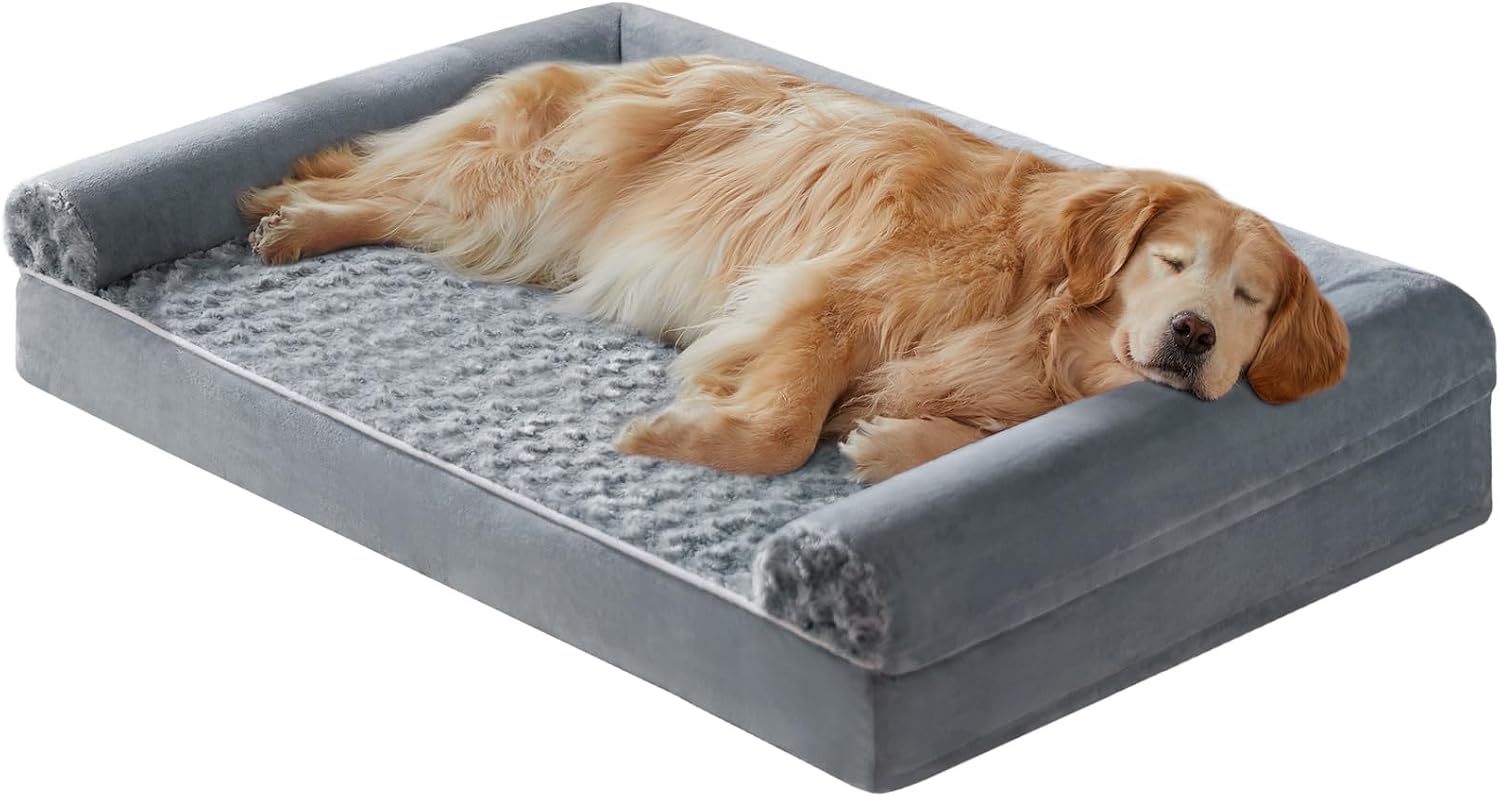
BFPETHOME Orthopedic Washable Large Dog Bed for Senior Dog Comfy Sleep
Senior-focused design with a washable cover, the least expensive way to try an orthopedic slab
The "large" sizing is the vaguest claim in this group, and thin orthopedic foam is the first thing to pancake
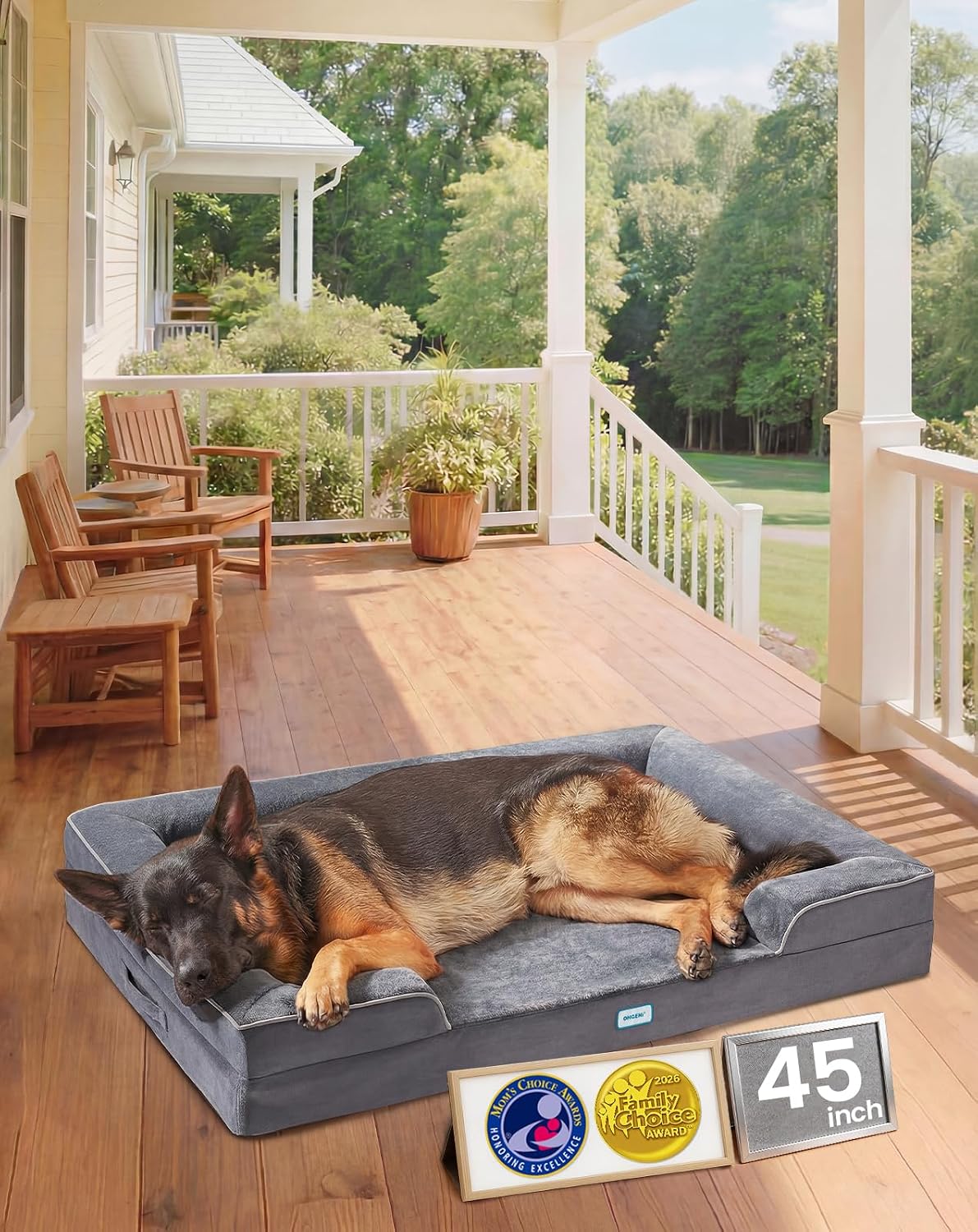
OhGeni Orthopedic Extra Large Dog Bed Couch, Memory Foam, 45-inch (Gray)
Named memory foam, honest 45-inch length, couch shape gives a lab something to lean on
Couch bolsters are extra fabric for a determined chewer, and the gray cover shows every muddy paw
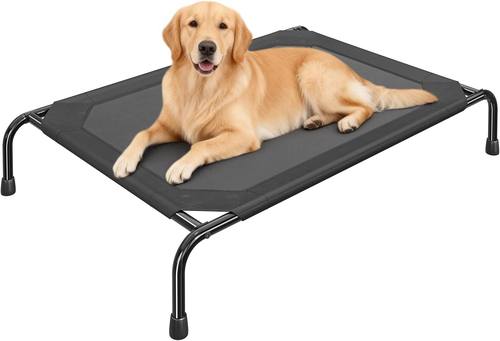
Ekisemio Elevated Dog Bed for Large Dogs, Waterproof XL Pet Cot with Mesh
Raised frame gets a lab off hot ground, waterproof mesh hoses clean, no stuffing to pull out
No cushioning at all for a lab with sore hips, and mesh is not chew-proof
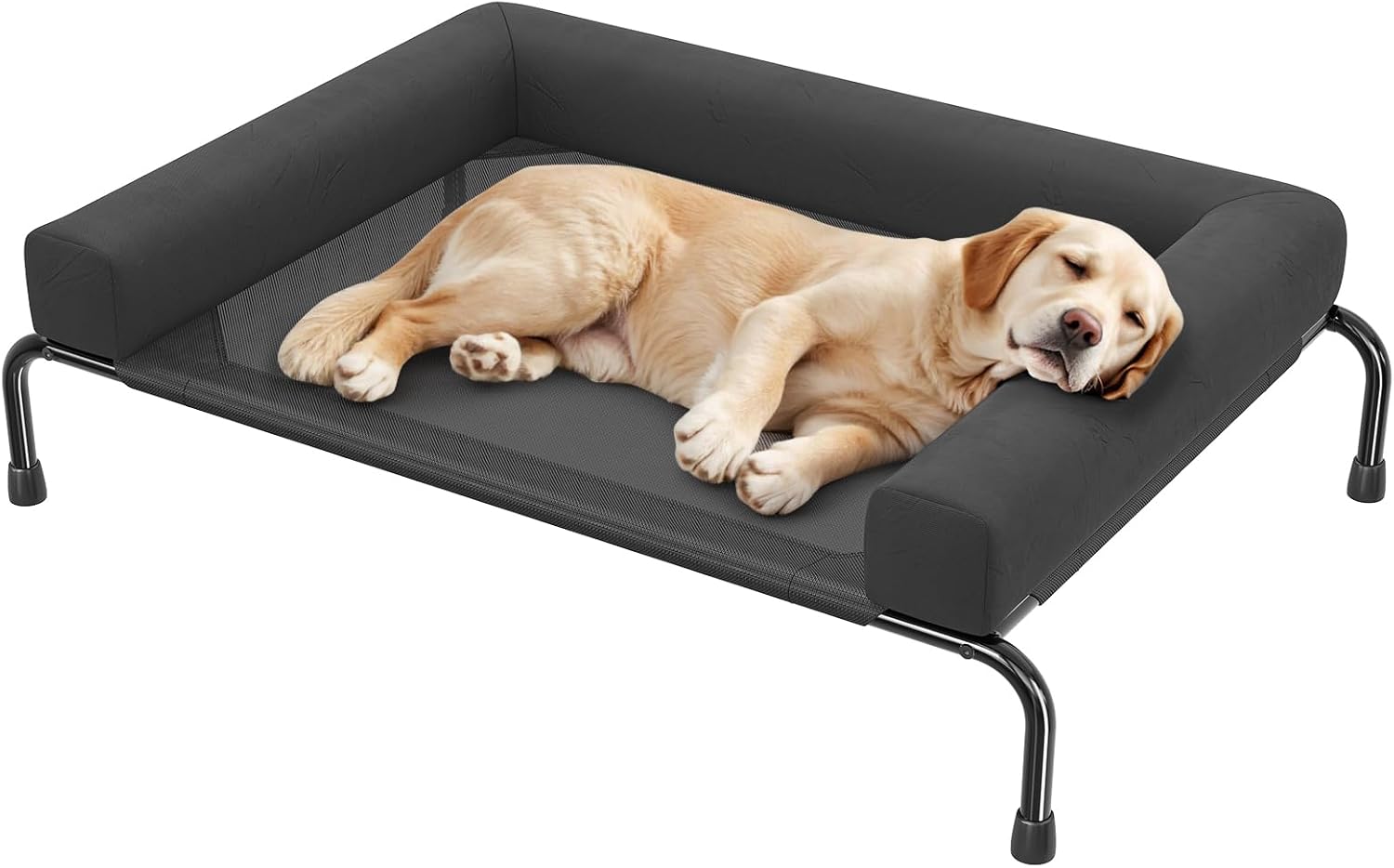
Ekisemio Elevated Dog Bed for Large Dogs, Cooling Raised Pet Cot with Mesh and Bolsters
Removable waterproof cover, bolsters give an older lab a place to rest his head, largest footprint here
More seams and more fabric means more places for a bored lab to start a project
Prices and availability were captured from Amazon Creators API and may change.
How I judge a bed for a lab
My criteria are boring and they have not changed in years. First, can a 75-pound lab destroy it, and if so, how fast? Second, is the foam dense enough to hold that weight without going flat? Third, is the size honest, because "large" on a dog bed label is close to meaningless.
I want foam in the 3 to 4 pounds per cubic foot range for a full-grown lab. Cheap foam runs closer to 1.5 to 2, and I have cut beds open to check because the labels will not tell you. Anything under 3 pounds flattens into what I call a pancake within a season of a lab sleeping on it. Penny weighs 55 pounds and she still sinks cheap foam to the floor by week six.
The fourth criterion is the cover. Zippers die before fabric does. I have personally killed 14 of them, and a bed with a removable, machine-washable cover is worth more than one with a fancy fabric and a zipper that seizes after three washes. You will wash this thing. Labs are oily, they shed, and they carry half the yard in on their paws.
Foam density is the whole ballgame for a senior lab
The BFPETHOME Orthopedic Washable Large Dog Bed and the OhGeni Orthopedic Extra Large Dog Bed Couch are both foam beds, and both lean on the word orthopedic. That word means nothing on its own. What matters is how thick the foam is and how dense it is, and neither label hands you that number, so you have to reason from the shape and the price bracket.
For a senior lab, I want a bed that lets Penny lie flat with her legs out, because that is how labs sleep. They do not curl into a ball the way a smaller breed does. Duke sleeps like a starfish, legs in four directions, and any bed he uses has to be long enough to hold all of that. A couch-style bed like the OhGeni changes the geometry: the bolsters give him an edge to press against and a place to rest his chin, and the 45-inch length is a real number you can check against your own dog rather than a marketing adjective.
The honest limitation of this whole category is lifespan. A budget orthopedic bed is a trial run, not a ten-year purchase. If your lab is 11 and you want to see whether foam helps his mornings before you spend real money, this is the cheap way to find out. If the answer is yes, you will eventually want something denser. If the answer is no, you spent a little and learned something. That is a fair trade.
Elevated cots: the cooling and chew math
The two Ekisemio cots work on a completely different principle. A raised frame holds the dog off the ground on a taut mesh panel, air moves underneath, and heat has somewhere to go. For an Ohio summer, that matters. For a lab who runs hot after twenty minutes in the yard, it matters more.
The B0G4CXJXQ6 is the plainer of the two: a waterproof XL pet cot with mesh, built for indoor and outdoor use, with the frame raised for joint support. Here is where I push back on the marketing. A taut mesh panel does not support joints the way dense foam does. It gives even, firm, flat support, which is genuinely better than a hard floor and genuinely worse than a good orthopedic slab. If Penny's hips are the problem, the cot is not the answer. If the problem is a hot dog who refuses to come inside in July, it is the best answer on this list.
From a chewing standpoint, the cot wins on structure and loses on material. There is no stuffing to pull out, no inner liner to gut, which removes the single most destructive thing a lab puppy does to a bed. But mesh is mesh. A determined adolescent lab can worry a hole into a mesh panel, and once there is a hole, the cot is done. So this is the bed I recommend for the dog who is past the worst of the shark phase, or for the dog who has never been a chewer in the first place.
Bolsters, mesh, and the 47.75-inch question
The second Ekisemio, the B0G4CZ33PT, is the same raised-cot idea with bolsters added and a removable, waterproof cover over a 47.75 by 31 inch frame. That is the largest footprint in this comparison, and for a big male lab it is the difference between sprawling comfortably and hanging a leg off the edge.
The bolsters are the interesting part. An older lab likes to rest his head, and a raised edge gives him that without the softness of a foam couch. The removable waterproof cover is the feature I would actually pay for, because outdoor cots get rained on, peed on, and dragged through mud, and being able to pull the cover and hose it is the difference between a bed that lasts two summers and a bed that lasts one.
The trade-off is seams. Every bolster is a seam, every seam is a place where teeth can start, and more fabric means more surface for a bored lab to work on. If you have a chewer, the plainer cot is the safer bet. If you have a calm older dog and you want the headrest and the bigger platform, the bolster version is the better bed.
Size honesty, because "large" is a lie
I measure nose to tail and add 12 inches. That is the rule, and it has never failed me. Duke is 75 pounds and stretches past 40 inches when he is flat out, which means a bed advertised as large at 36 inches is a bed he will hang off of.
The OhGeni tells you 45 inches. The bolster cot tells you 47.75 by 31 inches. Those are numbers you can work with. The BFPETHOME uses the word large in its name and leaves you to guess, which is not a knock on the bed itself so much as a knock on how this category sells. Measure your dog before you order anything, and if you are between two sizes, take the bigger one. A lab on a too-small bed will just sleep on your floor instead.
Cost per day, not sticker price
A cheap bed that dies in four months costs more than a good bed that lasts three years. That is arithmetic, not opinion. Every bed in this comparison is in the budget bracket, which means you should think of them as either a first bed for a young dog or a trial bed for a senior.
Run the math on your own dog. Take the price, divide by the months you expect to get, and compare that number to what you would spend replacing a destroyed bed every few months. For a lab under three years old, the honest answer is that you are buying a chew toy with a price tag, so buy accordingly and do not feel bad about it. For a lab over eight, the math flips and comfort starts winning.
Which bed for which lab
For a senior lab with hip trouble, the foam beds are the place to start, and the OhGeni's named memory foam and honest 45-inch length make it the more informative purchase of the two. The BFPETHOME is the budget entry point if you want to test whether your dog will even use an orthopedic bed before spending more.
For a hot-running lab in summer, or a dog who lives outdoors part of the day, the plain Ekisemio cot is the pick. It cools, it hoses off, and it removes the stuffing problem entirely. For an older dog who wants a headrest and a bigger platform, the bolster version is worth the extra fabric risk, provided your lab is not a chewer.
And for a lab under three? Buy the cot, keep a cheap foam bed as a backup, and put your money into chew toys until the shark phase ends. Your dog will not remember the bed. Your vacuum will remember the foam.
What I am watching next
I am tracking two things for winter. First, whether the removable covers on these beds survive repeated washing without the zipper seizing, because that is the failure point I see most. Second, whether the memory foam in the OhGeni holds its shape through a full season of a 75-pound lab, or whether it pancakes the way most budget foam does. I will report back with numbers once Duke and Penny have put real months on them.
If you take one thing from this, take the measuring tape. Measure your lab nose to tail, add 12 inches, and buy the bed that actually fits. Everything else is a detail.