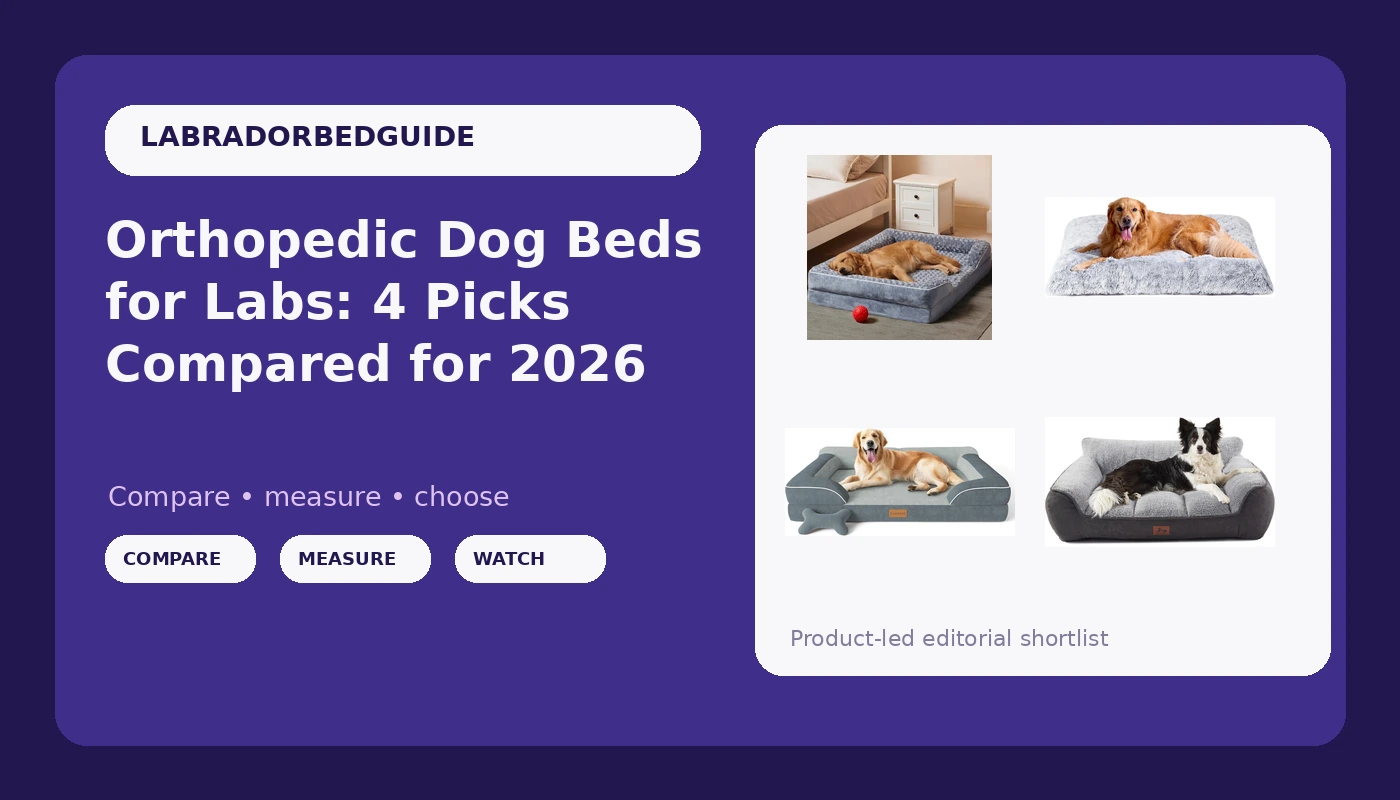
I spent ten years as a trainer before I started writing about gear, and most of that time was spent around field labs who treated every piece of equipment like a chew toy with a warranty. Two labs still live in this house. Duke is a 75 pound black lab, five years old, and still convinced that zippers are a food group. Penny is an 11 year old rescue with hip dysplasia, which means she needs foam that actually holds her up instead of foam that remembers being foam. That is why I compare orthopedic dog beds for labs differently than most sites do. Comfort is only half the question. The other half is whether the thing is still a bed in three months.
The short version: the CWAWZ Extra Large Dog Bed is the one I would start with for most labs in this group, because it pairs orthopedic foam with a waterproof, removable, washable cover and a 42 inch footprint that fits a dog who sleeps like a starfish. The WNPETHOME bed is the value pick for a senior lab, the XL Extra Thick Bolster bed suits a lab who leans or curls against furniture, and the EHEYCIGA is a crate liner rather than a main bed. That distinction matters more than any spec sheet.
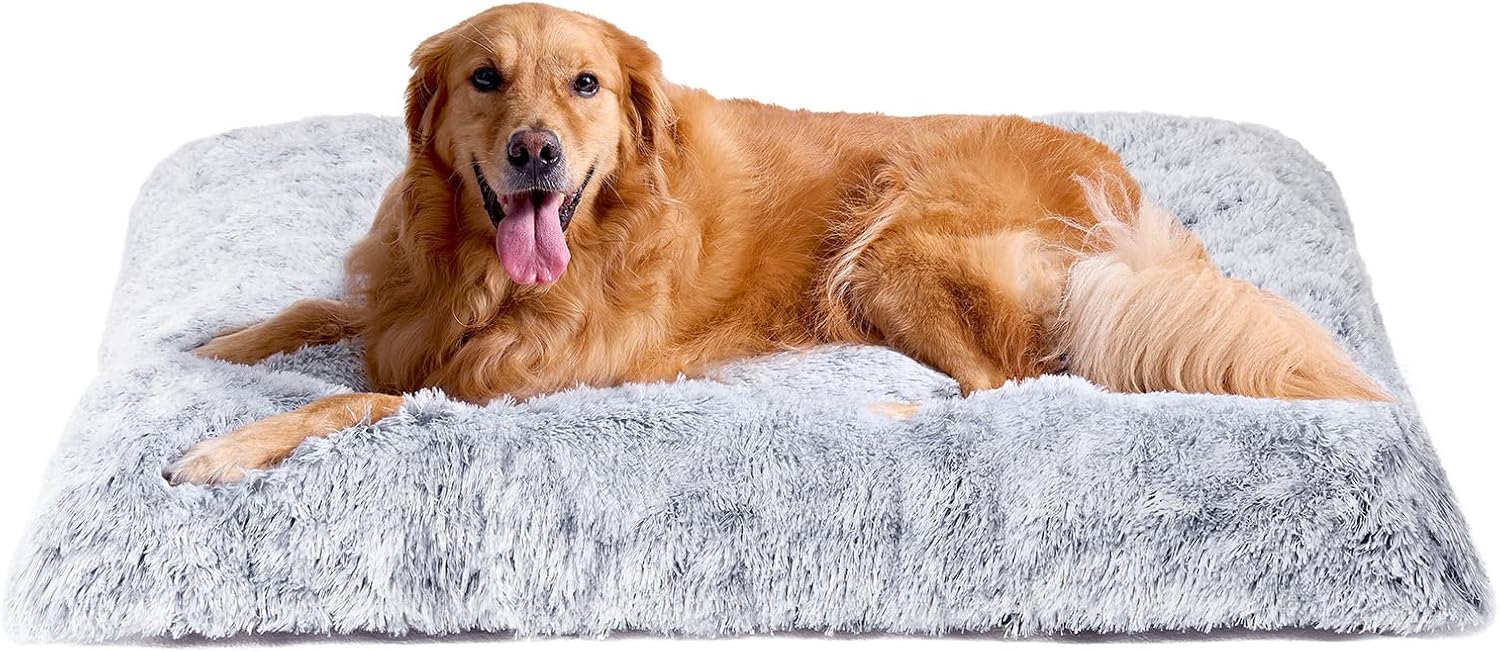
EHEYCIGA Fluffy Dog Crate Bed
Best as a crate liner or travel pillow, plush surface, easy to move room to room
Not orthopedic, and plush fabric has the shortest chew timeline of anything here
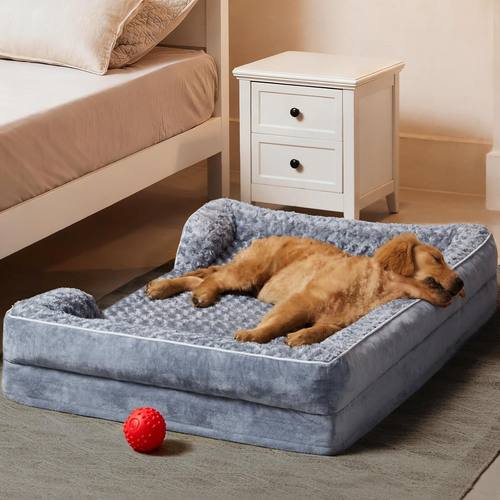
WNPETHOME Orthopedic Washable Dog Bed
Orthopedic support plus a washable cover, the exact pair of features an older lab needs
Sized "large," which is the smallest class in this group, so measure before you buy
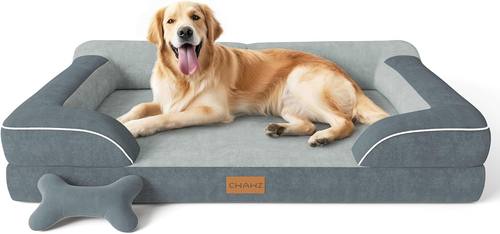
CWAWZ Extra Large Dog Bed
Cooling gel memory foam, waterproof removable cover, 42 inch platform for a sprawler
The bundled bone toy is garnish, and the cover is not chew proof
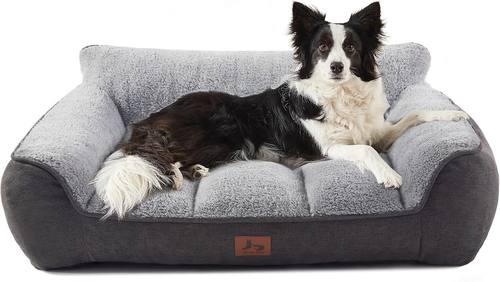
XL Extra Thick Orthopedic Bolster Dog Bed
Thick orthopedic base with raised edges for a lab who likes to lean or nest
Bolsters eat usable flat space, which is the opposite of what a starfish lab wants
Prices and availability were captured from Amazon Creators API and may change.
How I judge a lab bed before it earns floor space
I keep a notebook. Every bed that comes through this house gets logged: foam type, cover material, zipper quality, how the listed dimensions compare to the number in the title, and how many washes the cover survives before a seam gives out. Four things decide whether a bed is worth your money.
Foam density. Memory foam is measured in pounds per cubic foot. The cheap stuff runs 1.5 to 2, which is why a budget bed is a pancake by month four. Orthopedic foam that will hold a 75 pound lab needs to be in the 3 to 4 range. When a listing never mentions density, that silence is information.
The cover. Zippers die first. I have lost track of covers that washed fine twice and then split at the seam on the third run. A removable cover is only as good as the zipper holding it on, and a waterproof backing is the difference between a bed and a sponge when an older dog has an accident.
Honest sizing. A "large" dog bed in this category is often built for a 40 pound dog. Measure your lab nose to tail, add 12 inches, and compare that number to the actual dimensions buried in the listing, not the word "XL" in the title.
Chew timeline. This is the number that decides whether a bed is a purchase or a rental. Duke has taught me that plush fabric measures its life in days, and that no amount of redirection training fixes a determined two year old lab. Behavior work changes where the chewing happens. It does not change what a jaw does to velvet.
EHEYCIGA Fluffy Dog Crate Bed: a crate liner, not the main event
The EHEYCIGA is a plush extra large pillow built for a crate. Grey, soft, and easy to drag from the bedroom to the truck. As a crate liner for a calm adult lab, that is a real job. A crate needs a washable pad, and this one does it.
What it is not is an orthopedic bed. There is no dense support layer here for a lab carrying 75 pounds, so I would not buy it as the bed Penny sleeps on for eight hours. And plush is the material I trust least around a lab under three years old, because soft fabric invites exactly the chewing you are trying to prevent.
WNPETHOME Orthopedic Washable Dog Bed: the senior lab value pick
Orthopedic construction and a washable cover, marketed for senior dogs, is the two feature combination that matters most for an older lab. Penny's mornings improved measurably once she was sleeping on dense foam instead of a flattened pillow, and my vet has told me she sees more joint problems in labs than in any other breed she treats. Support at night is not a luxury for a dog with hip dysplasia.
The caveat is size. This is a "large" bed in a group where the other three run extra large, so a big male lab may be hanging off the edge. Measure Duke at 38 inches nose to tail, add 12 inches for sprawl, and you can see why the smaller footprint is a real limitation rather than a nitpick.
CWAWZ Extra Large Dog Bed: the closest thing to a full time bed here
This is the one I would put in the living room. Cooling gel memory foam, a waterproof cover that comes off for washing, a 42 inch pet sofa footprint, and a Dutch velvet cover in dark gray. Three of those four things are the exact list I check for a lab.
The cooling gel matters more than the marketing suggests for a black lab in an Ohio summer, because a dog who runs hot will abandon a bed that traps heat and sleep on the tile instead. The waterproof layer matters for an 11 year old dog, and the removable cover matters every single week. The bundled bone toy is garnish. Do not let it move the decision.
I will say plainly what this bed is not: it is not chew proof, and no velvet cover is. Treat it as a comfortable main bed for a lab past the shark phase, not as armor.
XL Extra Thick Orthopedic Bolster Dog Bed: for the lab who leans
Bolster beds have raised edges that give a dog something to rest a head or a hip against. Some labs love that. Duke is not one of them. A 75 pound lab does not curl up, he sprawls flat with his legs in four directions, and every inch of bolster is an inch of flat sleeping surface he cannot use.
If your lab sleeps pressed against the couch, against a wall, or curled into a donut shape, the shape works and the thick orthopedic base gives you the support the plush crate liner cannot. If your lab sleeps like a starfish, the raised edges are simply less bed.
The chew timeline, stated honestly
Not one of these four beds is chew proof. None of them. Chew proof covers and chew warranties live in a different price bracket entirely, and even there I test the claim instead of trusting the label.
If your lab is under three years old, my advice is the same as it has always been: buy the cheap bed now, buy the good bed later. A puppy is a chewer by definition. The expensive bed will not survive him, and you will be angry at the bed instead of at the behavior. Once he is past three, the math flips, and a dense orthopedic bed that lasts years costs less per day than a cheap one you replace twice a year.
Every lab owner makes the $60 mistake once. The smart ones only make it once.
Sizing: bring a tape measure, not a guess
Measure your lab nose to tail while he is stretched out, then add 12 inches. Penny measures 34 inches and Duke measures 38. That puts both of them in the extra large class, which means the 42 inch platform on the CWAWZ bed is the right fit and a "large" bed is a tight fit for Duke. The bolster bed gives you extra large dimensions with less usable flat space, so compare the interior platform rather than the outer frame.
Cost per day, the only honest comparison
A cheap bed that dies in four months costs you more per day than a good bed that lasts three years. That is arithmetic, not opinion. I cannot quote current prices here because they move, so check the current Amazon price on each listing and run the division yourself: price divided by the number of usable days you expect.
My rule of thumb for a lab household is that a bed under $100 is a rental, and the sweet spot for a durable main bed sits in the $150 to $250 band. Two of the beds in this comparison land well under that, which is exactly why they are worth looking at for a puppy, a crate, or a second bedroom rather than as the primary bed for a senior dog.
The senior dog exception
Penny gets judged on a different standard than Duke. Durability is not the headline for her. Joint support, a low entry height, and a cover I can wash after an accident are. That is why the WNPETHOME and CWAWZ beds sit above the plush crate liner on my list, and why I would spend more on foam for an older lab than on fabric toughness. An 11 year old lab is not going to destroy a bed. She is going to sleep on it for 14 hours a day, and her hips will tell you by morning whether it was dense enough.
Trade-offs I will not paper over
- The EHEYCIGA is a crate liner with no orthopedic layer, so it is a secondary bed, full stop.
- The WNPETHOME is sized "large," which may be tight for a big male lab who sprawls.
- The CWAWZ bundles a bone toy you do not need and a cover that is waterproof but not chew proof.
- The bolster bed trades flat surface for raised edges, which helps some labs and wastes space for others.
- None of the four carries a chew warranty, so a lab under three should start somewhere cheaper.
FAQ
Which of these is best for a senior lab with hip problems? The CWAWZ bed for the extra large footprint and cooling gel, or the WNPETHOME if you want the lowest cost orthopedic option and your dog fits the large size.
Is the plush crate bed worth buying at all? Yes, as a crate pad or travel bed for a calm adult dog. No, as the main sleeping surface for a 75 pound lab.
Will any of these survive a lab puppy? No. Buy a cheap bed until your lab is past three, then buy the dense orthopedic bed once.
What I am testing next
Winter 2026 is a chew proof cover test in this house, and I am tracking which zippers survive Duke across repeated wash cycles. When I have a full month of wash data on these covers, I will update the notes here. Until then, the foam and the sizing are what I can stand behind, and those are the two things that decide whether your lab actually sleeps.
Check the current Amazon price on each listing before you decide, because the cost per day math only works with today's number.