I spent ten years as a dog trainer before I started writing about gear full time, and the same question lands in my inbox every October: which orthopedic dog beds for labs actually survive a Labrador? Not a golden retriever, not a lap dog. A 75 pound black lab who treats every seam like a dare and every zipper like a chew toy with a handle attached.
This comparison puts four beds side by side. Two are chew-resistant builds from K9 Ballistics, one is a budget orthopedic extra-large from Bedsure, and one is a mid-priced orthopedic bed from Homemate that ships with a toy. Different materials, different price tiers, and honestly different jobs. The right answer depends on your dog's age and jaw, not on which listing photo is prettiest.
The short version: if your lab is under three years old, buy the K9 Elevated Cot Bed and accept that joint support is secondary. If your lab is a senior with hip trouble, foam matters more than armor, and the Bedsure or Homemate orthopedic beds are where your money belongs. Everything below is the reasoning.
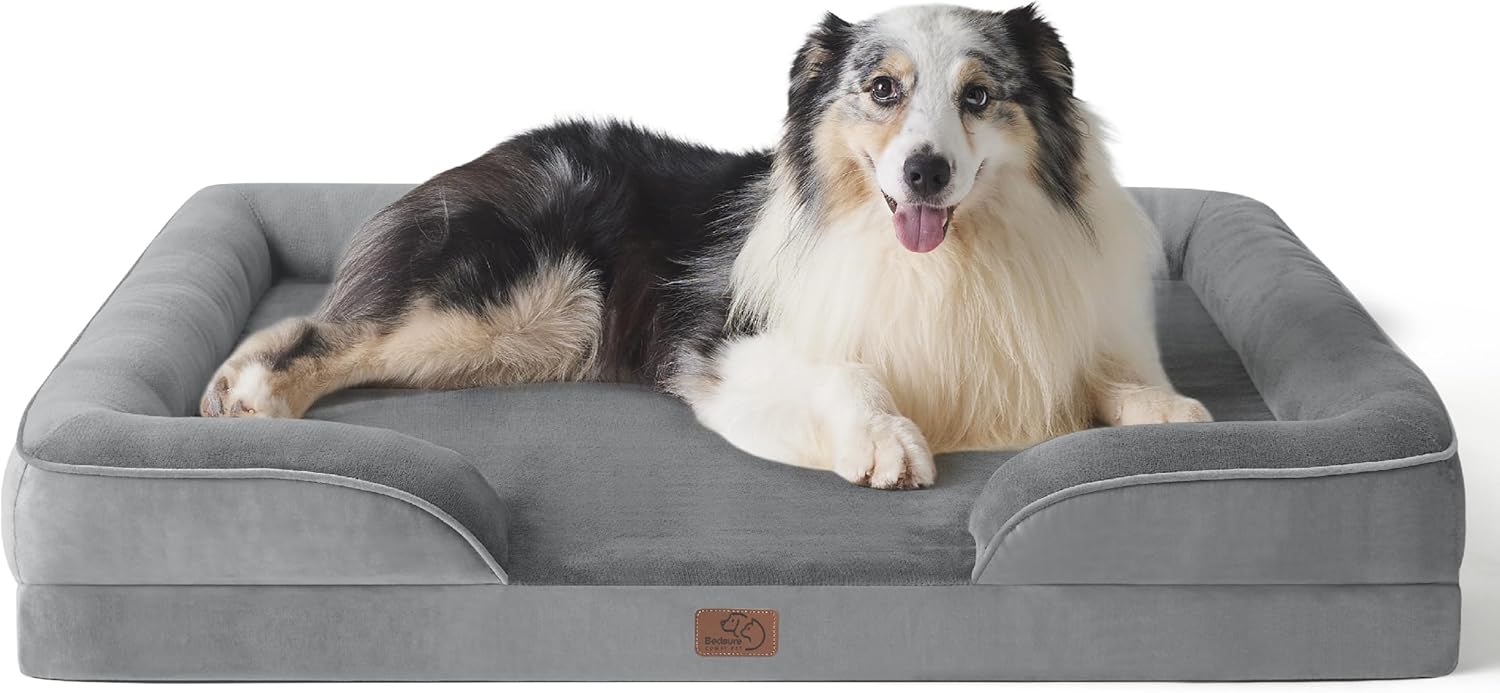
Bedsure Orthopedic XL Dog Bed Extra Large Washable Original Design
Cheapest honest extra-large option, washable cover, low-front bolster shape that suits how labs flop
Plush cover, not built for a dog in the shark phase
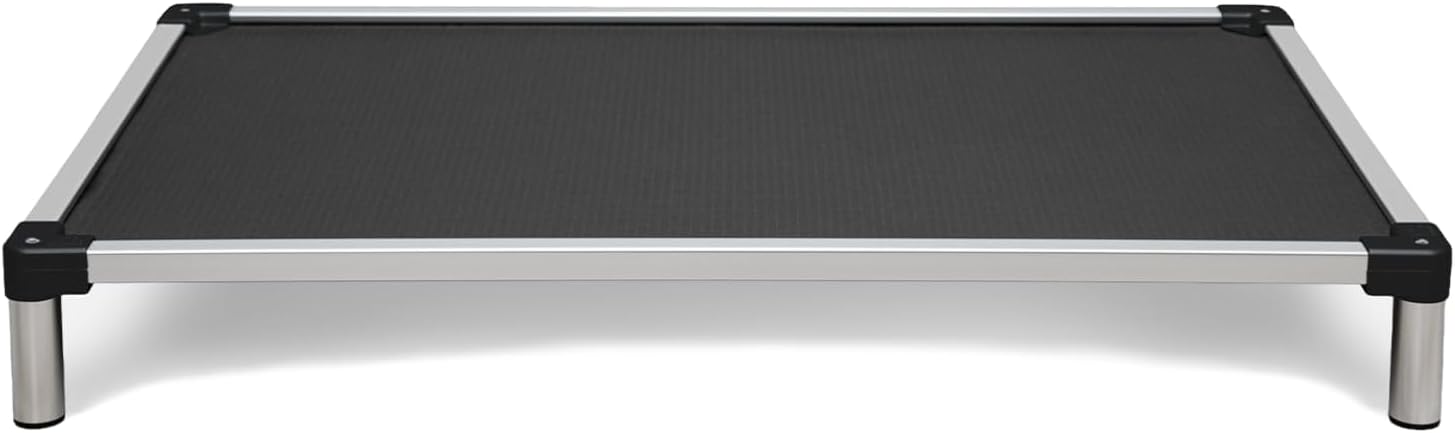
K9 Chew Proof Elevated Cot Bed, L, Obsidian Black Ripstop
Ripstop panel on a frame, nothing to shred, air circulates underneath
Zero joint support, and some labs need a week to trust a moving surface
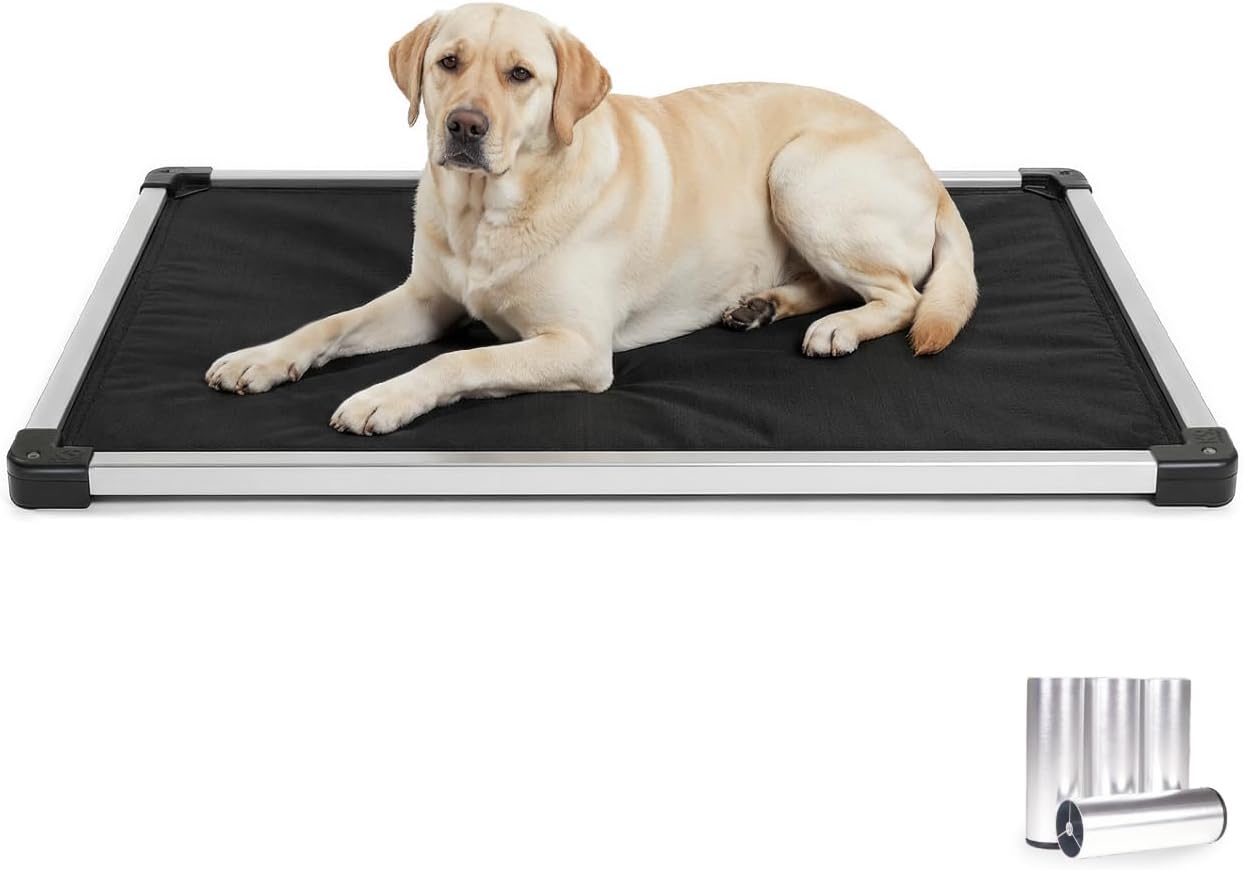
K9 Chew Proof Armored Padded Dog Crate Bed, L, Obsidian Black
Real padding plus a chew-resistant build, sized for a crate tray
Only makes sense if your lab actually sleeps in a crate
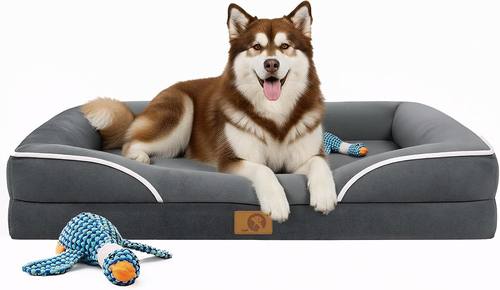
Homemate Dog Bed Extra Large Size Dog: 48"x35" Orthopedic Pet Bed with Toy
Honest extra-large footprint, orthopedic base, ships with a toy for redirection
Still a soft-covered bed, so it is not a solution for a dedicated chewer
Prices and availability were captured from Amazon Creators API and may change.
How I judge a bed for a Labrador
Three questions, in this order.
Can a determined 75 pound lab destroy it? That is the test, and it is pass or fail. Labs chew first and ask questions later. A bed that fails is a chew toy with a price tag, and the stuffing ends up in your vacuum cleaner.
Is the foam dense enough to matter? Memory foam is measured in pounds per cubic foot. Cheap beds run around 1.5 to 2. A bed that supports a lab's hips has to be denser than that, because a 75 pound dog compresses soft foam into a pancake within a few months. I measure sink depth with a ruler, and I have cut beds open to see what is actually inside. A bed that flattens by month four is not a bargain, it is a subscription.
Does the cover survive the washing machine? Zippers die first. A cover you cannot wash is a cover that smells like wet lab by February.
Notice what is not on that list: how it looks in your living room, and how plush it feels on day one. Neither one survives contact with a Labrador.
The four beds
Bedsure Orthopedic XL Dog Bed
The Bedsure is the budget entry, and it plays that role well. Extra large, machine washable, orthopedic design, and priced low enough that it is the natural first bed for an owner who has not yet learned what the cheap mistake costs. The low-front bolster shape is the right one for a lab: they flop over the edge instead of climbing in.
Where it loses points is durability. This is a plush-covered bed, and plush covers plus Labrador puppies are a bad combination. If your lab is past the shark phase, this is a comfortable, washable bed at a price that does not hurt. If your lab is fourteen months old and eats drywall, you are renting it.
K9 Chew Proof Elevated Cot Bed, L, Obsidian Black Ripstop
An elevated cot has no foam at all. It is a suspended ripstop panel on a frame, and that is the whole design. Ripstop is the material I trust most against a determined chewer, because the grid weave stops a tear from traveling. The dog lies on taut fabric above the floor, there is nothing to dig into, and there is no stuffing to pull out.
Two trade-offs. First, a cot offers no joint support. A senior lab with hip dysplasia gets nothing from a suspended panel, because there is no foam to conform to anything. Second, some labs need a week or two to trust a surface that moves under them. Most adjust, and then they claim it.
This is also the bed I would choose for a crated or kenneled dog in a warm house, because a cot does not hold heat the way a padded bed does.
K9 Chew Proof Armored Padded Dog Crate Bed, L, Obsidian Black
The armored padded crate bed is the compromise: actual padding, so it is comfortable, built with the same chew-resistant philosophy as the cot. It is sized for a crate, which makes it the pick if your lab sleeps in a kennel at night and you want padding on the tray instead of bare plastic.
The trade-off is straightforward. Padding plus armor costs more than either one alone, and a crate bed is only as useful as your crate. If your lab sleeps loose in the bedroom, a crate-specific bed is the wrong shape for the job no matter how well it is made. Buy this one for the dog who is crated, not for the dog who sprawls across half the room.
Homemate Dog Bed Extra Large Size Dog 48"x35" Orthopedic Pet Bed with Toy
The Homemate sits in the same tier as the Bedsure and adds a toy in the box. That sounds like a throw-in, but it is not nothing. Redirecting a puppy to a toy is the behavior loop that actually works. A puppy is not chewing your furniture to spite you. He is chewing because chewing is what puppies do, and your job is to make the bed boring and the toy interesting. Getting a toy with the bed makes that easier on day one.
The 48 by 35 footprint is honest extra-large sizing, which matters more than people think, because a lot of beds labeled large fit a 40 pound dog and nothing else. Same caveat as the Bedsure: this is a plush-covered orthopedic bed, not an armored one. Good foam, washable, comfortable, and not designed to survive a two-year-old lab with a grudge.
Chew resistant is a spectrum, not a sticker
I do not trust the word indestructible. I have seen the "lasted a week" reviews, and I have lived them. What the K9 builds actually offer is a material choice that removes the failure modes a lab exploits. There is no exposed foam to gut, no plush seam to worry open, no loose stuffing to pull through a hole.
That is a different claim from "your dog cannot damage this," and it is the honest one. Against a determined chewer, the practical goal is a bed that gives you a chew timeline measured in months rather than days, plus a cover that can be replaced when the fabric finally goes. A chew-proof guarantee is worth more than a chew-proof label, because guarantees are the part a company has to honor.
Orthopedic foam and the senior lab
Penny is 11, a rescue, and she has hip dysplasia. My vet told me she sees more joint problems in labs than in any other breed, and after living with Penny I believe her.
That changes the recommendation completely for an older dog. For a senior lab, comfort and joint support beat durability every time, because she is not chewing the bed, she is sleeping on it eighteen hours a day. Dense foam is the entire game. A thick orthopedic base with real density holds its shape and supports the hips instead of letting them sink to the floor. Thin, light foam compresses into a pancake and does nothing.
If you are buying for a dog over eight, spend your money on foam and skip the armor. That is why the Bedsure and the Homemate stay in this comparison at all. They are not chew-proof, and for a senior lab they do not need to be.
Sizing: measure nose to tail, then add twelve inches
A lab does not curl up. He sprawls, starfish style, legs in four directions, and he needs maximum flat space. Measure your dog nose to tail while he is stretched out, add 12 inches, and buy that. A bed that is too small means the dog sleeps half on the floor and the orthopedic foam never touches the hips that need it.
The Bedsure XL and the Homemate 48 by 35 both clear that bar for a 75 pound lab. A crate bed is sized to the crate instead, so measure the tray and match it.
The cost per day math
Price divided by usable days. That is the only honest comparison, and it is arithmetic rather than opinion.
A $60 bed that a chewer destroys in four months costs more per day than a $140 bed that lasts three years. Run the numbers and the cheap bed is often the expensive one. K9 Ballistics at that middle tier pays for itself in a couple of months if you are replacing budget beds every few weeks.
The math flips for a puppy, though. A ten month old lab will destroy almost anything, including an armored bed, so a cheap washable bed plus a serious chew toy is the correct spend until the shark phase ends. Every lab owner makes the cheap mistake once. The smart ones only make it once.
Which one should you buy?
- Lab under three who destroys everything: the K9 Chew Proof Elevated Cot Bed. Nothing to shred, nothing to gut.
- Lab who sleeps in a crate: the K9 Chew Proof Armored Padded Dog Crate Bed.
- Senior lab with hip trouble: orthopedic foam first. The Bedsure for a tighter budget, the Homemate for the larger footprint and the toy.
- Adult lab past the shark phase, first bed: the Bedsure, and put the savings toward a toy rotation.
- New puppy: the Homemate, because the toy in the box starts the redirect on day one.
What I am testing next
Chew-resistant covers for winter 2026, and specifically zippers, because that is where covers fail first. I am also documenting Penny's response to denser orthopedic foam for a senior-dog guide, since hip support is the one place where a lab owner should stop optimizing for toughness and start optimizing for the dog.
Two labs, one 75 pounds and chewing, one 55 pounds and limping, will sort out the rest. If you only take one thing from this comparison: buy for the dog you have right now, not the dog you hope he becomes. A puppy needs a cheap bed and a good toy. A senior needs good foam. A two-year-old lab needs something he cannot eat, and he will let you know within a week which category you bought.