
I have spent ten years with a lab asleep somewhere near my feet, and the last four measuring whether the bed under him was actually holding up. Duke is a 75 pound black lab who chews first and asks questions later. Penny is a 55 pound rescue with hip dysplasia who needs support more than she needs toughness. That split is why I write about the best dog beds for labs instead of just the toughest ones. A bed that survives Duke but leaves Penny limping in the morning is not a good bed. A bed that cradles Penny but turns into confetti in Duke's mouth is not a good bed either. This comparison covers four beds sold right now, what each one is built to do, and the specific lab it actually fits.
Related: Orthopedic Dog Beds for Senior Labs
The pick for most adult labs here is the FurHaven Cooling Gel Sofa Bed, because it pairs a solid orthopedic foam base with the largest flat sleeping area of the four and a cover you can wash. The Veehoo elevated bed is what I would buy for a chewer, a kennel, or a dog that runs hot. The two donut beds are for dogs who curl, which is a smaller share of labs than the marketing suggests.
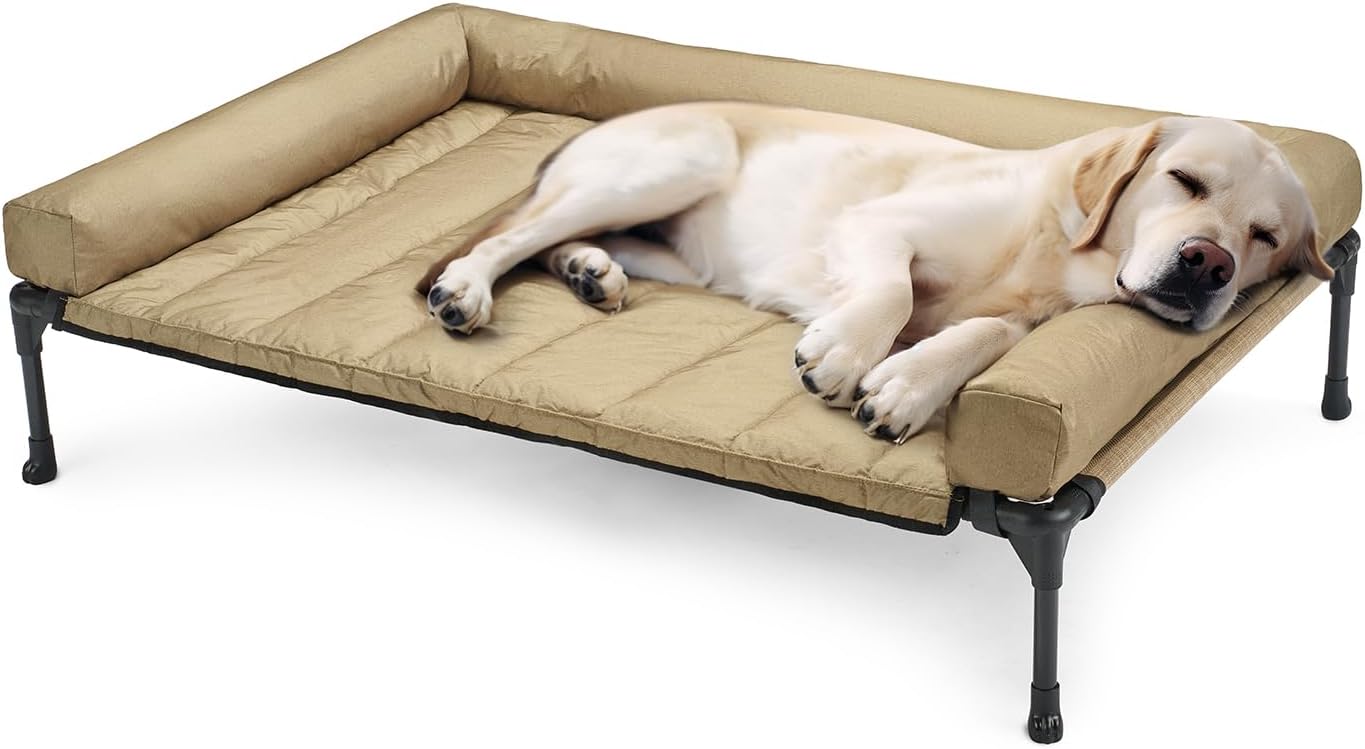
Veehoo Outdoor Elevated Dog Bed with Waterproof Bolster Cushion
Chew resistant cot design with almost no stuffing to gut, waterproof bolster, dries fast, airflow underneath in summer
No orthopedic foam for hips, harder for a senior lab to step onto, thin on a cold floor
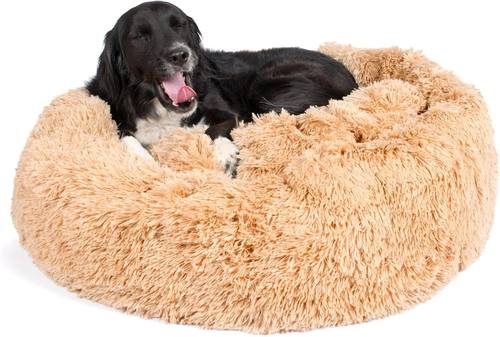
BarkBox Dog Bed Memory Foam Donut Cuddler
Memory foam donut with a waterproof lining, removable washable cover, calming shape, toy included
Listed sizing tops out at 65 lbs, which is under Duke, and plush donut fabric is a chew risk
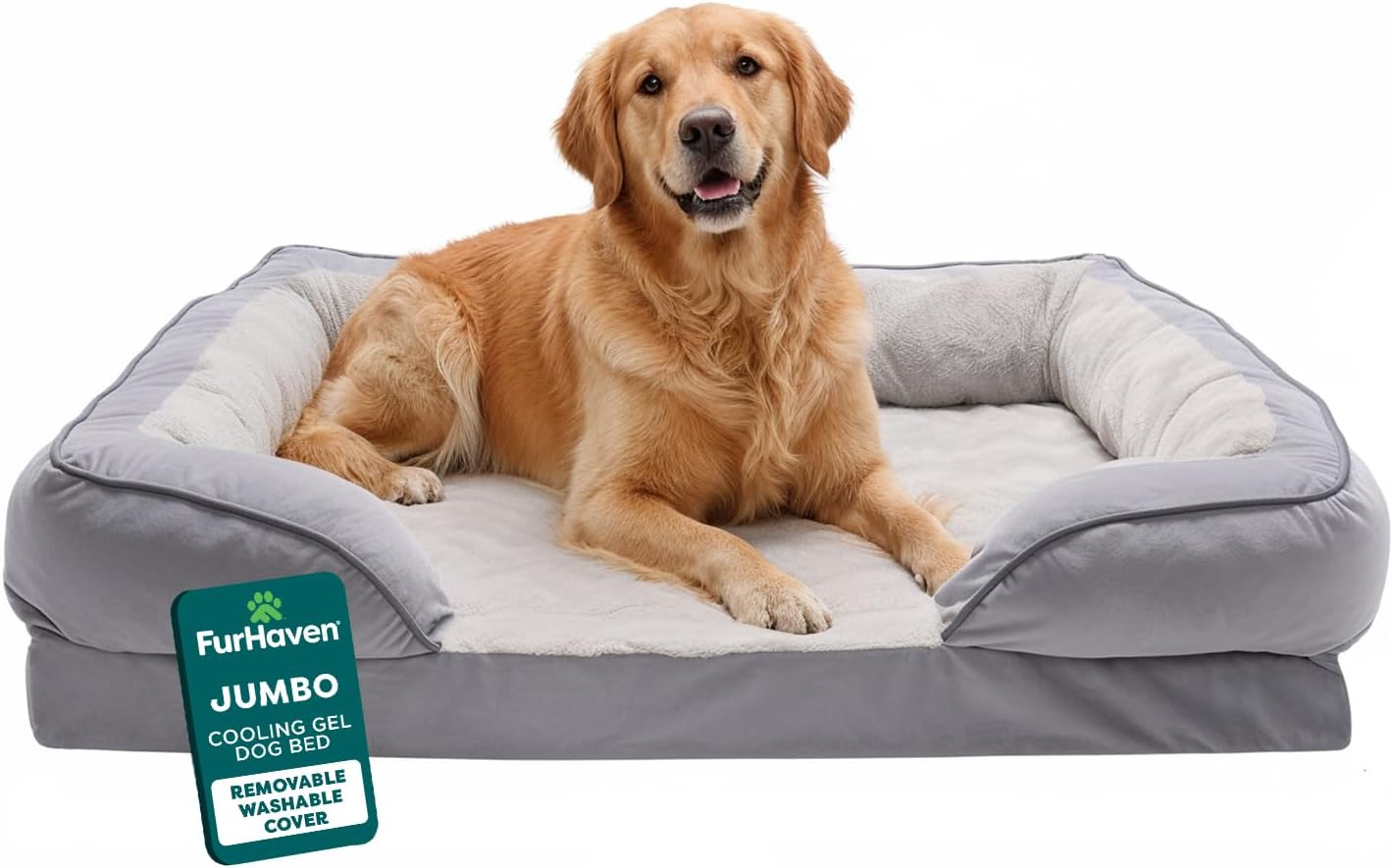
FurHaven Cooling Gel Dog Bed for Large Dogs, Perfect Comfort Sofa Bed
Solid orthopedic foam base plus a cool gel top, Jumbo XL sleeping area, washable cover, good for hot labs and sore hips
Velvet plush is soft, not chew armor, bolsters eat floor space, gel top is a winter trade-off
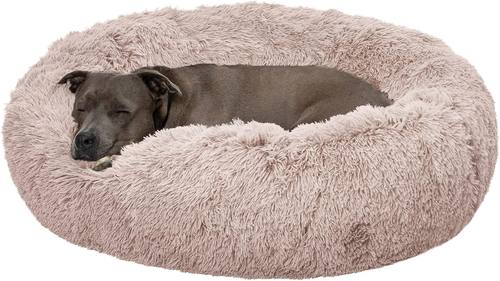
Furhaven 36" Round Calming Donut Dog Bed
36 inch round, refillable, removable washable cover, rated to 75 lbs, long faux fur is gentle on old joints
36 inches is short for a lab that sleeps like a starfish, and shaggy plush invites chewing
Prices and availability were captured from Amazon Creators API and may change.
What a Labrador actually needs from a bed
Start with how the dog sleeps. Labs sprawl. Duke sleeps like a starfish, flat on his side with his legs in four directions, and a bed that is comfortable for a curling terrier is a bed he hangs off of. The measurement I use is nose to tail plus 12 inches, and I take it with a tape measure, not with the word "large" on a product page. A bed marketed as large that comfortably fits a 40 pound dog is a sizing lie, and sizing lies are the most common thing I find in this category.
Then look at foam. Density is measured in pounds per cubic foot, and cheap foam runs 1.5 to 2. That is the foam that pancakes under a lab in a few months, which is why I have cut beds open to check what was inside. For a lab's hips, especially a senior lab with dysplasia, you want dense support, not a soft pillow that bottoms out the moment 75 pounds lands on it.
Then look at the cover. Zippers die first. I have killed more zippers than I can count, and a removable cover with a weak zipper is worse than no removable cover, because you paid for a feature that fails at wash number six. A waterproof lining is the detail that keeps accidents and drool out of the foam, and it matters more for a senior dog than most listings admit.
Then do the honest math. Cost per day is price divided by usable days. A cheap bed that dies in four months is not cheaper than a better bed that runs two years, and that is arithmetic, not opinion. The number that decides it is the chew timeline, meaning how long the material survives a determined lab, measured in weeks and months.
The four beds, and who each one is for
Veehoo Outdoor Elevated Dog Bed with Waterproof Bolster Cushion
This is the cot, not the couch. The dog sleeps off the ground on a taut surface, air moves underneath, and the bolster cushion is waterproof, which is exactly what you want on a porch, in a kennel run, or at a field trial where everything gets wet. For a lab owner, the real selling point is what is not there: there is very little stuffing to gut and almost no plush to shred. When a determined lab goes after a cot, he is fighting fabric and frame instead of pulling foam out of a seam.
The honest trade-off is that an elevated cot is not an orthopedic bed. Penny's hips need a surface that gives, not one that holds firm, and a senior lab with weak back legs can struggle to step up onto a raised frame. If you have a lab under 3 who chews everything in sight, this is where I would put the money first, because there is less bed there to destroy. If you have a senior lab with hip trouble, keep reading.
BarkBox Dog Bed Memory Foam Donut Cuddler
A memory foam donut with a raised rim, a waterproof lining, a removable machine washable cover, and a toy in the box. The calming donut shape works, and it works for a specific kind of dog: one who curls into a ball and presses against something. Penny does that. She tucks her nose toward her tail and sleeps against the rim, and a bed with walls makes her settle faster than a flat mat.
Here is the problem, stated plainly. The listed sizing on this bed tops out at 65 pounds. Duke is 75. That is not a rounding error, that is a lab hanging over the edge of a bed that was not built for his weight class, and foam that is undersized for the dog on it is foam that flattens early. Beyond the weight, this is a plush donut bed, and BarkBox beds are for dogs who do not chew. I have read the reviews that say "lasted a week." I have lived them. If your lab is past the shark phase, or your lab is a 50 to 60 pound older dog who curls, this bed makes sense. If your lab is 18 months old and eats furniture, this is tuition.
FurHaven Cooling Gel Dog Bed for Large Dogs, Perfect Comfort Sofa Bed
This is the closest thing in this group to the bed I would put a middle aged lab on. It is a sofa style bed with bolsters around the edges, a cool gel top layer, and a solid orthopedic foam base underneath. The base is the part that matters for hips. The gel top is the part that matters for a breed that overheats, and labs overheat. A lab that pants on a 68 degree evening will use a cooling surface more than you expect, and a washable cover on top of all of it means you are not rebuilding the bed every time it gets dirty.
The size to look at is the Jumbo XL, and this is where you pull out the tape measure rather than trusting the label. Measure your lab nose to tail, add 12 inches, and compare that to the listed dimensions before you buy. The trade-offs are real: velvet plush is comfortable, not chew resistant, so a bored lab can still open a seam; the bolsters take up real floor space in a small room; and the cooling gel top is a feature that a thin coated senior lab may not want in a cold Ohio January. For a hot running, middle aged, 70 to 80 pound lab, this is my pick of the four.
Furhaven 36" Round Calming Donut Dog Bed
A 36 inch round donut in long shaggy faux fur, rated for dogs up to 75 pounds, with a removable washable cover and a refillable design. The refillable part is genuinely useful and rare. When the fill pancakes, and it will, you top it up instead of replacing the whole bed, which is the kind of thing that keeps cost per day low over a two year run. The long faux fur is also the softest surface of the four, and for an older dog with thin coat and bony hips, that softness is not a luxury.
Now the honest part. Rated to 75 pounds covers Duke's weight, but 36 inches is a circle, and a 75 pound lab stretched out flat is longer than 36 inches. Duke would hang off it. Penny, at 55 pounds and a dedicated curler, fits it fine. So this is a bed for the lab who curls, not the lab who sprawls, and that is a distinction the listing does not make for you. The other warning is the fur itself. Long shaggy plush is exactly the texture a bored lab chews, so if your dog is still in the phase where everything is a toy, this bed is a snack with a cover.
The trade-offs nobody puts in the listing
Donut versus flat is the first decision, and it is a decision about your dog's sleep position, not about style. A donut bed gives a curler a wall to press against and a flat bed gives a sprawler room to stretch. Labs mostly sprawl, so the flat sofa and the cot have an advantage here, but a senior lab who tucks in tight will get more out of the two donuts than any measurement suggests.
Cooling versus warmth is the second. The FurHaven gel top and the Veehoo's open airflow are both summer features. In a cold house, a thin coated senior lab will choose the plush surface every time, and that is worth knowing before you buy a cooling bed in October and wonder why the dog ignores it in January.
Foam versus air is the third, and it is the one that maps directly onto age. Dense foam supports hips, and air supports nothing but the dog's weight off the floor. Under 3 years old, a lab's joints do not need the foam as much as your budget needs the cot. Over 8, the calculation flips, and Penny's morning stiffness is the reason.
Then there is the cover question, which is where beds quietly die. A removable cover with a waterproof lining and a zipper that survives repeated washing is worth more than any comfort feature on this page. I check zippers the way other people check thread count.
Finally, the chew timeline. Every bed here has one, and the plush ones have the shortest. For a lab under 3, buy the bed you can afford to lose, and put the money into the durable bed after the shark phase ends. That is not pessimism, that is the pattern I have watched repeat for a decade.
What I would buy, by dog
- A chewer under 3: the Veehoo elevated bed. Least stuffing, fastest drying, least to destroy.
- A hot running adult lab, 70 to 80 pounds: the FurHaven Cooling Gel Sofa Bed in Jumbo XL, after you measure.
- A senior lab with hip trouble: the same FurHaven sofa bed, because the solid base matters more than the gel top at that age.
- A curler, 65 pounds or under, past the chewing phase: the BarkBox donut, or the Furhaven round donut if you want the refillable cover and the softer fur.
What I am watching next
I am spending this winter testing chew resistant covers and tracking which zippers survive Duke, and I am logging how Penny responds to denser orthopedic foam for a senior dog write-up. Neither of those tests changes the advice above. The rules stay the same: measure your dog, check the foam, watch the cover, and do the cost per day math before you click buy.