I have spent ten years training Labrador retrievers and the last six of those years learning, one shredded cover at a time, what a 75-pound lab does to a bed. Duke is five, black, and chews first and asks questions later. Penny is eleven, a rescue with hip dysplasia, and she is the reason I keep a tape measure and a notebook. When people email me about dog beds for labs, they usually want one of two things: something that survives, or something that helps a stiff senior get up in the morning. This comparison is about the second job on a tight budget, plus the one cheap bed I trust inside a crate.
Here is the honest framing before we get to the table. None of these four is a chew-proof bed. I have watched Duke destroy a cover advertised as tough in under a week, and I will not tell you a thirty-dollar pad is indestructible, because it is not. What these are is utility: two crate pads, one waterproof senior pad, and an elevated cot. Every one of them has a real job in a lab household. Every one of them has a failure point I want you to know about before you spend anything.
The short answer: the waterproof orthopedic crate pad is the best of this group for most lab owners, because a cover you can wipe down survives a senior dog, a muddy winter, and a puppy in one piece. The elevated cot is the best second bed. The other two are crate-specific, and one of them is not sized for a grown lab at all.
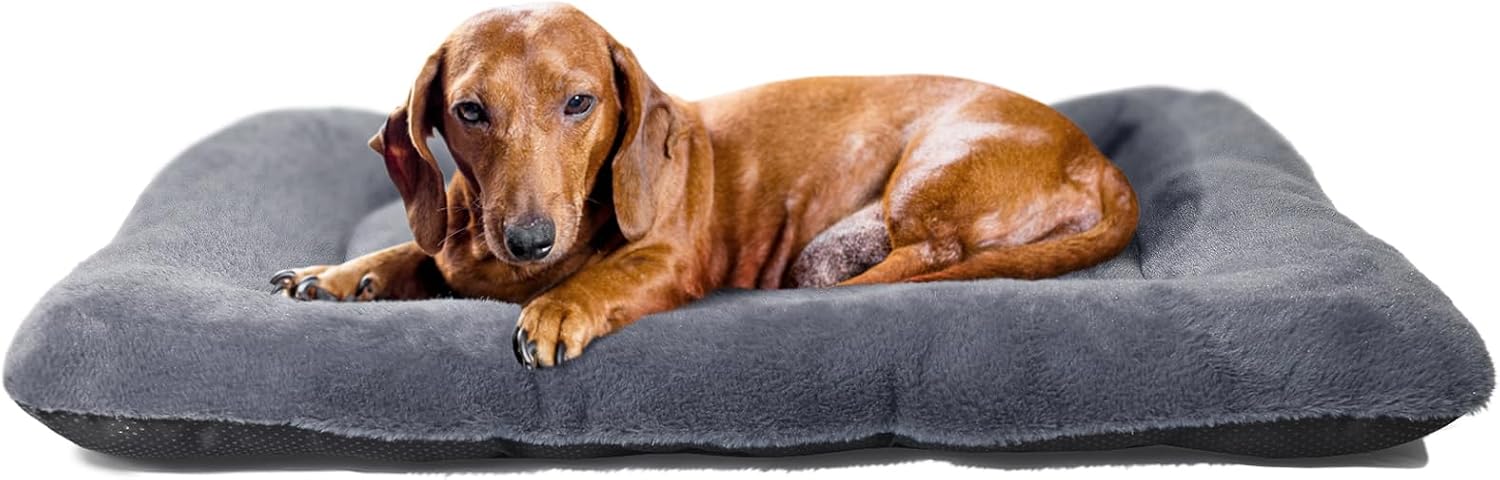
30 Inch Dog Crate Pad Washable Ultra Soft 30 x 19 Dog Bed for Medium Breeds up to 30 lbs, Cozy Kennel Mat for Crates with Anti-Slip Bottom Pet Sleeping Mattress, Dark Grey
Cheap enough to keep in the crate, the car, and on the porch at the same time; the anti-slip bottom stays put on a plastic crate tray
30 x 19 is sized for a dog up to 30 pounds, so this is a puppy pad or a small senior pad, not a grown lab pad
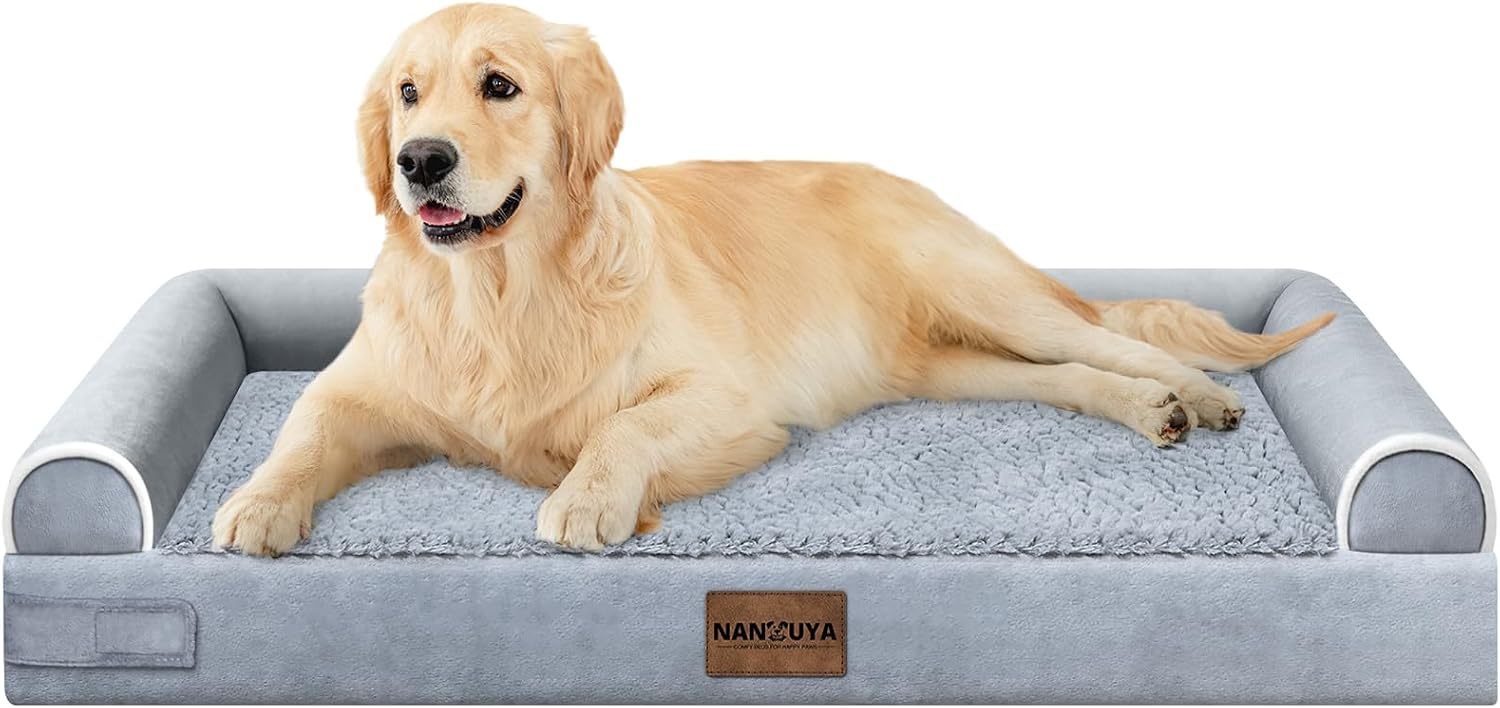
NANUYA Orthopedic Dog Bed for Large Dogs, 36 x 27 Inch, Light Grey
Fits a 36-inch crate without bunching, and the size is at least honest about what it is
36 x 27 is a curl-up footprint; Duke sprawled out wants closer to 48 x 30, so his elbows hang off the edge
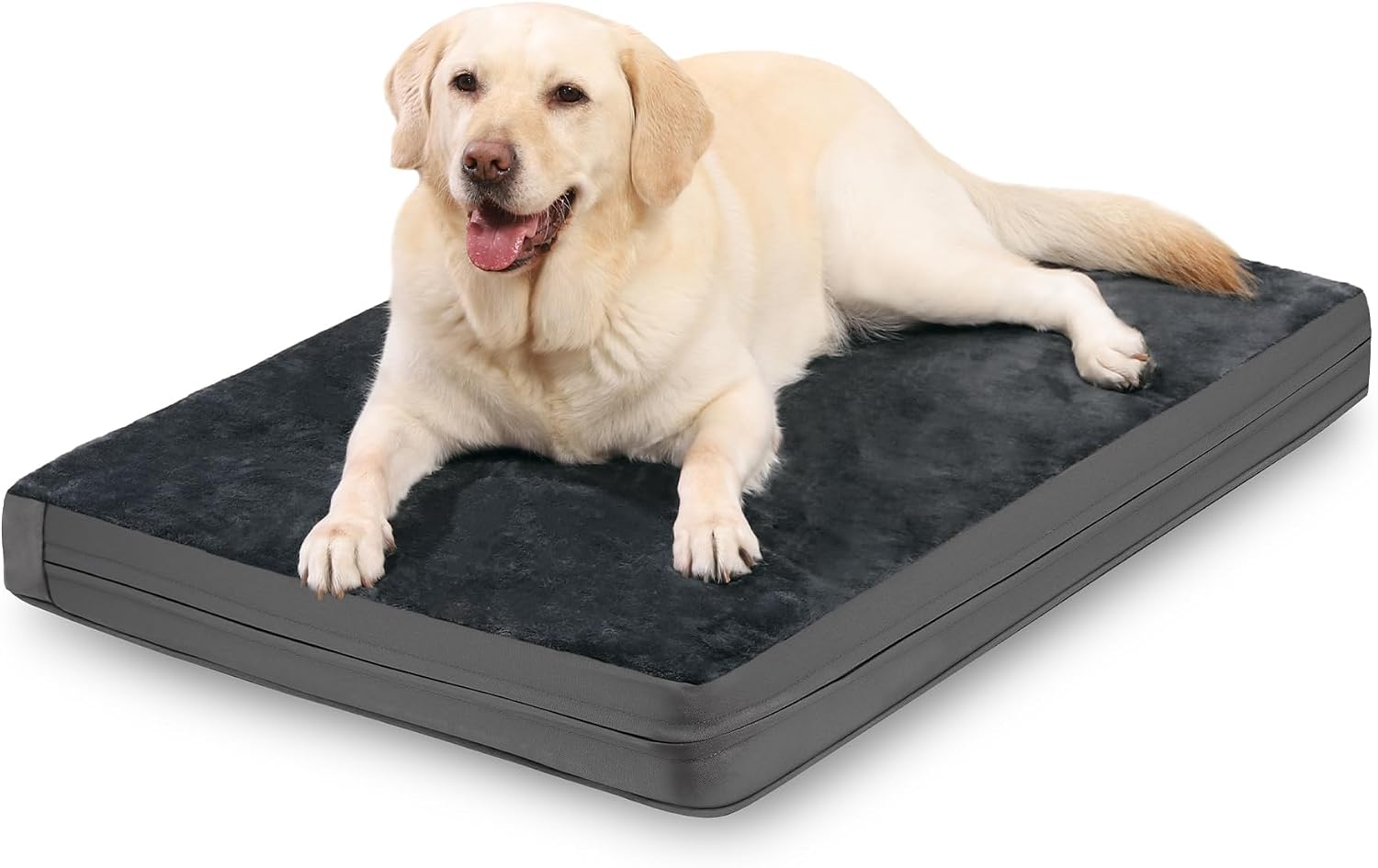
Waterproof Dog Bed Large Sized Dogs, Orthopedic Washable Crate Pad 35"x22"
The waterproof cover is the feature that saves a bed; a wipe down beats a full wash cycle when you live with a senior lab
Still a crate footprint at 35 x 22, and a waterproof layer can sleep warm for a dog who runs hot
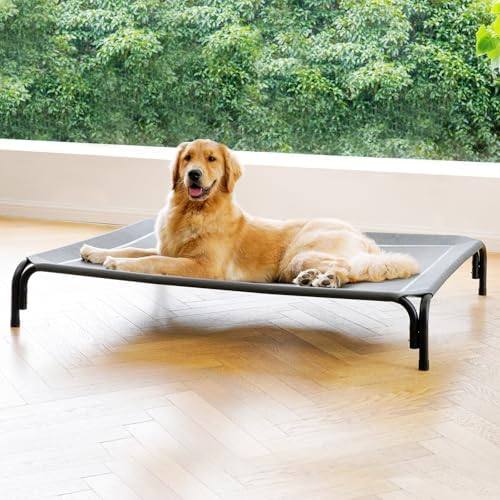
Elevated Dog Bed Raised Outdoor Dog Cot for Large Dogs, Installation Requires No Tools, Frame with Washable Cooling Mesh Anti-Slip Feet, Indoor Pet Bed, Black, 43.3 Inches
Largest footprint in this group, raised off the floor, no tools to assemble, and nothing inside to flatten into a pancake
Zero foam support, which rules it out for Penny's hips, and mesh is chewable if your lab is in the shark phase
Prices and availability were captured from Amazon Creators API and may change.
How I judge a bed for a Labrador
Three things, in the order they kill a bed.
Size honesty. A lab does not curl up, he sprawls. Duke sleeps flat with his legs in four directions and takes up more floor than a twin mattress. The rule in my notebook is nose to tail plus twelve inches of clearance on every side. For a 75-pound lab that works out to roughly 48 by 30 inches of usable sleeping surface. Most beds labeled large are not. A 36 by 27 bed is a crate pad wearing a large tag.
The cover and the zipper. Zippers die first. I have killed fourteen of them in six years and every one failed at the same spot, the corner where the dog digs before he lies down. If the cover does not come off and go into the washing machine, the bed has a short life no matter how good the foam is underneath.
The foam. Memory foam density is measured in pounds per cubic foot. Cheap beds run about 1.5 to 2, and I have cut beds open to confirm it. At this price you are usually buying a fiber layer over a thin slab. That is fine for a crate pad. It is not fine if you are buying the word orthopedic hoping to fix a senior lab's hips. If your dog already limps in the morning, call your vet before you call Amazon.
The crate pad that knows its limits
The 30 Inch Dog Crate Pad says the quiet part out loud in its own listing: medium breeds up to 30 pounds. Duke is 75. Penny is 55. Neither of them fits, and I am not going to pretend otherwise.
So why is it in a comparison about labs? Because a lab is not 75 pounds forever. For the first six months, your puppy is a 20-pound shark in a crate, and this is the pad that belongs under him. It is also the right pad for the car crate, the porch, and the kitchen corner where an older dog has decided to sleep in a tight ball. The anti-slip bottom is the detail that matters more than it sounds, because a pad that slides around a plastic tray gets dug at, and digging is how covers die. The dark grey hides dirt from a wet Ohio winter better than anything light colored.
Ignore the phrase ultra soft. Soft means plush, and plush means stuffing on your living room floor if you leave it with a chewer. Put it in the crate, watch your dog, and pull it the second he starts mouthing a seam.
See the 30 inch crate pad on Amazon
The small bed labeled large
The NANUYA Orthopedic Dog Bed is the one I get asked about most, because it says large and the price is friendly. Read the measurements first: 36 by 27 inches. That is a 36-inch crate pad, and it is a good one for a lab who actually sleeps in a crate. If your dog sleeps loose in the house, 36 by 27 is not large. It is a bed Duke would hang off on three sides.
Where it earns its place: a 55-pound lab who curls, a senior who likes a smaller footprint, and any dog past the shark phase who just needs something soft between his elbows and a hard floor. The light grey will show every muddy paw print, so plan on washing the cover, which is at least the point of a removable cover.
The word orthopedic is doing a lot of work here. At this size and this price, treat it as a crate pad with a comfortable surface, not as joint support. Real joint support is dense foam, and dense foam costs real money. If your lab is under three years old, this bed is a chew toy with a price tag, and I would rather you spend that money on a second chew toy instead.
Check the NANUYA orthopedic bed on Amazon
The waterproof pad, and why it wins this group
If you own a lab over eight years old, you already know why the Waterproof Dog Bed belongs at the top of this list. Senior dogs leak. Puppies have accidents. Winter in Ohio means muddy paws four months a year. A cover you can wipe down with a rag is worth more than any marketing word on the package.
The size is 35 by 22, which is a crate pad, not a floor bed, and it fits a standard 36-inch crate. The cover is washable as well, so the waterproof layer handles the small messes and the washing machine handles the big ones. For Penny, this is the pad that goes in her crate when her hips are bad and she needs a firm, flat surface she can push up from, rather than a plush nest she sinks into and struggles to climb out of.
The trade-off is heat. A waterproof layer traps warmth, and labs run hot. If your dog sleeps on the tile in July, he may sleep on the floor next to this pad in July too. That is a seasonal problem, not a deal breaker.
See the waterproof orthopedic crate pad on Amazon
The elevated cot for the lab who runs hot
The Elevated Dog Bed is the odd one in this group, and the one I recommend most often as a second bed. It is 43.3 inches long, it raises your dog off the floor, and it goes together with no tools. The cooling mesh matters in a house without central air, and it matters even more in a kennel run or on a porch, because airflow underneath a dog is the fastest way to cool him down.
The bigger point for a lab household: there is no foam to flatten and no cover to shred. A cot has nothing inside to eat. That does not make it chew-proof. The mesh is fabric, and a determined two-year-old lab can put a tooth through it. But the failure mode is a hole, not a snowstorm of foam crumbs across your kitchen.
Where it fails is joint support. Penny has hip dysplasia, and a stiff eleven-year-old lab stepping up onto a raised cot is a dog who may skip the bed entirely and lie on the floor. No foam means no cushioning for elbows either. For a young, healthy lab in summer, this is the best thirty dollars in the article. For a senior with bad hips, it is furniture he will ignore.
See the elevated dog cot on Amazon
Cost per day is the only honest comparison
Here is the arithmetic I use. Say a bed costs a hundred dollars and lasts three years. That is about nine cents a day. Now say a cheap bed costs a quarter of that and lasts four months before the foam pancakes or the zipper goes. That is more per day than the expensive bed, and you paid it twice because you had to buy a replacement.
Apply that logic to this group honestly. A crate pad that lives in a crate, gets washed monthly, and stays under a dog who does not chew it can last a year or more, and that is cheap living. The same pad handed to a two-year-old lab as a floor bed is measured in weeks. Same product, completely different cost per day, and the difference is your dog's age and jaw, not the listing.
One more thing about this group: a crate pad is not competing with a serious orthopedic bed. It is a different tool. You do not replace a mattress with a sleeping bag, and you do not replace a dense foam bed with a twenty-dollar pad. You use both, in different rooms, for different jobs.
Sizing: what large really means for a lab
Measure your dog, not the label. Nose to tail, then add twelve inches. Duke measures about 36 inches nose to tail, so his sprawl bed needs to be roughly 48 by 30. Penny measures about 32 inches and sleeps curled against a wall, so a 36 by 27 bed genuinely fits her. Same breed, two different answers.
For crate pads, match the pad to the crate, not to the dog. A 36-inch crate takes a pad in the 35 to 36 by 22 to 23 range. Buy the pad that fits the tray, because a pad that bunches at one end is a pad your dog will dig at, and digging is what kills covers. If your lab is still growing, buy for the crate you own today and accept that you will buy again in a year.
The trade-offs nobody puts on the listing
None of these beds is chew-proof, and any listing that implies otherwise for a product in this price range is selling you a story. I have lived the lasted a week reviews.
Orthopedic is a word, not a specification. Ask for density or ask for nothing.
A waterproof cover sleeps warm. A cooling mesh cot has no cushioning. You are always trading one comfort for another, and the right trade depends on whether your lab is nine months old or nine years old.
Elevated cots wobble on uneven ground and the mesh is the chew point. Crate pads are only as good as the crate they sit in, because a pad on an open floor slides, bunches, and gets dug at.
What I would buy, in order
For a lab household with one dog and a normal budget, the waterproof crate pad first, because it handles the messes that actually happen. The elevated cot second, for summer and for the dog who destroys foam. The 36 by 27 bed third, for the lab who sleeps in a crate or curls in a corner. The 30 by 19 pad last, and only if you have a puppy or a small senior who needs a soft spot.
If your lab is under three years old, buy the cheapest thing on this list and put your real money into a chew-proof bed when he grows out of the shark phase. That is not a knock on these four. It is just how labs work.
The last word
I keep a notebook of every bed that comes through this house, and the pattern has never changed. The bed that lasts is the bed that matches the dog in front of you, not the dog in the marketing photo. Measure your lab, check whether he curls or sprawls, decide whether you are solving for a wet senior or a bored puppy, and then buy the cheapest thing that solves that specific problem. Do that and you will skip the sixty-dollar mistake that most lab owners make exactly once.