
I spent ten years as a dog trainer before I started writing about gear full time, and most of that decade was spent around labs: hunting dogs, obedience dogs, and a few that were simply smarter than their owners. Today I live with Duke, a 75 pound black lab who treats every seam as a personal challenge, and Penny, an 11 year old rescue with hip dysplasia who has taught me more about foam than any spec sheet ever did. Shopping for large dog beds and heating pads for a labrador is a different exercise than shopping for a beagle, because a lab brings two problems to every purchase: weight and teeth. This comparison covers the four items I would actually put in a lab household, what each one is for, and where each one fails.
Short answer first: if your lab is a senior, the GOLOPET Extra Large Dog Heating Pad is the piece I would start with, and if your lab is under three and still in the shark phase, the Drymate crate liner is the only item on this list that survives contact with a determined puppy. Everything else depends on which lab you own, and that is the whole problem with most buying advice.
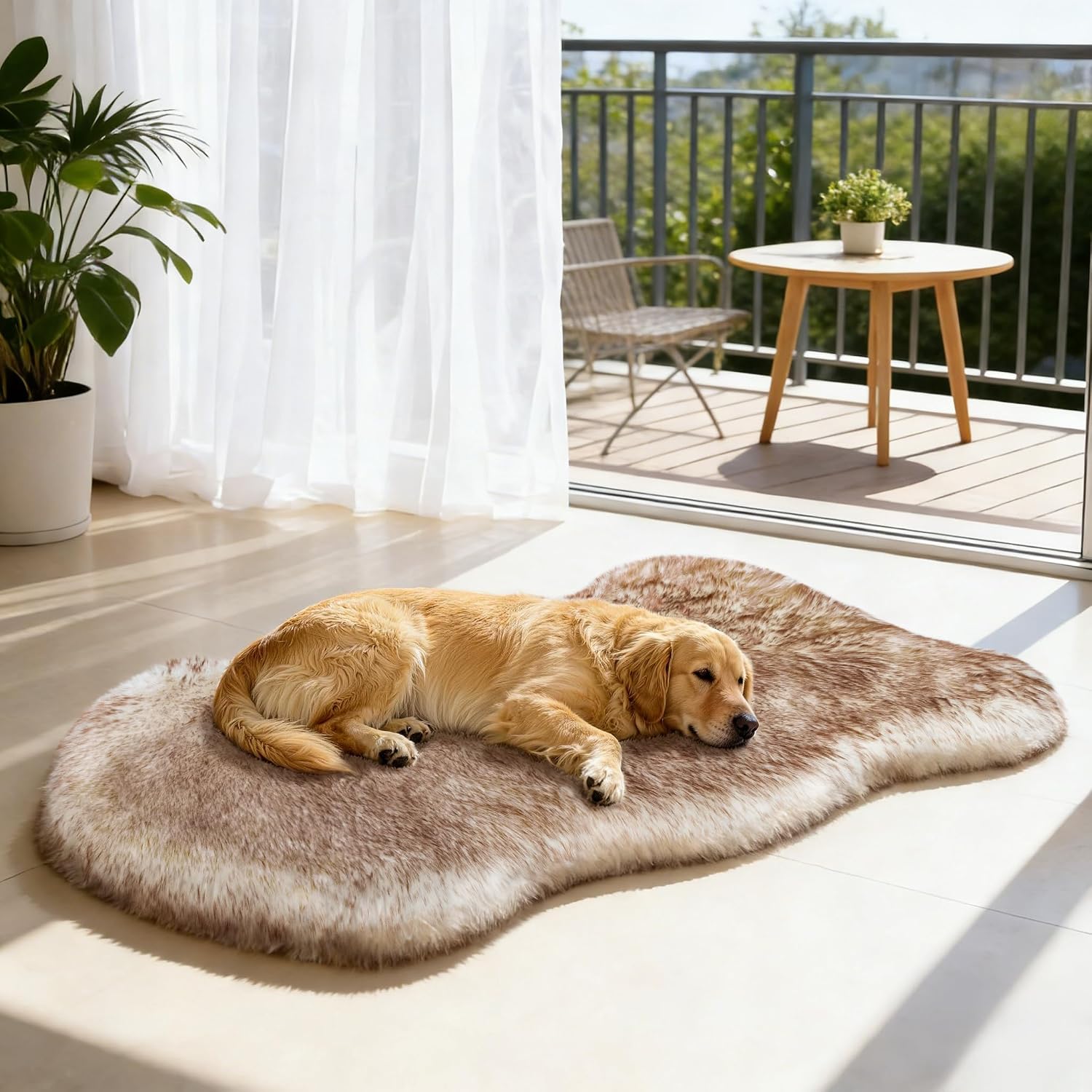
Faux Fur Dog Bed Rug for Large Dogs, Orthopedic Thick Foam 50"x30"x3"
Honest 50 by 30 footprint with 3 inches of foam, a real bed for a lab who sprawls
No foam density given, and faux fur is a magnet for a dog under two
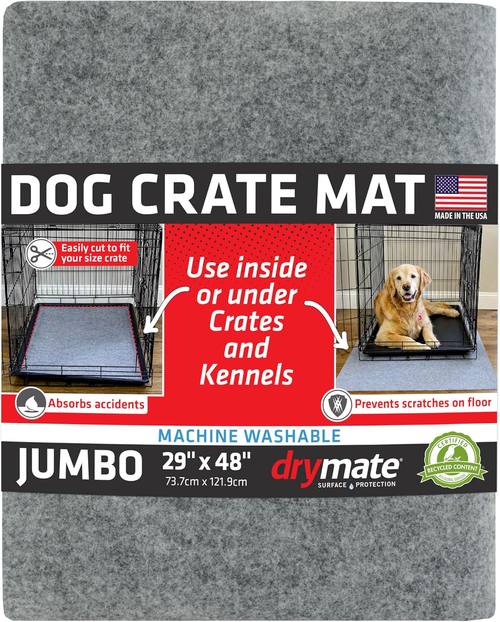
Drymate Dog Crate Mat Liner, Absorbs Urine, Waterproof, Non-Slip, Washable Puppy Pee Pad, Thin Cut to Fit Design (LGrey)(29"x48")
Waterproof, non-slip, washable, cut to fit, and the cheapest insurance in this list
It is a liner, not a bed. Thin by design means zero joint support
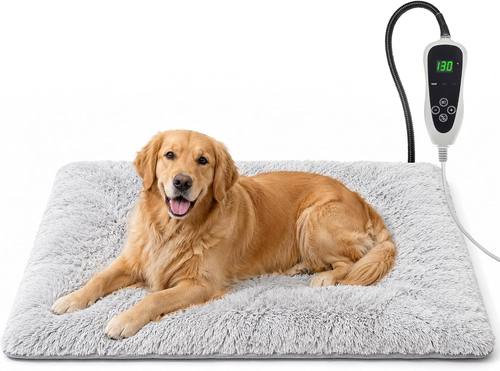
GOLOPET Extra Large Dog Heating Pad, 47x30 In with Smart Thermostat Switch and Power Line Protection Tube, Waterproof Pet Heating Pad with Long Velvet Cloth Cover
Widest heated surface here, waterproof, thermostat switch, and dual MET and UL certification
Heat is comfort, not orthopedic support, and every cord is a chew risk
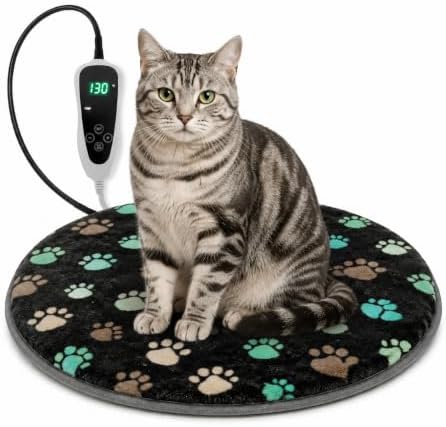
GOLOPET Large Dog Heating Pad 36x24 in with Normally Open Function
Same brand and build in a size that fits a 36 inch crate and a smaller lab
36 by 24 is a stretch for a 75 pound lab sprawled flat, and no thermostat switch is listed
Prices and availability were captured from Amazon Creators API and may change.
How I judge anything that goes under a lab
Every item that comes into this house gets the same treatment. It goes in the notebook, it gets measured with a tape, and it stays until it fails or until a year passes. I care about three numbers.
The first is foam density. Memory foam is measured in pounds per cubic foot, and cheap foam runs 1.5 to 2. I have cut beds open to check. A bed without a density spec is a bed I assume will compress, and compression is what turns a bed into a pancake.
The second is the chew timeline, which is how long a material survives Duke measured in weeks, not the years the marketing copy claims. I have seen the "lasted a week" reviews. I have lived them.
The third is cost per day, which is price divided by usable days. A cheap bed that dies in four months costs more than an expensive bed that lasts three years. That is arithmetic, not opinion.
I want to say one thing up front: none of these four items is a chew proof bed, and none of them claims to be. They are the supporting cast around a bed. The liner that saves the crate floor, the heat that helps an old lab get moving in the morning, and the foam that gives a sprawled out dog something honest to lie on.
The crate liner: cheap insurance for a puppy
The Drymate Dog Crate Mat Liner is not a bed and it is not pretending to be one. It is a waterproof, non-slip, washable liner designed to go under a crate tray or under a bed to protect floors, and it comes in a 29 by 48 inch size with a cut to fit design. It is made in the USA.
For a lab puppy, that is exactly what belongs under the dog. Your puppy will have accidents, and you will not want to be scrubbing a floor at six in the morning in February. It absorbs urine, the backing keeps it from sliding around on a hard floor, and it goes in the washing machine.
Here is the honest trade off. Thin means zero joint support. It will not cushion Penny's hips, and it adds nothing for a 75 pound lab lying on hardwood. What it does is protect the floor and survive being washed, and in the first year of a dog's life those two things matter more than people admit. This is the one item in the comparison where cheap is the correct answer.
Heating pads: what they are for
Two GOLOPET pads are in this comparison, and the difference between them comes down to size and control.
The Extra Large model measures 47 by 30 inches, which makes it the widest heated surface in this group. It has a smart thermostat switch, a power line protection tube, a waterproof build, and a long velvet cloth cover, and it is described as having obtained MET and UL dual certification. That certification is the part I actually care about, because a heating pad that plugs in and sits under a 75 pound dog is an electrical device first and a comfort product second. Certification from a testing lab is not marketing language, and I will take it over any adjective on a box.
The smaller pad measures 36 by 24 inches and is listed with a normally open function. That is a control detail rather than a comfort feature, so if the way the unit behaves on power matters to your setup, ask the seller before you buy. Size wise, 36 by 24 is the pad I would put in a 36 inch crate, and it fits a smaller lab or a rescue who sleeps curled. Penny is 55 pounds and sleeps more tucked than Duke does, so a 36 by 24 surface covers her.
What heat does not do is fix hips. My vet, Dr. Alvarez, has told me she sees more joint problems in labs than in any other breed she treats. A warm surface helps a stiff dog get up in the morning, and that is worth something real, but heat is a comfort tool and not a treatment. I am a trainer, not a vet, and I will not play one. If your lab is limping, that is a conversation for your veterinarian, and the pad is what you put down after the appointment.
What heat also does not do is survive a chewer. Every heated pad has a cord. Duke has chewed through a lamp cord, two phone chargers, and one expensive set of earbuds. If your lab is under three, run the pad only while you are in the room, or skip heat entirely until the shark phase ends.
The foam bed: footprint and the starfish test
The Faux Fur Dog Bed Rug is the closest thing here to an actual bed. It measures 50 by 30 inches with 3 inches of orthopedic thick foam and a faux fur top, and the dimensions are stated in inches, which already puts it ahead of half the category.
Labs do not curl up. A 75 pound lab sprawls like a starfish, legs in every direction, and he needs the full length of his body plus room to stretch. My rule is nose to tail plus 12 inches. Fifty inches of length covers Duke with room to spare. The 30 inch width is where it gets tight, because a sprawled lab with his legs out is wider than his body measurement suggests.
The foam is the question mark. The listing says orthopedic thick foam and gives a real 3 inch height, but there is no density figure in pounds per cubic foot, and density is the number that decides whether a bed is still a bed in 18 months or a pancake with a fur cover. When I cannot find a density spec, I assume 1.5 to 2 pound foam and I plan for compression. That does not make this a bad buy. It makes it a bed I would expect to replace, and that changes the cost per day math.
The faux fur top is a separate consideration. Plush is a chew magnet for a lab under two, and a chewed plush cover means vacuuming foam out of a carpet for a week. My rule on plush is simple: not until the dog is past the phase where everything goes in the mouth.
Sizing honesty
"Large" is the most abused word in this category. I have measured beds labeled large that fit a 40 pound dog, and I have watched a 75 pound lab hang off the end of one. Read the actual dimensions, measure your dog nose to tail while he is lying down, and add 12 inches. For Duke that is 50 inches minimum. For Penny it is 44. If a product page does not give you both dimensions in inches, close the tab.
The crate liner follows a different rule, because 29 by 48 is a floor protection measurement rather than a sleeping measurement. Measure the crate tray, then cut to fit.
Cost per day, and the $60 mistake
Every lab owner makes the $60 mistake once. You buy the cheap bed, the foam flattens in four months, the cover splits at the zipper, and you buy another one. Two years and three beds later you have spent $180 and you still do not own a bed. The smart ones only make it once.
The math is not complicated. Price divided by usable days. A cheap bed that lasts 120 days costs about 50 cents a day. A bed that costs three times as much and lasts three years costs a fraction of that per day, and it is still a bed at the end of it. Cheap foam is the most expensive thing in this category, and I have cut enough beds open to say that with confidence.
The liner is the exception. It costs very little, it does a job no bed does, and there is no foam in it to flatten. That is the one place where the cheap option is also the durable option.
Which one for which lab
Senior lab with hip trouble. Start with the extra large GOLOPET heating pad for mornings, and pair it with a dense foam bed for the rest of the day. Heat helps a stiff dog move. Foam is what supports the joints while she rests.
Lab under three. The Drymate liner and a cheap bed. Do not spend real money until the chewing slows down, because every dollar you spend before age three is tuition. A puppy is a chewer by definition.
Adult lab past the chewing phase who sprawls. The foam bed rug is the honest option at this price point, with the caveat that you should expect to replace it when the foam compresses. If you are spending more than this, find a density spec first.
Crate trained puppy. Liner under the tray, thin mat inside the crate, and no cords anywhere near it.
What I'm testing next
I have chew proof covers for winter 2026 on the bench, along with a running tally of which zippers survive Duke, because zippers die before fabric does. I have broken 14 of them across the beds I have owned. Penny's response to different foam densities is going into a senior dog guide, and that one will have more measurements than opinions, because that is the only way I know how to write about a dog I love.