Related: How to Measure Your Lab for a Bed Without Guessing
I have two labs and a notebook. Duke is 75 pounds of black lab who treats every soft surface as a chew toy with a price tag. Penny is 55 pounds, 11 years old, a rescue with hip dysplasia who needs foam that does not quit by month four. Between the two of them I have retired enough beds that the word "indestructible" stopped meaning anything to me around bed number nine.
That is why this guide looks the way it does. Labrador dog beds are not one product. A bed for a two-year-old lab in the shark phase and a bed for an 11-year-old with bad hips are two different purchases, and the size on the box rarely matches the dog in your living room. Ten years as a trainer taught me to read the dog before the label, and four years of writing reviews taught me to read the tape measure before either one.
So here are four beds, sorted by what they actually solve: sprawl space, crate duty, curling up, and senior hips. One table at the end if you want the fast version. No prices printed here, because listings move and my numbers would be stale by the time you read this, so check the current Amazon price on each one before you commit.
What I check before a bed earns floor space
Four things, in this order.
The footprint. Measure your lab nose to tail while he is stretched out flat, then add 12 inches. Labs sleep like starfish, legs everywhere, and a bed that fits a curled-up spaniel is a bed your lab will hang off the side of. I have watched Duke slide off a "large" bed more times than I can count. Large on a product page is a marketing word. Forty inches is a measurement.
The foam, if there is foam. Memory foam is measured in pounds per cubic foot. Cheap beds run light and turn into pancakes in a season or two, and a pancake under a lab is a hip problem waiting to happen. I have cut beds open to check. If a listing will not tell you the density, that silence is the answer.
The chew timeline. How long does this material survive a determined 75-pound lab, measured in weeks or months? Plush fabric loses that fight. Ballistic nylon and woven decking win it. If your lab is under three, assume he is a chewer by definition and buy accordingly.
The cover and the zipper. Zippers die first. I have tested enough of them to say that with confidence. A washable cover is only washable if the zipper survives wash number three.
Best Overall for a Full-Grown Lab: Simple Trending Elevated Dog Bed for Large Dogs with Bolsters, Grey
An elevated cot is the shape I reach for first when the dog in question is a full-grown lab who runs hot and sleeps flat. There is no foam slab to pancake and no loose stuffing to pull out through a seam, which matters if your lab opens seams for sport. Air moving under the deck helps a dog who spends July flattened against the kitchen tile.
The bolsters are the detail that separates this one from a bare cot. They give a lab something to rest his head on, and a raised rim is also where a lot of dogs park their chin when they are watching the door. The grey cover is the kind of color that hides field mud, which is not a small thing in a hunting household.
What I would check before ordering: the weight rating on the frame, whether the deck fabric is replaceable on its own, and whether the bolsters are sewn on or removable. A sewn bolster is one more seam, and seams are where chewers start. Then measure. If the deck is shorter than your lab nose to tail plus 12 inches, he will hang over the edge and the whole point of a cot disappears.
The honest downside: a cot gives you airflow and chew resistance, not joint cushioning. This is not the bed for a lab with hip dysplasia. It is the bed for the lab who destroys everything else.
Best Crate Companion: Paw Inspired Washable Padded Crate Mats for Dogs, Gray, 41x28 Inch
This is a mat, not a bed, and the difference matters. It is padded and washable and it is sized for a crate pan, which makes it the piece of gear that keeps a crated lab off bare plastic. If your lab is crate trained, or you are working through crate training with a young dog, this is the layer that goes in first.
The 41 by 28 inch size is the part to pay attention to. That is a standard 42 inch crate pan, so measure your crate before you order rather than after. A mat that bunches at one end is a mat that gets pawed into a corner and then chewed at the corner. Flat and snug beats oversized every time.
Chew reality check: a determined lab can open a mat seam, and padding is padding. For a puppy in the shark phase this is the right purchase, because it costs less than a real bed and it survives the washing machine. For a dog who has already eaten his way through two beds, a mat is a snack with a border.
The trade is comfort. There is not much foam here, so it will not do anything for an older lab's joints. Use it for crate duty, for travel, or as the bottom layer under a better bed.
Best Secondary Bed: Best Pet Supplies Round Calming Dog Bed for Small, Medium & Large Dogs, Plush Donut Cuddler with Raised Rim, Pink, 30 x 30 x 8
I will be straight with you, because that is the job. A 30 inch round donut is not the main bed for a 75 pound male lab. My rule is nose to tail plus 12 inches, and 30 inches does not get there. Duke would use half of this bed and the floor would get the rest.
Now the part where it earns a place anyway. Some labs do curl. Penny curls in front of the fireplace in January, and a donut with a raised rim gives her head and neck somewhere to rest instead of the hardwood. The anti-slip bottom keeps it from skating across a tile floor when she stands up, and the cover is washable, which is the first thing I look for in any bed that lives in a family room.
So the honest verdict is a role, not a ranking. This is a good secondary bed for a lab who curls, a fine main bed for a smaller female lab or an adolescent who has not finished filling out, and a reasonable first bed for a puppy if you accept that a plush bed in a chewer's house has a short life. It is also a pink colorway, so check the listing for the other color options if pink is not the plan.
What it is not: a bed for the lab who destroys things, and not a bed for a senior with hip pain. Plush does not support hips. It never has.
Best for a Senior Lab: WNPETHOME Orthopedic Waterproof Extra Large Senior Dogs Bed for Comfy Sleep
This is the category where I stop doing arithmetic and start doing right by the dog. Penny's hips are the reason I own a tape measure at all, and my vet has told me more than once that she sees more joint problems in labs than any other breed. A senior lab carrying 70 or 80 pounds needs foam that holds its shape through the night, not a cushion that bottoms out by 2 a.m.
Three things make this the senior pick. Orthopedic foam is the headline, and the extra large footprint is what a sprawler actually needs when his joints are stiff and he cannot curl tight anymore. Waterproof matters more than people expect: older dogs leak, and a waterproof cover means the foam underneath does not become the problem. The washable cover is the third piece, because a bed you cannot wash is a bed that smells like a kennel by March.
What I would verify in the listing before buying: the foam thickness, whether the waterproof layer is the outer cover alone or a liner inside it, and how the zipper is built. Zippers die first. That is not an opinion, it is a repair log.
The caveat is the same one I give for every soft bed on this page. Orthopedic foam and a determined two-year-old lab do not coexist. This is a bed for a dog past the shark phase, or for a household willing to supervise. Buy it for the senior, not for the puppy.
How the four compare
Same four beds, sorted by what they solve. Sizing notes are the ones I would check with a tape measure in my own hallway, not the numbers on the box.
| Bed | Style | Sizing reality | Best for | Cost |
|---|---|---|---|---|
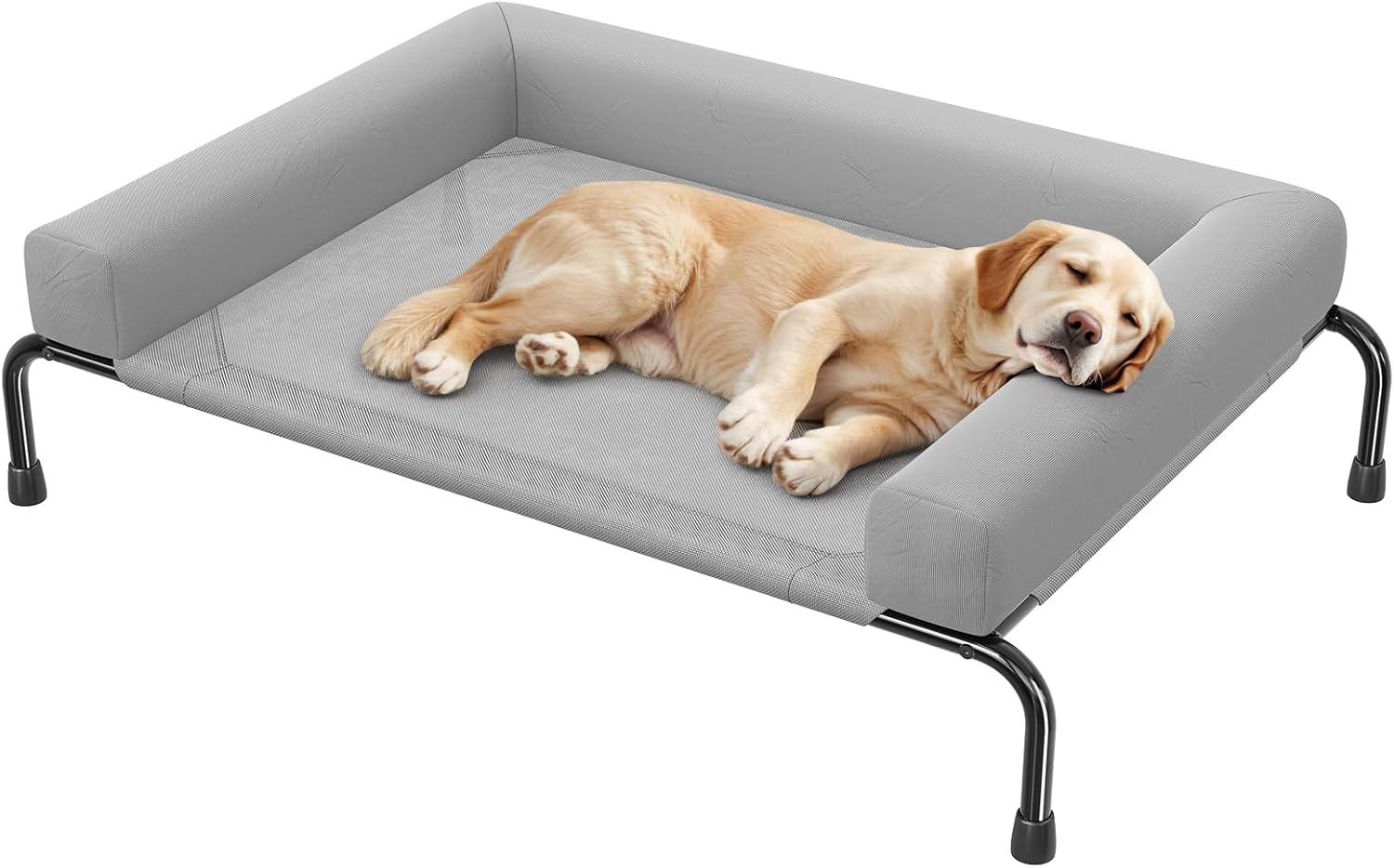 Visit on Amazon → Simple Trending Elevated Dog Bed with Bolsters |
Elevated cot with raised bolsters | Check deck length against nose to tail plus 12 inches | Full-grown labs, hot sleepers, mild chewers | Check current Amazon price |
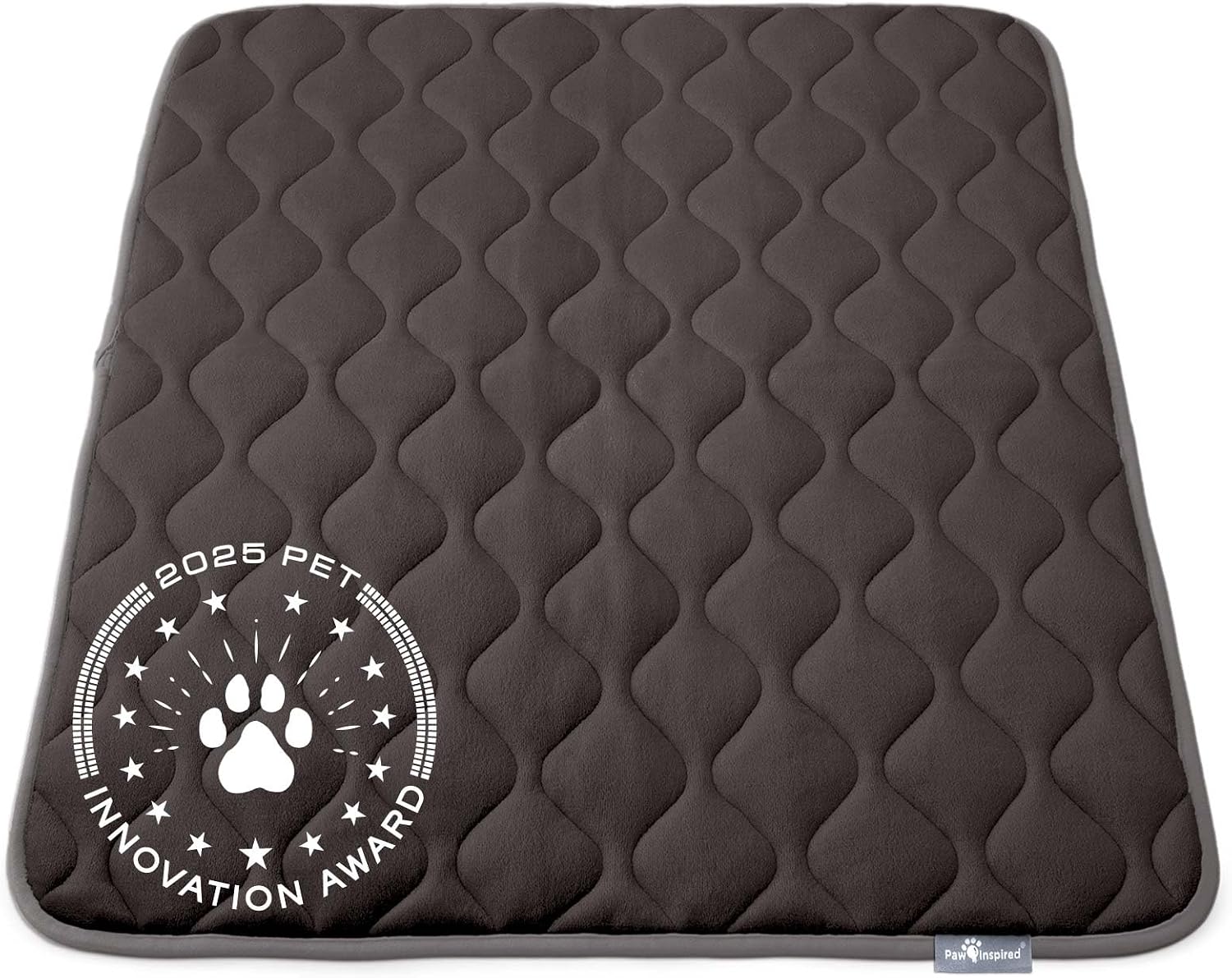 Visit on Amazon → Paw Inspired Washable Padded Crate Mat |
Flat padded crate mat | 41 x 28 inches, sized to a 42 inch crate pan | Crate duty, travel, puppies, easy washing | Check current Amazon price |
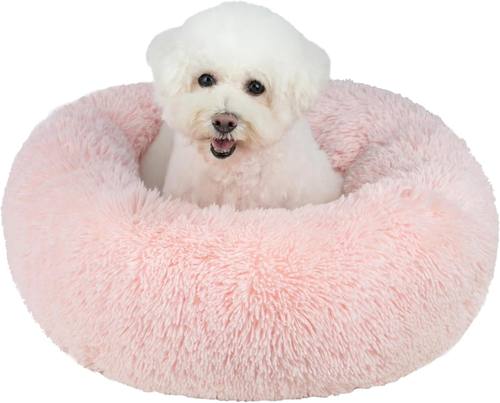 Visit on Amazon → Best Pet Supplies Round Calming Dog Bed |
Round plush cuddler, 30 x 30 x 8 | A secondary bed for a big male lab, a main bed for a smaller lab | Curlers, smaller labs, first bed for a puppy | Check current Amazon price |
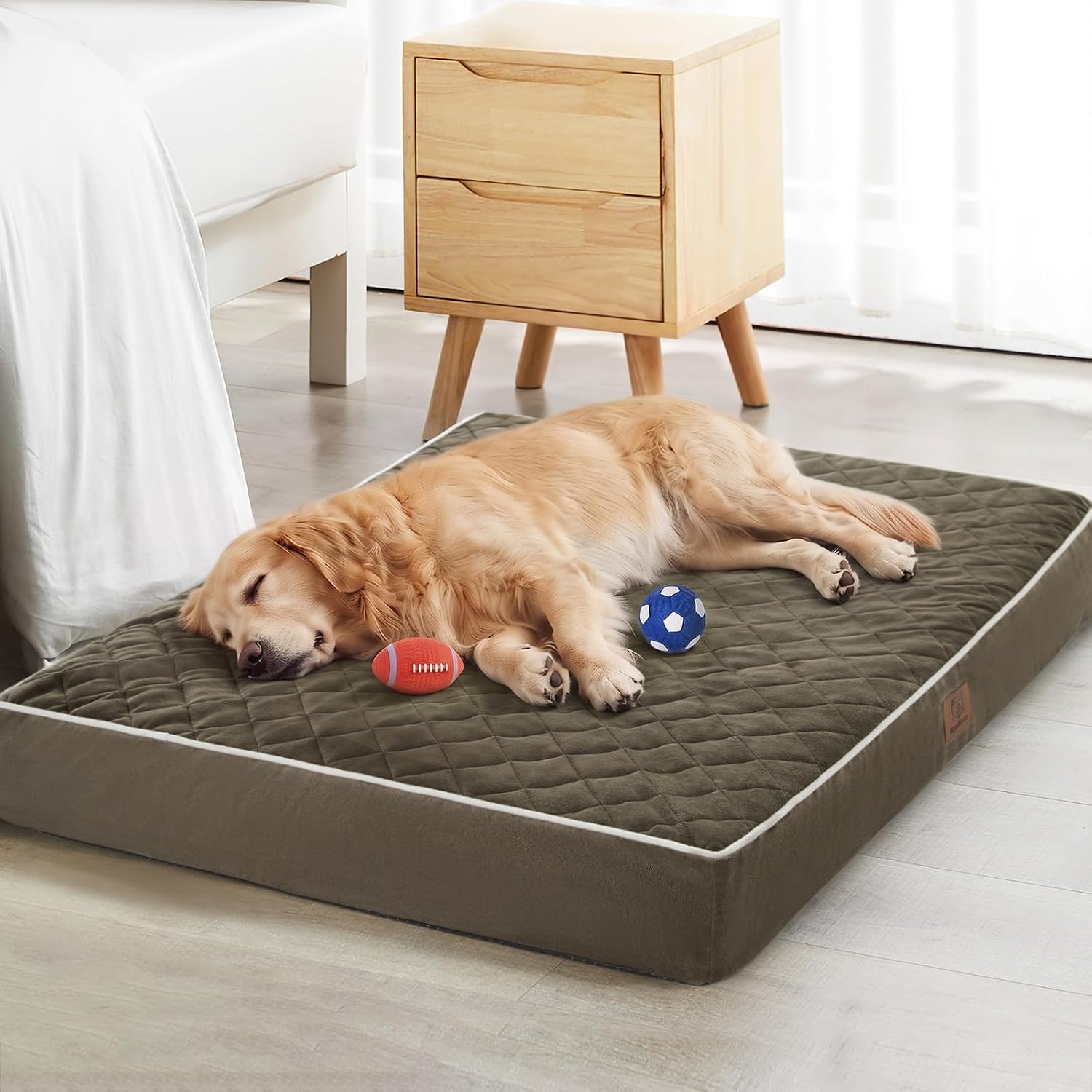 Visit on Amazon → WNPETHOME Orthopedic Waterproof Senior Bed |
Orthopedic foam, waterproof, extra large | XL footprint suits a lab who sleeps flat | Senior labs, hip support, accident-prone sleepers | Check current Amazon price |
Should you buy the Simple Trending elevated bed?
If your lab is full-grown, runs hot, and has a history of opening seams, yes. It is the shape that survives a chewer best because there is nothing inside it to pull out. Add up what you have spent replacing destroyed beds and the math stops being close.
Skip it if your lab is a senior with sore hips. Airflow is not cushioning, and a cot will not help a stiff joint in the morning.
Should you buy the Paw Inspired crate mat?
Yes if you have a crate and a dog who sleeps in it. It is the least expensive way to make a crate pan livable, and it goes in the washing machine, which is the whole point. Measure your pan first. Snug beats oversized.
Should you buy the calming donut bed?
Yes, as a second bed, for a lab who curls, or for a smaller lab who fits a 30 inch round. No, as the only bed for a 75 pound male who sleeps like a starfish. And no if your lab is a chewer, because plush loses that fight in a week.
Should you buy the WNPETHOME orthopedic bed?
If you have a senior lab, this is the one place I would spend without arguing. Dense foam, waterproof cover, extra large footprint, and a washable surface. The money you save on cheap beds that flatten is the money you should be putting here instead.
The bottom line for Labrador dog beds
Match the bed to the phase, not to the price tag. A puppy needs a cheap crate mat he can destroy without it hurting. A two-year-old needs an elevated cot with nothing inside to eat. A curling lab needs a donut as a second bed. A senior with bad hips needs orthopedic foam and a waterproof cover, and that is the purchase where I would not compromise.
Measure your dog nose to tail, add 12 inches, and write the number in your phone before you open a listing. That one habit has saved me more money than every review I have ever read, including mine.