Most Labrador dog bed comparison articles make the same mistake. They line up four beds as if they were four versions of the same thing, then crown a winner. These four products are not the same thing. Two are beds, one is a crate liner built to catch pee, and one is a heating pad. Putting them in one table is a little like comparing a couch, a tarp, a fan, and a radiator, then asking which one is the best couch.
I am Mike. I spent ten years as a trainer working with hunting labs and obedience dogs before I started writing about gear full time. There are two labradors asleep behind me right now. Duke is 75 pounds, five years old, black, and the reason I keep a tape measure and a repair kit within arm's reach. Penny is 55 pounds, 11 years old, a rescue with hip dysplasia, and she has taught me more about foam than any mattress salesman ever could. I have been through more than 40 beds. I keep a notebook with foam sink depth, zipper failures, wash counts, and chew timelines.
So when I put four products in one table, I want you to know what each one is for, because that is the only comparison that matters when you own a lab.
The short answer: the Bedsure orthopedic bed is the only actual bed in this group and the one to start with for a lab who sleeps like a starfish. The Drymate liner is the smartest purchase here for a puppy or an older lab with accidents. The GGIB cooling mat earns its spot in a July heat wave. The GOLOPET heating pad is for stiff senior hips, and it comes with two questions you need to answer before you plug it in.
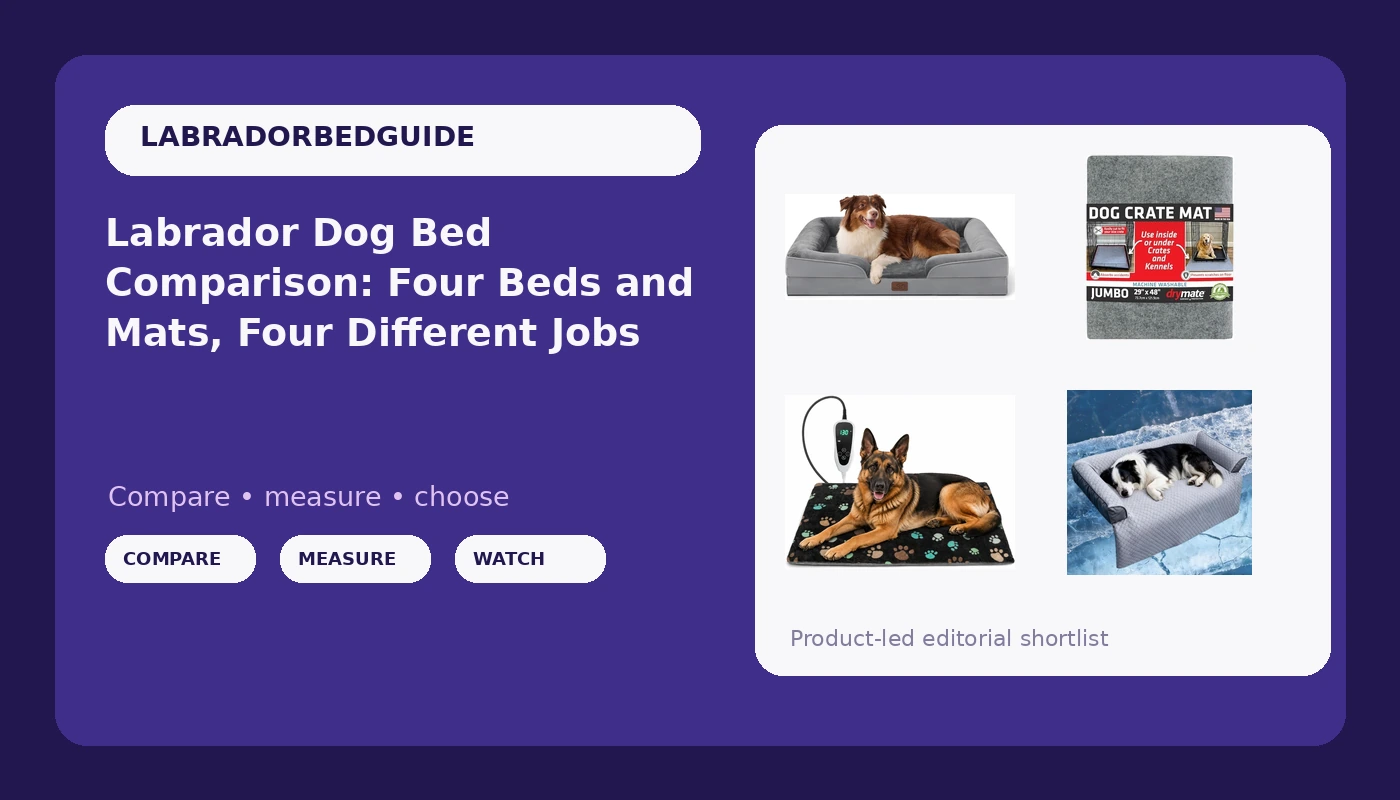
Bedsure Orthopedic Dog Bed Large Sized Dog Washable Visit on Amazon
The only real bed of the four, with orthopedic foam, a washable cover, and a flat shape that suits how a lab actually sleeps
Foam density is not published, and light foam pancakes under a 75 pound lab; not a bed for a chewer under three
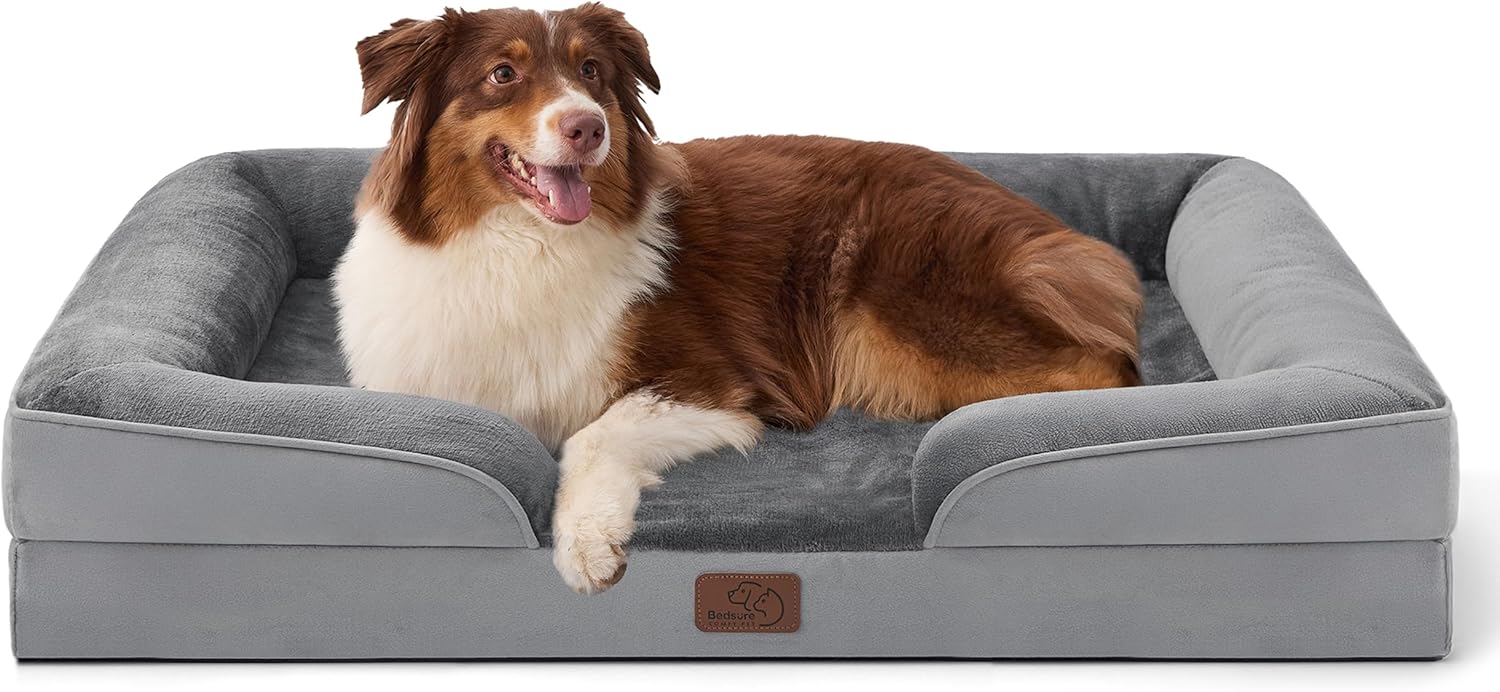
Drymate Dog Crate Mat Liner, Waterproof, Non-Slip, Cut to Fit (29"x48") Visit on Amazon
Absorbs urine, waterproof, non-slip, machine washable, and cut to fit a crate pan; the cheapest way to protect a floor or tray from a puppy
Thin by design. It is a liner, not a mattress, and a determined lab can still chew fabric
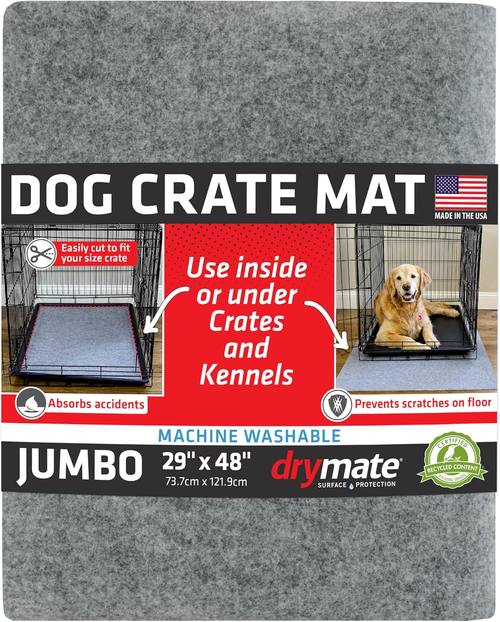
GGIB Cooling Dog Bed Mat with Bolster Pillow, Large Visit on Amazon
Cooling mat plus bolster, washable, and it doubles as a couch cover that keeps lab hair and drool off the furniture
The cooling mechanism is not defined, and the bolster is a headrest rather than structure
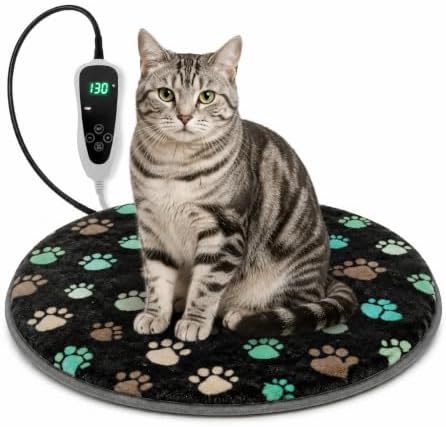
GOLOPET Large Dog Heating Pad 36x24 in Visit on Amazon
A 36 by 24 inch heated surface, which is real room for a stiff senior lab rather than a token warm patch
Cord management and the normally open function need reading before use, and it is not a bed on its own
Prices and availability were captured from Amazon Creators API and may change.
One note on what this table is and is not. Everything below comes from the product listings and from years of living with labs, not from a laboratory test I did not run. Where a claim comes from the listing, I say so. Where it comes from my own house, I say that too.
What each of these four is actually for
The Bedsure orthopedic bed: the only real bed in the group
The listing says orthopedic, large, and washable, and that is an honest summary of what you get: a foam bed with a cover you can put in a machine. For a lab, the washable part is not a bonus, it is a requirement. Labs drool, shed, and roll in things they should not. A cover that survives twenty washes is worth more than a fancy gusset. Zippers die before foam does in my notebook, so look at how the cover opens and closes before you fall in love with a color.
The word orthopedic is where I slow down. Orthopedic does not come with a density number, and density is the whole game with foam. I have cut open beds in this price band and found the light stuff, the 1.5 to 2 pound foam that pancakes in a season under a dog Duke's size. That is how you get a pancake, and a pancake is not a bed. If a product will not tell you its foam density in pounds per cubic foot, assume it is the light stuff and set your expectations to match.
Who is this for? The lab past the shark phase, meaning the chewing years that run to about three, or the adult who never chewed anything but dinner. If your lab is under three, this bed is tuition, not furniture. Buy it knowing that.
The Drymate crate liner: a floor saver, not a mattress
Start with what it is not. This is not a bed, and nobody at Drymate pretends otherwise. It is a 29 by 48 inch liner that absorbs urine, has a waterproof backing and a non-slip base, goes in the washing machine, and can be cut to fit a crate pan. The job is protection: the crate tray, the car seat, the floor under the water bowl, the corner where a puppy is still figuring out the schedule.
For a puppy, this is the right purchase and an orthopedic bed is the wrong one. Every lab owner makes the cheap-bed mistake once. A liner plus an inexpensive crate pad is a smarter first setup, because the liner is the item that saves your floor and your patience, and if the puppy shreds it you are out a liner instead of a bed.
The limit is obvious once you touch it. It is thin by design, so a lab sleeping directly on it is sleeping on a pad over a hard pan. That is fine for crate training and terrible as a primary bed for an 11-year-old with bad hips. It is also fabric, not armor. A bored lab can chew it. The difference is that a chewed liner is an inconvenience and a chewed orthopedic bed is a loss.
The GGIB cooling mat: for the lab who sleeps like a starfish in July
Black labs run hot. In an Ohio July, Duke abandons every soft surface in the house and stretches out flat on the kitchen tile, legs everywhere, taking up more floor than a lab should be able to. A cooling mat gives him a designated cool spot that is not the middle of the hallway where I trip over him at 6 a.m.
The bolster pillow is worth understanding before you buy. For a lab who sleeps like a starfish, a bolster is mostly a headrest and a place to lean, not a wall to curl against. Donut beds are a joke for labs, because a 75 pound lab does not curl up. So read "bolster" as pillow, not as structure.
Cooling is the word I would question. "Cooling" covers everything from a phase change gel to a thin breathable cover. If the listing does not name the mechanism, treat it as a breathable mat that stays cooler than a foam bed, not as air conditioning. The second job is the one the marketing buries: it is washable and it works as a couch cover, which keeps lab hair, drool, and muddy paws off the furniture. For a lot of lab owners, that alone earns the purchase.
The GOLOPET heating pad: warmth for stiff senior hips
Penny's hips are why I pay attention to heat. My vet told me that warmth helps a stiff hip loosen up before a walk, and I have watched it work on cold mornings. I am a trainer, not a vet, so ask yours before you build a routine around heat.
At 36 by 24 inches, this is a real surface rather than a token warm patch, which matters when the dog lying on it is a senior lab who cannot fold herself into a small square anymore. The listing also uses the phrase "normally open function," which is electrical language for how the controller behaves, and it is worth reading the full details before you plug anything in. Two questions matter: does it cycle on and off, and can it run unattended? The answers should be in the listing and the manual. If they are not, that is your answer.
The lab-specific problem is the cord. A 75 pound lab who chews will eventually find a cord, and that is true of every heated product ever made. Route it, cover it, and unplug it when the dog is not using it. And remember that a heating pad is a layer, not a bed. Follow the manufacturer's placement instructions rather than my guess or yours.
How I judge a bed for a Labrador
Five things, in order, every time.
- Foam density. Ask for pounds per cubic foot. Three to four is where a lab's joints get genuine support. No number means light foam.
- Honest sizing. Measure your dog nose to tail and add 12 inches. "Large" is a marketing word, and a starfish needs room to spread out.
- The cover and the zipper. Zippers fail first in my notebook, before foam and before stitching. Look at the zipper, not the color.
- The chew timeline. If your lab is under three, buy for how long the bed survives, not how soft it feels on day one.
- Washability. If it cannot go in a machine, it will end up at the curb.
Cost per day, not sticker price
The only honest comparison is price divided by usable days. A cheap bed that pancakes in four months costs more per night than a bed that holds its shape for three years. That is arithmetic, not opinion, and it is the reason I tell people to think in cost per day instead of cost at checkout.
None of the four products here is a forever bed for a hard chewer. That is not a knock on any of them. It is a statement about what a lab's jaw does to fabric and foam. If you need something Duke cannot open, you are shopping a different category, and you should expect to pay accordingly.
The trade-offs nobody prints on the box
- None of these four is chew-proof, and none of them claims to be.
- Two of them are thin by design. Thin is a feature in a crate liner and a compromise in a bed.
- Cooling and heating both require common sense. A mat is not air conditioning, a pad is not a furnace, and neither replaces supervision.
- The liner is the only one with a genuine waterproof job. Do not ask a bed cover to do that work.
What I would buy, by dog
- Puppy under three: the Drymate liner plus an inexpensive crate pad. Save the money for the dog who stops chewing.
- Adult lab with no chewing habit: the Bedsure orthopedic bed, and wash the cover often.
- Hot sleeper who sheds on the couch: the GGIB cooling mat, used as a cool spot and a furniture protector.
- Senior with stiff hips: the GOLOPET heating pad, placed over a dense orthopedic bed, with the cord managed.
- Hard chewer of any age: none of these. Different category, different budget.
The cheap-bed mistake is tuition. Most lab owners pay it once. Some pay it every spring, and those are the people who buy plush beds for two-year-olds and then vacuum foam out of the carpet for a week. Buy for the dog in front of you, the one who is 75 pounds of jaw and sprawl, and let the notebook handle the rest.