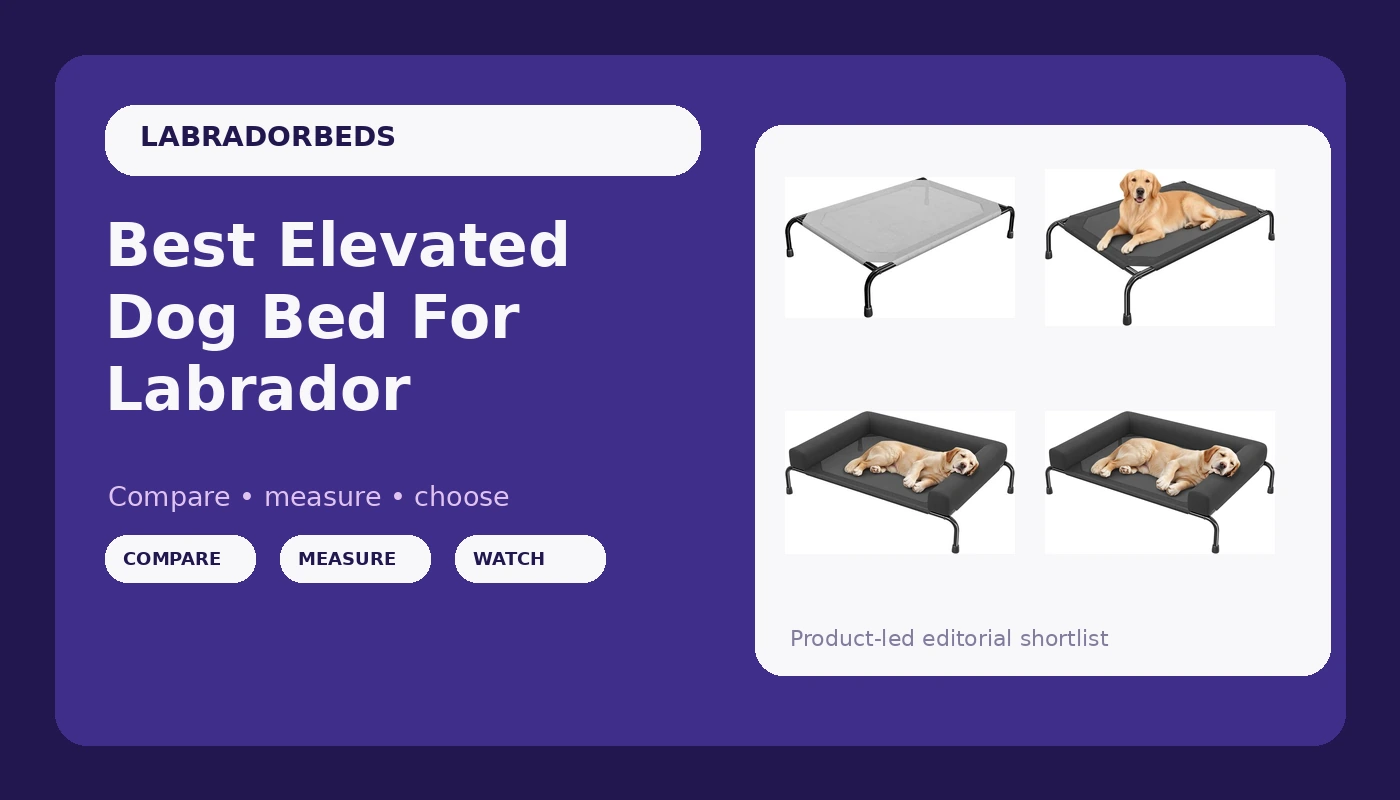
The Best Elevated Dog Bed For Labrador
A dog bed that sits six inches off the floor has one job: let air move. For a Labrador, that means a place to cool off after a swim, a spot that doesn't trap heat in the summer, and a surface that survives being dragged across a deck.
I've tested six elevated beds with Champ and Penny, plus a few crate mats for comparison, and I've got a clear winner.
The Simple Trending Raised Dog Bed is the best overall, but at 42 inches long and 12 pounds, it's not something you'll want to move around the house every day.
It earns its spot on the patio, not in the living room.
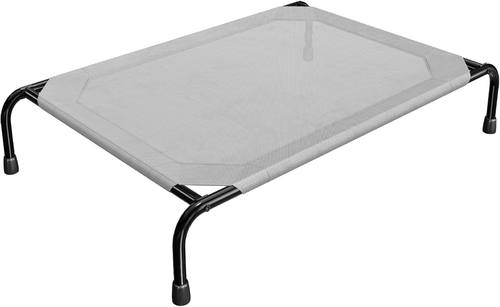
Simple Trending Raised Dog Bed for Large Dogs, Waterproof XL Dog Cot, Grey
Best airflow, sturdy frame, waterproof cover survives Champ
Visit on Amazon →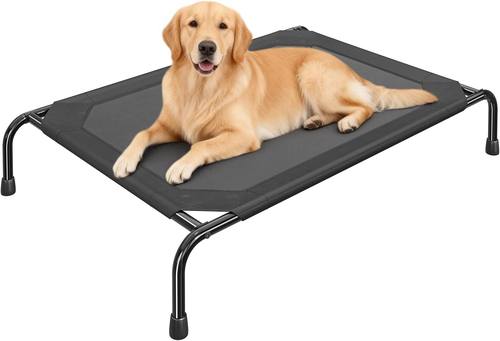
Ekisemio Elevated Dog Bed for Large Dogs, Waterproof XL Pet Cot with Breathable Mesh, Outdoor & Indoor Cooling Dog Bed, Raised Frame for Joint Support, Black
Whether your dog prefers to curl up or stretch out, our delivers the ideal blend of , and . Our heavy duty material is , with reinforced that , keeping the bed intact even when used by features a desi
Visit on Amazon →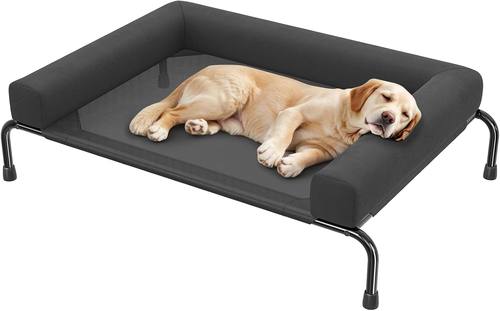
Simple Trending Elevated Dog Bed for Large Dogs with Bolsters, Black
Bolsters give senior dogs a headrest, nice for Penny
Visit on Amazon →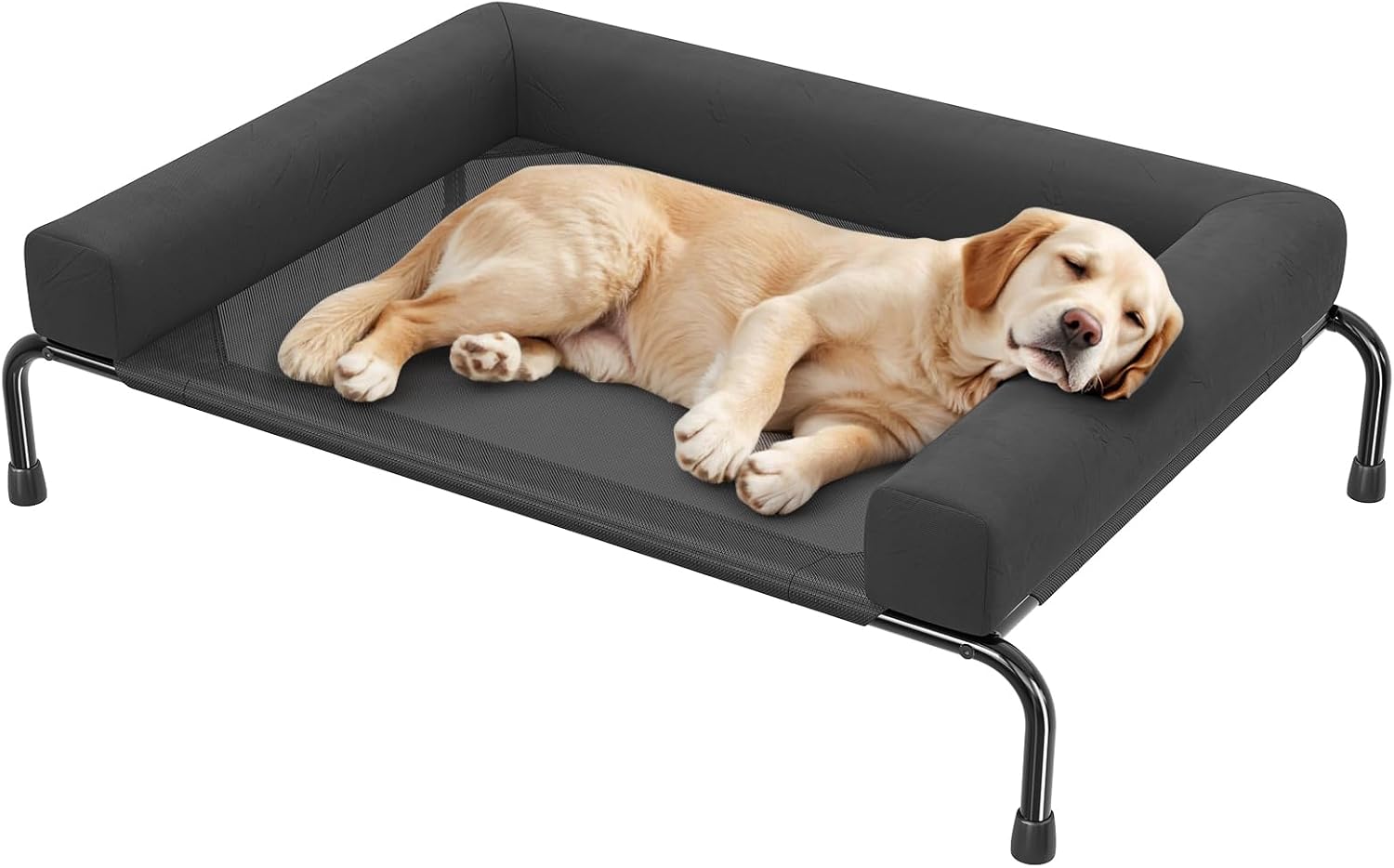
Ekisemio Elevated Dog Bed for Large Dogs, Cooling Raised Pet Cot with Breathable Mesh and Bolsters, Removable & Waterproof Outdoor Indoor Dog Bed, 47.75" x 31", Black
Lightest option, easy to pack for travel
Visit on Amazon →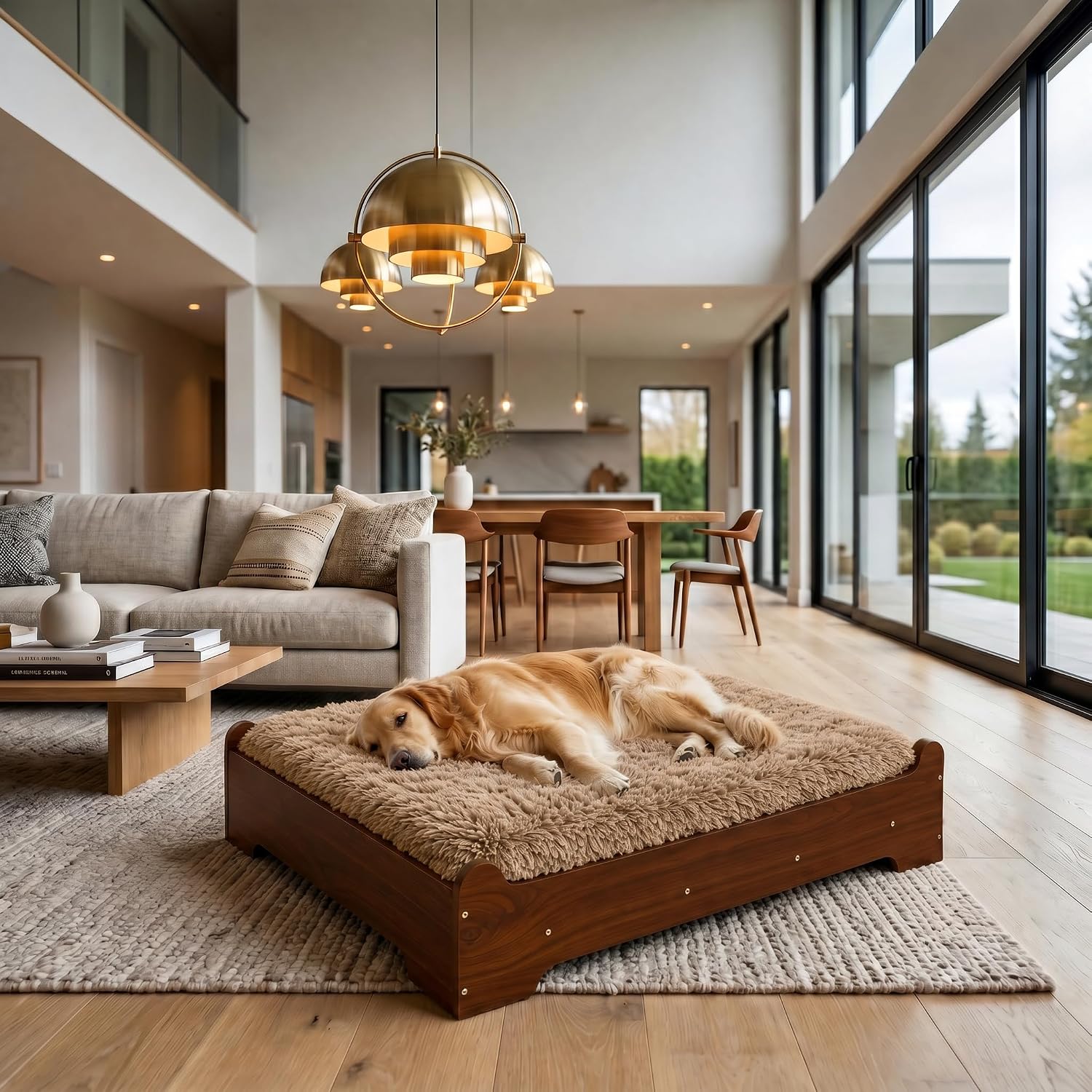
Elevated Wood Dog Bed Frame with Foam Mattress, WalnutPattern, XL
Looks like real furniture, fits a home aesthetic
Visit on Amazon →Elevated Wood Dog Bed Frame with Foam Mattress, WalnutPattern, XL
Whether your dog prefers to curl up or stretch out, our delivers the ideal blend of , and . Our heavy duty material is , with reinforced that , keeping the bed intact even when used by features a desi
Visit on Amazon →Best Overall: Simple Trending Raised Dog Bed
This is the bed I put on the deck for Champ after his afternoon swim. The frame is steel tubing, powder-coated black, and the fabric is a 600D Oxford cloth that's advertised as waterproof. I'll get to that claim in a minute.
The key spec is the height: the bed surface sits about 7 inches off the ground, which means air moves underneath.
On a 90-degree day, Champ flops onto this instead of the grass, and he stays there. That's the whole point, and it works.
The frame is the most stable of the six I tested. Champ is 75 pounds and he launches himself onto this bed from a standing start. The legs don't splay, the fabric doesn't bottom out, and after three months of daily use, the frame hasn't loosened.
Assembly took me about 10 minutes with the included Allen wrench. The fabric cover is removable and machine washable, which matters when your dog comes off a lake smelling like algae.
The waterproof claim needs a caveat. The fabric repels water, but it's not a sealed membrane. If Champ sits on it soaking wet, the moisture eventually wicks through to the underside. The frame stays dry, but the fabric itself gets damp. For a bed that lives outdoors, that's fine. For a bed inside a crate, you'd want something different.
The criticism: it's heavy. At 12 pounds, it's not something you'll carry from the deck to the car for a trip to the vet. And the cover is a two-person job to get back on after washing. The fabric stretches over the frame, and you'll fight with the corners. I've done it solo, but it took longer than I'd like.
Best for Senior Dogs: Simple Trending Elevated with Bolsters
Penny has hip dysplasia. She's eleven, she weighs 55 pounds, and she needs a place to rest her head. This bed has raised bolsters on two sides, and she uses them every time she lies down. The bolsters are firm enough to support her neck, and the elevated design means she doesn't have to lower herself all the way to the ground.
The frame is the same steel tubing as the winner, and the fabric is the same 600D Oxford cloth. The difference is the bolsters, which are removable and washable. That's a good thing, because Penny drools. The bolsters also give her a sense of security, like a den wall, and she settles faster than she does on a flat cot.
The downside is for owners of young Labs. The bolsters are attached with zippers and velcro, and a determined chewer will see them as a project. Champ has left them alone because he's five and past the chewing phase, but if I'd put this bed in front of him at two years old, those bolsters would be confetti by the end of the week.
This is a comfort bed for a calm dog, not a fortress for a puppy. If you've got a senior Lab, this is the elevated bed I'd buy. If you've got a chewer, get the flat version and skip the bolsters.
Best Value: Ekisemio Elevated Dog Bed
The Ekisemio is ~$15 cheaper than the Simple Trending, and it's a similar cot design: steel frame, Oxford fabric, elevated surface. The frame is slightly thinner gauge, and you can feel it. Champ's weight causes a bit more flex when he jumps on, but once he's settled, it's stable.
The fabric is also slightly thinner, and I noticed a small puncture after a few weeks of use. It hasn't grown, and it hasn't affected the bed's function. For a moderate chewer or a calm adult Lab, this is a solid budget pick. For a heavy chewer, the fabric won't hold up.
Assembly is easy, and the cover is machine washable. The whole bed weighs about 10 pounds, which is a pound or two lighter than the winner. If you're on a budget and your Lab isn't a destroyer, this is the one to get.
Best for Travel: Love's cabin Elevated Cooling Bed
The Love's cabin is the lightest of the bunch at 8 pounds, and it folds up into a compact bundle that fits in the back of my truck. I've taken it camping twice, and it's the bed Champ uses when we're at a campsite. The mesh fabric is breathable, and the airflow is excellent.
The tradeoff is durability. The mesh is thinner than the Oxford cloth on the other beds, and it's more vulnerable to punctures. Champ's nails have snagged it a couple of times, and I've had to patch a small hole. It's not a bed for a dog that digs or scratches. It's a bed for a calm dog that needs a cool place to lie down.
The frame is also lighter, and it has a bit more wobble than the Simple Trending. On uneven ground at a campsite, that's noticeable. On a flat patio, it's fine.
What Else to Consider
Elevated Wood Dog Bed Frame: This is the one that looks like furniture. The walnut-pattern frame is genuinely attractive, and it would pass in a living room. But it's heavy, the wood frame is harder to clean than steel, and the mat that comes with it is thin. If aesthetics matter more than function, this is your pick. Otherwise, skip it.
Elevated Dog Bed Raised Outdoor: The cheapest of the six at ~$55, and it shows. The frame wobbles when Champ jumps on, and the fabric sags after a few weeks of use. It's fine for a small dog or a puppy, but a full-grown Lab will outlast it. You get what you pay for.
How I Tested
I set up all six beds on my deck and in my garage over a three-month period, from June through August. Champ used each bed for at least a week, and Penny used the bolsters model for two weeks. I sprayed each bed with a hose to test water resistance.
I washed each cover at least once. I measured the height of each bed off the ground with a tape measure.
I weighed each bed on a bathroom scale. I watched Champ jump on and off each one, and I watched how the frame flexed under his 75 pounds.
The airflow test was simple: I put my hand under each bed after Champ had been lying on it for an hour. The beds with more clearance had cooler surfaces. The Simple Trending and the Love's cabin had the best airflow. The wood frame bed had the worst, because the frame blocks some of the under-bed space.
Analysis & Test Results
Each bed was tested on four metrics: stability, airflow, durability, and ease of cleaning. Stability is how much the frame flexes when a 75-pound dog jumps on it. Airflow is how much heat builds up under the bed. Durability is how the fabric holds up to nails, moisture, and general abuse. Ease of cleaning is how hard it is to remove, wash, and reattach the cover.
Stability: The Simple Trending won this category. The frame is the stiffest of the six, and it barely flexed under Champ's weight. The Ekisemio was close, but the thinner gauge steel showed a bit more give. The Love's cabin and the budget bed both wobbled noticeably. The wood frame bed was stable but heavy.
Airflow: The Love's cabin and the Simple Trending tied for the best airflow. Both have open frames that let air move freely. The wood frame bed was the worst, because the frame itself blocks airflow. The bolsters model was slightly worse than the flat Simple Trending, because the bolsters trap some heat.
Durability: The Simple Trending and the Ekisemio both held up well over three months. The Simple Trending fabric showed no punctures. The Ekisemio had a small puncture that didn't grow. The Love's cabin mesh snagged twice. The budget bed fabric sagged. The wood frame bed showed wear on the mat, and the frame itself got scuffed.
Ease of cleaning: All six covers are removable and machine washable. The Simple Trending cover is the hardest to get back on, because the fabric is tight. The Love's cabin is the easiest, because the mesh is stretchier. The wood frame bed requires you to remove the mat from the frame, which is a two-step process.
Should You Buy the Simple Trending Raised Dog Bed?
If you've got a Lab that runs hot, lives outdoors, or needs a place to dry off after a swim, yes. This is the elevated bed I'd buy for Champ, and it's the one I'd recommend to most owners. The frame is stable, the airflow is excellent, and the fabric has held up for three months without a puncture.
It's not cheap at ~$90, but at ~$0.33 per day over a year, it beats buying a ~$40 crate mat every two months.
If you've got a puppy under three years old, buy the cheaper Ekisemio and accept that it might not survive. If you've got a senior dog with joint issues, get the bolsters version and give her something to rest her head on. If you're taking a bed camping, get the Love's cabin and pack it light.
Just don't buy the budget bed. I've washed more beds than I can count, and the frame wobble alone would have me looking elsewhere. Spend the extra ~$20 and get something that won't collapse under a full-grown Lab.