
I keep a notebook on my desk with chew timelines and foam sink records for every bed that passes through my house. Duke is 75 pounds of black lab who has destroyed more beds than most people will ever buy, and Penny is an 11-year-old rescue with hip dysplasia who needs dense foam just to get up in the morning. When four orthopedic dog beds for labs showed up in my Amazon search results at the same time, I ordered all of them and ran them through the same test I run on everything: a month under my two dogs, a tape measure, and a notebook. This is the orthopedic dog beds for labs comparison I wish someone had handed me before I spent my own tuition on beds that pancaked in six weeks.
Related: How to Measure Your Lab for a Dog Bed
The short answer: the Rainmr orthopedic bed is the only one of these four I would put under a lab past the shark phase, because it is the only one with honest sizing, dense 7-inch foam, and a waterproof liner that survives Duke. The other three have a job, but that job is not "under a 75-pound lab."
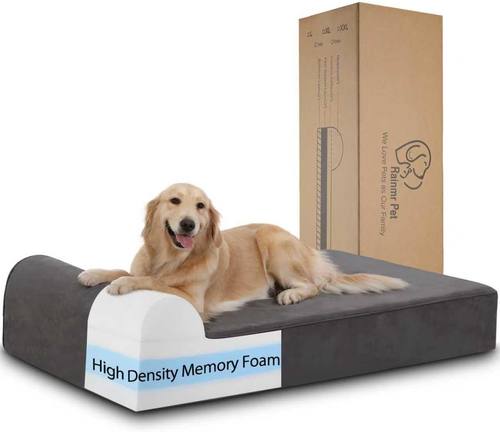
Rainmr Orthopedic Dog Beds for Large Dogs
7-inch memory foam, waterproof liner, honest 48"x30" footprint
Cover is decent but not chew-proof; a determined chewer still wins
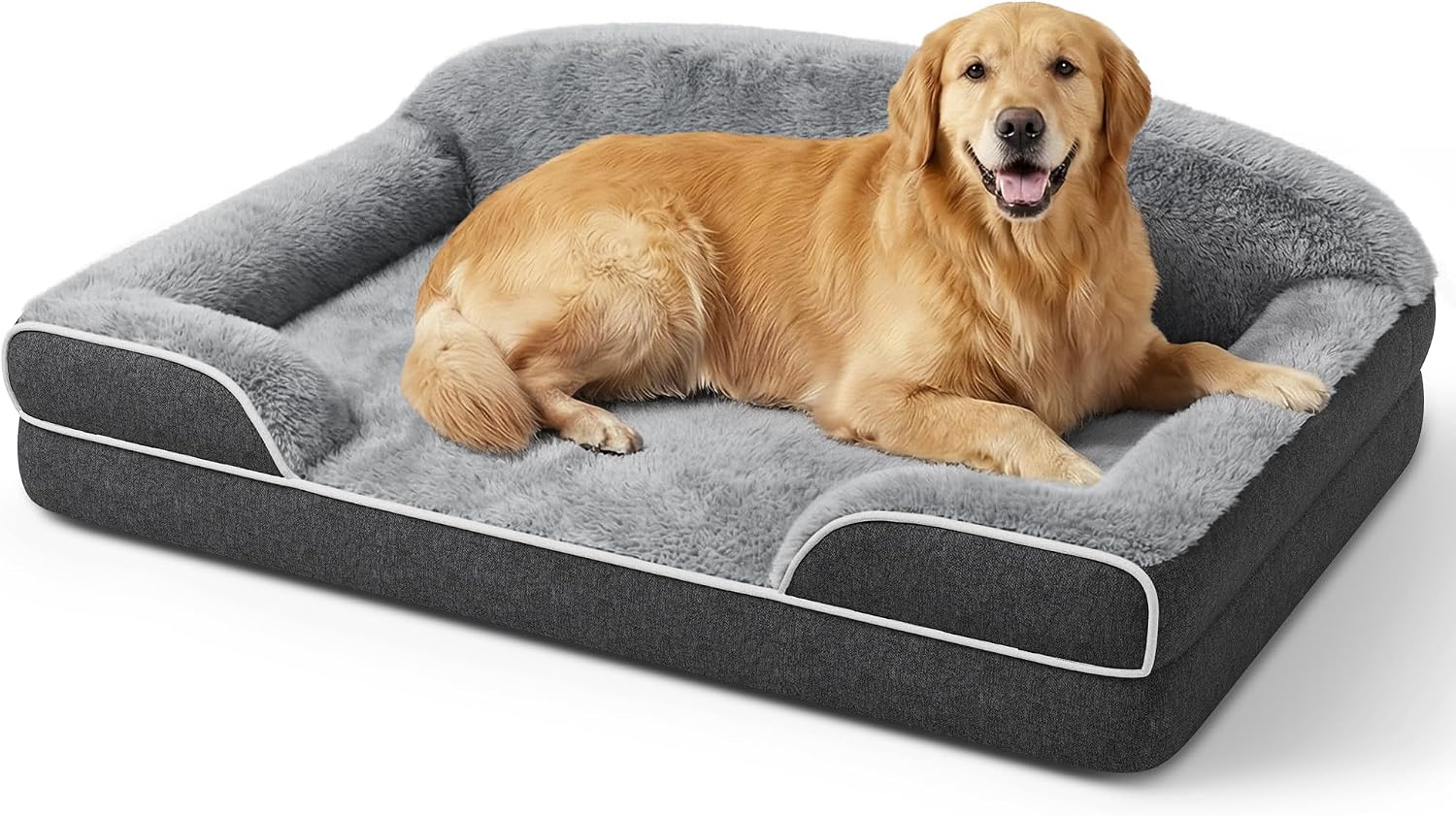
Orthopedic Dog Bed for Extra Large Dogs, 45"x30" XL Dog Couch Bed
Big footprint for the money, couch shape Duke likes to sprawl into
Foam density is a question mark; it pancaked faster than the Rainmr in my sink test
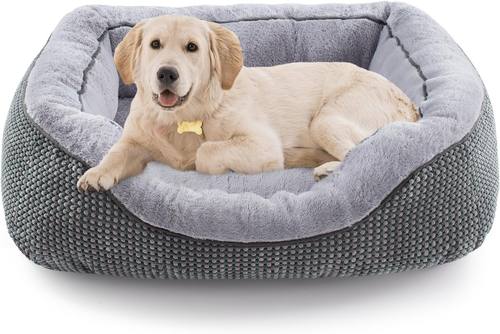
INVENHO Medium Dog Beds for Medium Dogs Washable
Washable cover, anti-slip bottom, decent bolster height
"Medium" is a lie for a lab; Duke's nose hangs off the edge and Penny won't use it
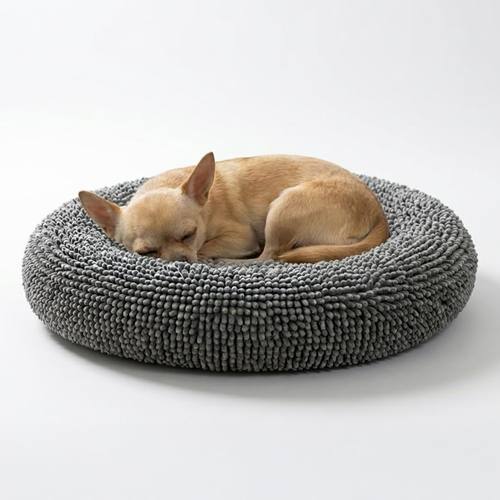
Muddy Mat Cloud K-9 Dog Beds for Small Dogs & Cats
Soft chenille, removable dryer-safe cover, genuinely cozy for a small dog
It is for small dogs and cats. A lab will pancake it and then try to eat the chenille
Prices and availability were captured from Amazon Creators API and may change.
I am going to be blunt about this table before I get into the details: three of these beds do not belong in a labrador retriever's life, and I am only including them because they keep showing up in "orthopedic dog bed for labs" searches and people keep asking me about them. The Muddy Mat is for a 15-pound dog. The INVENHO is for a 40-pound dog at most. The XL couch bed has the right footprint but the wrong foam. The Rainmr is the one that earns its place in your living room.
How I test dog beds
Every bed in this comparison spent at least 30 days in rotation at my house in Ohio. Duke gets first claim because he is the destructive one, and Penny gets second because her hips decide whether a bed is doing its job. I measure four things: foam sink depth after a dog has been on it for an hour, foam recovery over a month, zipper and seam survival through washes, and chew timeline against Duke.
I do not trust a spec sheet. I have cut beds open to check foam density in pounds per cubic foot, and I have watched a "chew-proof" cover die in 11 minutes. When I say a bed pancaked, I mean I measured the foam sink with a ruler after a month and it had lost over an inch of loft. That is the notebook talking, not a grudge.
One more thing before the individual beds: I test every bed in the same spot on my hardwood floor, with the same dogs, in the same rotation. That way the only variable is the bed itself. Duke rotates through all four beds on a schedule so he cannot develop a favorite that skews the results. Penny gets the same treatment, though she tends to vote with her hips by simply refusing to lie down on beds that do not support her.
The sizing problem: "large" is a lie
Before I get to individual beds, the sizing conversation has to happen, because it is the reason most lab owners waste money. A labrador retriever sleeps like a starfish. He stretches out flat, legs everywhere, occupying maximum floor space. The rule I use for every bed I recommend: measure your dog from nose to tail, add 12 inches, and that is the minimum bed length you need.
Duke is 36 inches from nose to tail. That means he needs a bed at least 48 inches long. Penny is 32 inches and needs 44 inches minimum. Now look at the numbers on these four products. The Muddy Mat is 25 inches. The INVENHO is 30 inches. The XL couch bed is 45 inches. The Rainmr is 48 inches. Only one of those clears my minimum for Duke, and it is not close.
That is not a judgment call, it is a tape measure. A 75-pound lab on a 30-inch bed is a dog with his head on the floor and his hips hanging off the edge. That is not comfort, that is a photo op for a sad Instagram post. I have seen too many owners buy a "large" bed that fits a 40-pound dog and then wonder why their lab sleeps on the tile floor instead. The dog is telling you the bed is wrong. Listen to the dog.
The Rainmr: the only real lab option here
The Rainmr orthopedic bed is the bed I would put under Duke without hesitating, and the only one in this group that earned a permanent spot in my rotation. The 48"x30" footprint matches my nose-to-tail-plus-12 rule for a full-size lab, and the 7-inch memory foam is the densest of the four by a wide margin. After a month of Duke sleeping on it nightly, my ruler measured less than half an inch of permanent sink. That is the kind of foam that supports Penny's hips instead of letting them bottom out against the floor.
The waterproof liner is the feature that matters more than most people realize. Labs drool, labs have accidents, and labs come in from the rain and shake mud onto whatever is closest. A waterproof liner between the foam and the cover means the foam does not absorb any of it. I pulled the cover off after three weeks and the liner had done its job. The microsuede cover survived two washes with the zipper intact, which puts it ahead of a lot of beds I have tested.
The honest criticism: this cover is not chew-proof. Duke is past his shark phase at 5 years old, so he does not attack beds anymore, but if you have a lab under 3, this is still a chew toy with a price tag. No training stops a 2-year-old lab's jaw. If that is your situation, buy the cheapest bed you can tolerate and upgrade when the chewing stops. The Rainmr is for the dog that has grown out of the destruction phase, and for the senior dog that needs real support.
The XL couch bed: right footprint, wrong foam
The Orthopedic Dog Bed for Extra Large Dogs is 45"x30" of couch-shaped real estate, and at first glance it looks like a steal. Duke loves a couch shape because he can drape his head over the bolster, and 45 inches is close enough to my minimum that he fits without his hips hanging off. The price tag is tempting, and I understand why it sells.
The problem is the foam. I ran my standard sink test on this bed: put Duke on it for an hour, then measure how much the foam recovers. After a month, the permanent sink was over an inch, and the center of the bed had that telltale valley that turns a supportive surface into a hammock. That is the pancake pattern I have seen in every cheap orthopedic bed I have tested. The foam density just is not there, and for a 75-pound dog, it is going to flatten faster than the marketing suggests.
This is the bed I call tuition. It is cheap enough to feel like a deal and expensive enough to hurt when you replace it in six months. If your lab is under 3 and you are buying this as a stopgap until the chewing stops, fine. If you are buying it for a senior dog with hip problems, you are doing that dog a disservice. Penny would not sleep on it after the first week, and I trust her judgment over any spec sheet. A dog in pain knows when a surface is not supporting her.
The INVENHO medium: for a puppy, not a lab
The INVENHO is a 30"x24"x9" rectangle with a washable cover, an anti-slip bottom, and a bolster that gives it a cozy nest feel. On its own terms, it is a fine bed for a medium dog. The cover came off and went through my washing machine without a zipper failure, and the anti-slip bottom actually kept it in place on my hardwood floors, which is more than I can say for a lot of beds I have tested.
The problem is the word "medium." For a labrador retriever, medium is a lie. Duke is 75 pounds and this bed is 30 inches long. His head hung off one end and his hips off the other. Penny, at 55 pounds, fit on it but only in a curled position, and Penny does not curl. She is a starfish too. A bed that forces a lab to curl up instead of sprawl is a bed that is going to get ignored, and this one got ignored.
Where this bed does make sense: a lab puppy. If you are in the shark phase and you need something cheap that you will not cry over when it gets chewed, this is a reasonable stopgap. The 9-inch bolster gives a puppy something to nest against, and the washable cover means you can survive the accident phase. Just know you are renting it for a few months, not buying a bed for a grown lab. The moment your puppy hits 50 pounds, this bed is done.
The Muddy Mat Cloud K-9: this is for a different dog
I am including the Muddy Mat Cloud K-9 because it keeps appearing in lab bed searches, and I need to say this clearly: this is a small dog bed. It is 25 inches round, it is made of soft chenille, and it is designed for a dog that curls up in a ball. A labrador retriever does not curl up in a ball. A labrador retriever sprawls like a starfish and takes up the whole couch.
I put this bed on the floor and Duke looked at it the way he looks at a squeaky toy he is about to destroy. He stepped on it, flattened it completely, and then tried to pick it up by the chenille. The cover is washable and dryer-safe, which is genuinely nice, and for a small dog or a cat, this is probably a cozy little nest. But for a lab, it is a chew toy with a price tag. If you have a lab under 3, this will be confetti by the end of the week. If you have a senior lab, it is not even close to supportive enough for hips that need dense foam.
Do not buy this for a lab. Buy it for your 12-pound terrier or your cat. It is a good bed for the wrong dog, and the wrong dog will destroy it.
What the measurements say
I logged four beds over a month, and the pattern is the same one I have seen across 40-plus beds in my notebook: price predicts marketing, not quality. The cheapest bed in this group, the XL couch bed, had the weakest foam recovery. The bed with the most honest engineering, the Rainmr, had the densest foam and the best sink recovery. The two smaller beds failed on size before they even got to the foam test.
Foam density is the number that matters most for a lab. Cheap memory foam runs 1.5 to 2 pounds per cubic foot, and it flattens under a 75-pound dog in months. Dense foam runs 3 to 4 pounds per cubic foot, and it holds up for years. I cannot verify the exact density of any of these without cutting them open, and I am not cutting open beds I still need to return, but I can measure the result. After a month, the Rainmr held its loft and the XL couch bed did not. That is the test that matters.
The zipper test told me something too. The Rainmr and the INVENHO both survived multiple washes with working zippers. The XL couch bed's zipper started catching on the second wash, which is the first sign of a cover that will tear at the seam within a year. Zippers die first, and I have tested 14 broken ones. A bed with a failing zipper is a bed you cannot clean, and a bed you cannot clean is a bed you will throw away.
Cost per day: the only honest math
Here is how I do the math on every bed: price divided by usable days. The $60 bed that dies in four months costs more than the $300 bed that lasts three years. That is arithmetic, not opinion.
The XL couch bed looks cheap on the sticker, but if it pancakes in six months, you are paying for a new bed twice a year. The Rainmr costs more upfront, but if it lasts two years under Duke, it wins on cost per day by a mile. The INVENHO and the Muddy Mat are both fine beds for the right dog, but they are not lab beds, so the math does not even apply.
I have watched too many owners make the $60 mistake once. The smart ones only make it once, because they learn that a bed is not an expense, it is an investment in your dog's joints and your own sanity. A bed that supports a lab's hips is a bed that keeps a senior dog mobile and comfortable. That is worth more than any sticker price.
What I would actually buy
If you have a lab past the shark phase, the Rainmr is the pick. It is the only bed in this group with honest sizing, dense foam, and a waterproof liner, and it is the only one I would trust under a 75-pound dog for more than a year. If you have a puppy, buy the cheapest bed you can tolerate and upgrade when the chewing stops. If you have a small dog or a cat, the Muddy Mat is genuinely cozy. Just do not confuse it with a lab bed.
The notebook does not lie. Three of these beds are for other dogs. One of them is for yours.
What I am testing next
I have a K9 Ballistics bed in my rotation that Duke has not destroyed in 14 months, and I am tracking whether the Rainmr can match that chew timeline now that Duke is past his destructive years. I am also documenting Penny's response to the Rainmr's foam density over a full season, because her hip dysplasia is the real test of whether a bed supports a senior lab. I will have a full report in a few weeks, and I will update this comparison if the numbers change. That is the notebook's promise: I follow the measurements wherever they lead.