
Most labrador dog bed advice falls apart the same way the beds do: fast, and at the seam. You read a product page, you see a plush rectangle with a nice photo, you order it, and three weeks later you are vacuuming foam out of the carpet while your dog looks at you like you handed him a snack.
I spent ten years as a trainer working with hunting labs and obedience dogs before I started writing about gear full time. My two labs are the reason I take this seriously. Duke is a 75-pound black lab who chews first and asks questions later. Penny is a 55-pound rescue with hip dysplasia, which means she needs foam that actually holds her up. Between the two of them, I have taken apart more beds than I want to add up.
So this is not a list of pretty beds. It is how to choose one, how to size it honestly, and how to keep it alive past the phase where your lab treats everything as a chew toy.
Why you should trust me
I am not a veterinarian and I do not play one. I will tell you what my vet said about Penny's joints, and that is where it stops. I do not review food, supplements, or medical devices. What I do is put beds under two labradors for at least a month before I write a word about them, and I keep a notebook with chew timelines, foam sink depth, and the date each cover fails.
I have cut beds open to check what is actually inside. I have measured foam with a ruler instead of trusting the word orthopedic on a box. I have logged fourteen broken zippers and one warranty claim that required me to describe my dog's crimes in writing. If a brand sends me a product, I say so. If a bed does not survive Duke, you will read that here.
How I picked and how I tested
The test is simple and it is brutal. Can a determined 75-pound lab destroy this? If yes, it fails.
For foam, I check density before anything else. Good orthopedic foam runs around 3 to 4 pounds per cubic foot. Cheap foam runs 1.5 to 2, and it turns into a pancake in a few months. You can feel the difference with your palm: press down and count how long it takes to come back. If your handprint stays, so will your dog's.
For size, I measure nose to tail while the dog is stretched out flat, then add 12 inches. Labs sleep like starfish, legs everywhere, so a bed that fits a curled-up dog is a bed your lab will half hang off of. A 40-pound dog bed labeled large is one of the oldest lies in this category.
For covers, I run them through the wash and watch the zipper. Zippers die first, every time. A cover that survives 20 washes without the pull tab snapping off is worth keeping.
Two beds are in my rotation right now, and they are for two very different dogs.
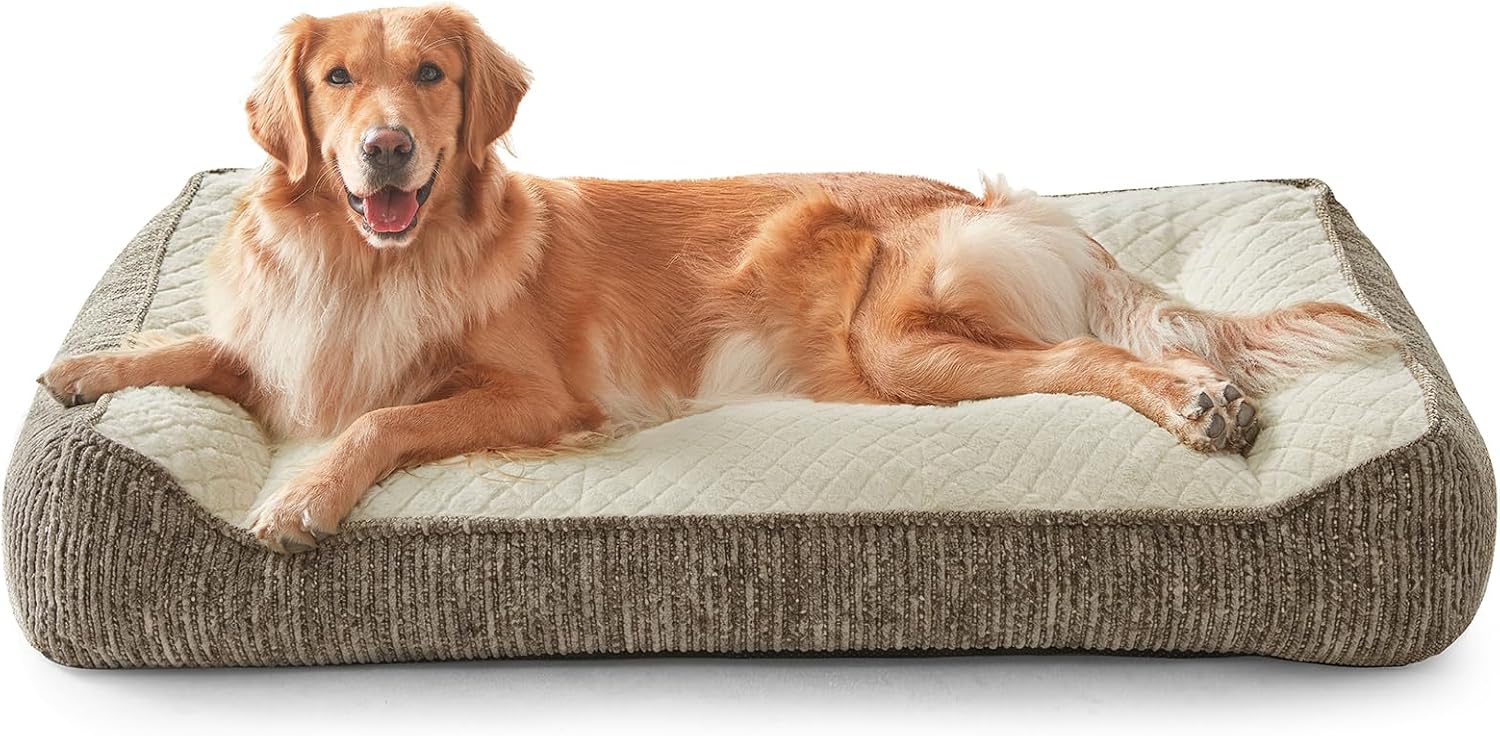
The main pick for most adult labs: JOEJOY XL Orthopedic Dog Beds Large Size Dog, Extra Thick Big Dog Couch Bed
 Visit on Amazon →
This is the bed I point adult lab owners toward first, because it gets the two things right that matter for a big dog: an XL footprint and extra thick orthopedic foam. Duke sprawls. He does not curl. He needs a flat surface long enough for his legs to go somewhere, and this one has the room for that.
The couch style with the raised edges is a real benefit for a dog who likes to lean his head on something, and it also helps Penny settle instead of circling. For a senior lab carrying 55 to 75 pounds, thick foam is not a luxury. It is the difference between a dog who gets up stiff in the morning and a dog who gets up. My vet told me she sees more joint problems in labs than any other breed, and hip and elbow support starts with what your dog sleeps on for eight hours a night.
Here is the honest part. The word orthopedic on a listing does not tell you the foam density. Before you order, read the dimensions and confirm the cover details, because the cover is what you will actually wash. If your lab is under three years old and still in the shark phase, read the next section before you spend anything.
Flaws but not dealbreakers: Nothing in this price range is chew-proof. A determined two-year-old lab can open a seam if you leave him alone with it and nothing else to do. Buy it for the dog you have, not the dog you hope he becomes.
Any adult lab from about 50 pounds up, and especially a senior who needs support getting off the floor, will get real use out of this one.
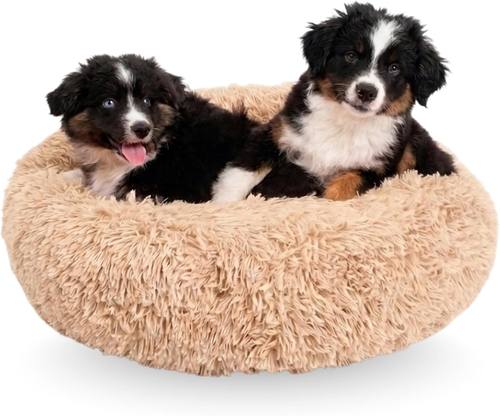
The pick for puppies and smaller dogs: Active Pets Premium Medium Donut Dog Bed, Fits Up to 45 lbs, Machine Washable Cushion, Plush Long Pile Faux Fur Fabric, Portable Beige Pet Bed Furniture for Puppies Adult Canines & Cats
 Visit on Amazon →
I have said for years that donut beds are a joke for full-grown labs, and I stand by it. A 75-pound lab does not curl up into a ball. Duke sleeps like a starfish and a donut bed is a waste of money for him. So why is this here? Because this bed is honest about what it is, and it fits a 45-pound dog and under.
That makes it the right bed for three situations. First, a lab puppy. A puppy is a chewer by definition, and you should not put an expensive bed in a crate with a nine-week-old land shark. This one is machine washable with a plush long pile faux fur surface that puppies seem to sink into, and it is portable enough to move from crate to living room to car. Second, a smaller lab, or a lab mix on the petite side. Third, the family cat, who will claim it within a day.
The size limit is real. Penny at 55 pounds would spill over the edge of this, so it is not her bed. Read the listing dimensions and match them to your dog's stretched-out length, not to his weight alone.
Flaws but not dealbreakers: Plush faux fur is comfortable and it is not durable against a serious chewer. Treat this as the bed for the phase before your lab earns a better one, and expect to replace it. That is not a knock. That is the plan.
Puppy owners, small lab owners, and anyone shopping for a dog under 45 pounds should start here.
How to size a labrador dog bed in five steps
Sizing is where most people get burned, because they trust the word large instead of a tape measure.
Step one: Measure your lab nose to tail while he is flat. Wait until he is sprawled out, not curled. That is the number that matters.
Step two: Add 12 inches. Labs stretch out when they sleep, and a bed that fits the standing dog does not fit the sleeping dog.
Step three: Read the listed dimensions, not the label. A bed called large that measures 30 inches long is a bed for a 40-pound dog. Compare the numbers on the listing to your measurement.
Step four: Measure the space. Crate, corner, foot of the bed, wherever this is going. An XL bed that does not fit your room is a bed your dog will not use.
Step five: For a puppy, size for the adult. A lab puppy grows into 70 to 80 pounds. Buy the puppy bed now, then buy the XL bed when he stops chewing, which for labs is usually somewhere around three years old.
How to make a bed survive the shark phase
A puppy is not chewing to be bad. He is chewing because chewing is what puppies do. Your job is to make the bed boring and the chew toy interesting.
Redirect, do not punish. When the mouth goes to the bed seam, swap in a toy and praise the swap. Every single time. That is the behavior loop, and it works better than any material.
Buy cheap while the teeth are sharp. This is the one place I will tell you to spend less. A plush bed that costs less than a bag of dog food is the correct purchase for a nine-month-old lab, because you are not buying furniture, you are buying time.
Do the cost math anyway. A bed that dies in four months costs more per day than a bed that lasts three years. That is arithmetic, not opinion. The cheap bed is only cheaper if it survives, and it usually does not.
Wash the cover before it smells. Dogs destroy beds they have decided are dirty. A washable cover you actually wash lasts longer than a fancy one you never touch.
Rotate two beds if you can. One in the crate, one in the living room. A bed that gets a break gets fewer teeth.
How to judge foam without getting fooled
Press the foam with your open palm and count. Good orthopedic foam springs back in about a second. Cheap foam holds your handprint.
Look for a density number, not a marketing word. Memory foam is measured in pounds per cubic foot. If a listing will not tell you, assume it is light.
Check the bed at 30 days. Flip it over and feel for a flat spot where your dog's hips land. If you can feel the floor through it, the foam has already given up and you own a pancake.
Weigh comfort against destruction for seniors. Penny is eleven and her hips are not going to get better. For her, foam support beats durability every time, because she is not the one chewing.
The competition and why it lost
There are specialty brands selling beds marketed as chew-proof at several times what the two beds above cost, and for a lab who has already destroyed three beds, that math can make sense. I have seen chew-proof guarantees honored and I have seen them argued over. If you go that route, read the warranty terms before you buy, because some of them require a level of documentation that would embarrass a small claims court.
What loses every time is the plush bed sold to a lab puppy owner. It looks great in the photo, it is soft, and it lasts about a week. I have seen the reviews that say so. I have lived them.
What also loses is the bargain bed labeled large that arrives the size of a bath mat. Measure first. Always.
What this all costs
I cannot quote you a price that will still be true next month, so do the math on the listing when you get there. What I can tell you is how to think about it.
Divide the price by the number of days the bed actually lasts. A bed that survives three years under a 75-pound lab comes out to pennies a day. A bed that dies in four months costs several times that, and you pay it again four months later.
The XL orthopedic bed is the one you buy once for an adult lab. The donut bed is the one you buy for the puppy, the small dog, or the cat, and you buy it knowing it is temporary. That is not a compromise. That is the correct order of operations.
What I would do
If your lab is under three, buy the donut bed for the crate, keep a chew toy in it, and wait. Do not spend real money on a bed that is going to meet teeth.
If your lab is past three, or a senior with hips that ache in the morning, buy the XL orthopedic bed. Measure him stretched out first, add 12 inches, and confirm the footprint before you order.
That is the whole method. Measure the dog, measure the space, check the foam, and match the bed to the phase your lab is actually in. Duke and Penny have different needs and different beds, and neither of them has chewed a mattress in over a year. That is the goal.