Related: Best Orthopedic Dog Beds for a Senior Labrador
I trained labs for ten years, hunting dogs and obedience dogs, and I have lived with two since. Duke is a 75 pound black lab, five years old, and has never met a zipper he respected. Penny is an 11 year old rescue at 55 pounds with hip dysplasia, and she is the reason I started paying attention to foam instead of fabric patterns. My old mentor Jack used to say read the dog before you read the label, and that is the whole method here.
Orthopedic dog beds for Labradors get sold on adjectives. Supportive. Premium. Heavy duty. None of those words tell you whether the foam will still be foam in two years, or whether the cover survives the washing machine. So I shop by four numbers and one behavior: the bed's real dimensions, the foam loft, the cover material, and how your dog actually sleeps. Then the behavior, which for a lab is the starfish. He sprawls flat, legs in four directions, and he takes up more floor than most people plan for.
Get the size wrong and nothing else matters. A lab hanging off the edge of a "large" bed is sleeping on the floor with extra steps.
One more thing before the picks. A bed for a puppy and a bed for a five year old lab are different purchases. Under three years old, a lab is in what I call the shark phase, and no cover on the market is worth testing against that jaw. Buy cheap now, buy good later. For a senior, the standard flips: joint support and comfort beat durability, because Penny is not chewing anything anymore.
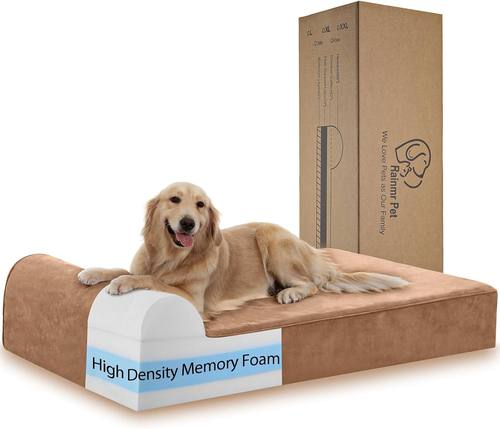
Best Overall: Rainmr Orthopedic Dog Bed for Large Dogs
The spec sheet on this one reads the way a lab bed should read: 48 inches long, 30 inches wide, a 7 inch memory foam base, a waterproof liner under a durable microsuede cover, removable and washable, with a nonskid bottom. Khaki, if color matters to your living room.
Forty-eight inches is the number I care about most. My sizing rule is nose to tail plus 12 inches. A big male lab runs close to three feet from nose to tail, so 48 inches gives him room to sprawl without his hips sliding off the edge. Thirty inches of width is enough for the starfish pose to actually work. Anything narrower and Duke ends up sleeping in a curl, which he hates and which is bad for his elbows.
The 7 inch loft is the second number. Memory foam is measured in pounds per cubic foot, and cheap foam runs 1.5 to 2. Good orthopedic foam runs 3 to 4. A tall base only helps if the density is behind it. If it is not, you are paying for height and getting a pancake in a few months. That is the thing I would watch on any bed in this price band: how it feels at month six, not week one.
The waterproof liner is the quiet win here. Penny has had accidents, and a liner means you are washing a cover, not throwing out a mattress. The microsuede cover is soft and it is removable and washable, which is the correct design. It is also not chew proof, and I will not pretend otherwise. Duke destroyed softer covers than this in his first two years. If your lab is past the shark phase, or if you are buying for a senior, microsuede over a liner is a good trade.
Best Second Bed: XL Orthopedic Dog Bed in Grey
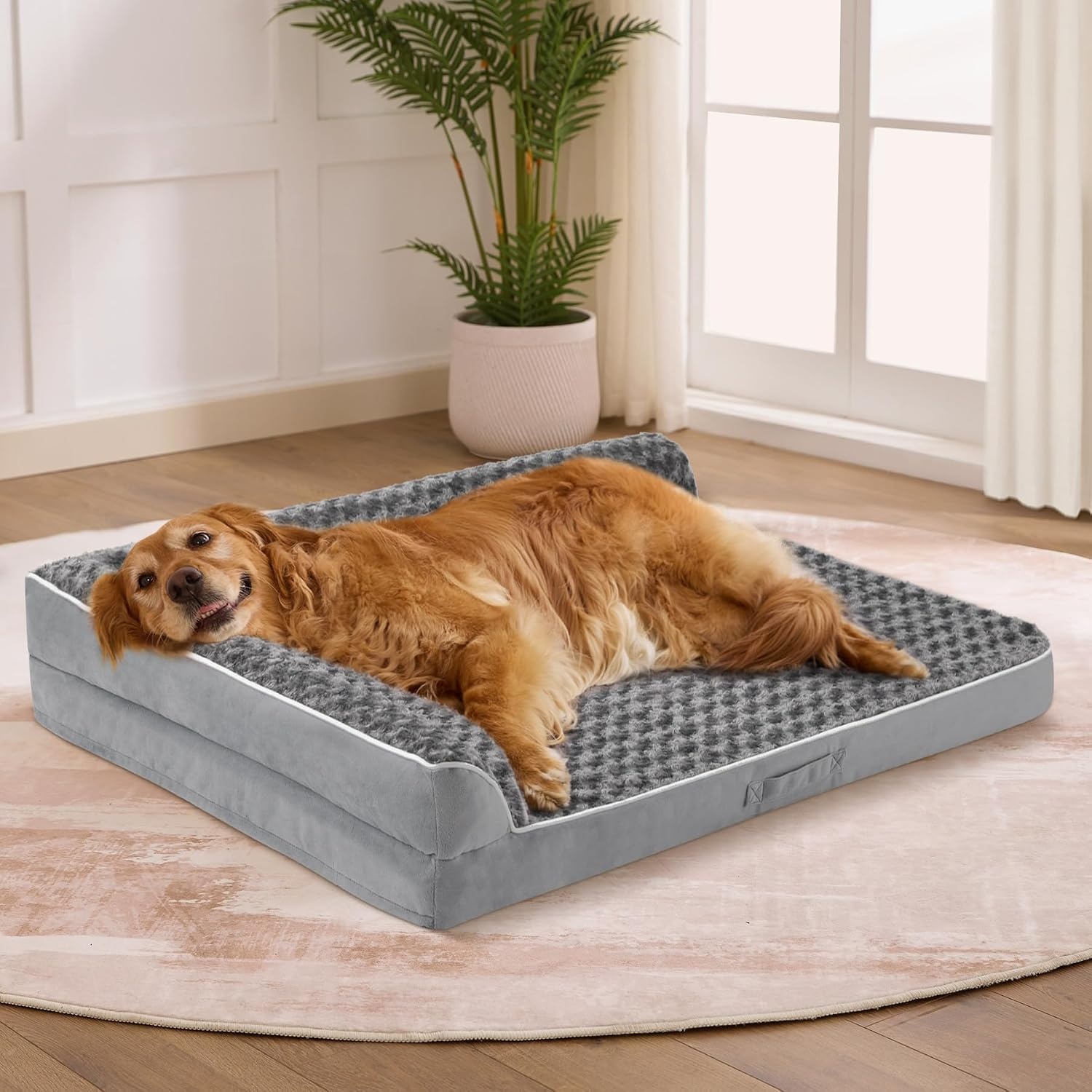
This one measures 42 by 30 with a 7.5 inch base, in grey. Read the label carefully, because "XL" is doing a lot of work in that sentence. Forty-two inches is a hair short for the biggest male labs. For Penny at 55 pounds, or for a male who sleeps fairly compact, it is plenty, and the extra half inch of loft is real.
This is the bed I would put upstairs, in the car, or in the room where the dog hangs out while you work. Two beds is not a luxury for a lab, it is joint management, because a dog with hip dysplasia will take the nearest soft surface rather than walk to the good bed. A second orthopedic bed in the right room gets used more than one expensive bed in the wrong room.
Same logic as above applies to the foam. Higher loft, and the value depends entirely on density. Squeeze it in the store if you can, or check how it recovers after a week of a 75 pound dog standing on the same spot. Foam that stays compressed is foam that has given up.
How I evaluate a bed before I recommend it
My notebook has four columns for every bed that comes through this house.
The first is size, measured with a tape, not read off the listing. I want length and width of the usable sleeping surface, because bolsters and raised edges eat into it.
The second is foam. Loft is easy to measure. Density is the one that decides whether the bed is still a bed at month eight, and it is the number brands leave off the page most often.
The third is the cover. I check the zipper first, because zippers die before fabric does. I have broken more than a dozen of them. Then I check whether the cover comes off without a fight, whether it survives a wash without shrinking, and whether the liner underneath is actually waterproof or just water resistant.
The fourth is stability. Nonskid bottoms matter on hardwood, and they matter more for a senior dog who is already unsure on her feet. A bed that slides when Penny stands up is a bed she stops using.
Analysis: what the specs actually tell you
Foam density is the whole ballgame for a lab. Labs carry serious weight, and Penny's morning limping improved measurably when she moved onto denser foam. If you take one thing from this article, take that: a thick bed with cheap foam is a marketing product, and a thinner bed with dense foam is a real orthopedic bed.
Covers are a durability question, not a comfort question. Microsuede feels better and washes well. Ballistic nylon survives jaws and feels like a tarp. There is no cover that is both, and anyone selling you both is selling you a story. For a chewer, buy the tough cover and add a soft blanket on top. For a senior, buy the soft cover and accept that it will wear out before the foam does.
Sizing labels are unreliable across the whole category. A "large" bed that fits a 40 pound dog is common. Measure your dog: nose to tail, then add 12 inches. That is your minimum length. For width, add about 6 inches to your dog's shoulder width if he sprawls, and remember that labs sprawl.
Heating pads are a different tool, and they need a different warning. Warmth helps stiff joints, and my vet has told me she sees more joint problems in labs than any other breed, so I take it seriously. But a heating pad is not a bed, it is an accessory. It goes on the lowest setting, it goes under a washable cover, and it does not go near a dog who chews cords. For a puppy, that is a hard no.
Labrador dog bed comparison table
This is the short version. Every bed here is one I would put in a lab household, for a specific dog and a specific job. Prices move, so check the listing.
| Bed | Size | Cover and care | Best for | Price |
|---|---|---|---|---|
 Visit on Amazon → Rainmr Orthopedic Dog Bed |
48 x 30 x 7 in | Microsuede over waterproof liner, removable and washable | Adult and senior labs who sprawl | $99.99 |
 Visit on Amazon → XL Orthopedic Dog Bed |
42 x 30 x 7.5 in | Grey cover, orthopedic base | Second bed, smaller labs, compact sleepers | $37.99 |
 Visit on Amazon → Waterproof Crate Pad |
35 x 22 in | Reversible, washable, waterproof | Crates, cars, kennel runs, messy days | $23.99 |
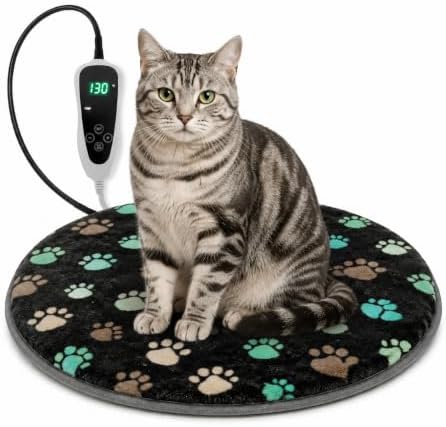 Visit on Amazon → GOLOPET Heating Pad |
36 x 24 in | Pad only, place under a washable cover | Senior labs with stiff hips | $42.99 |
Waterproof Dog Bed for Crate, 35x22
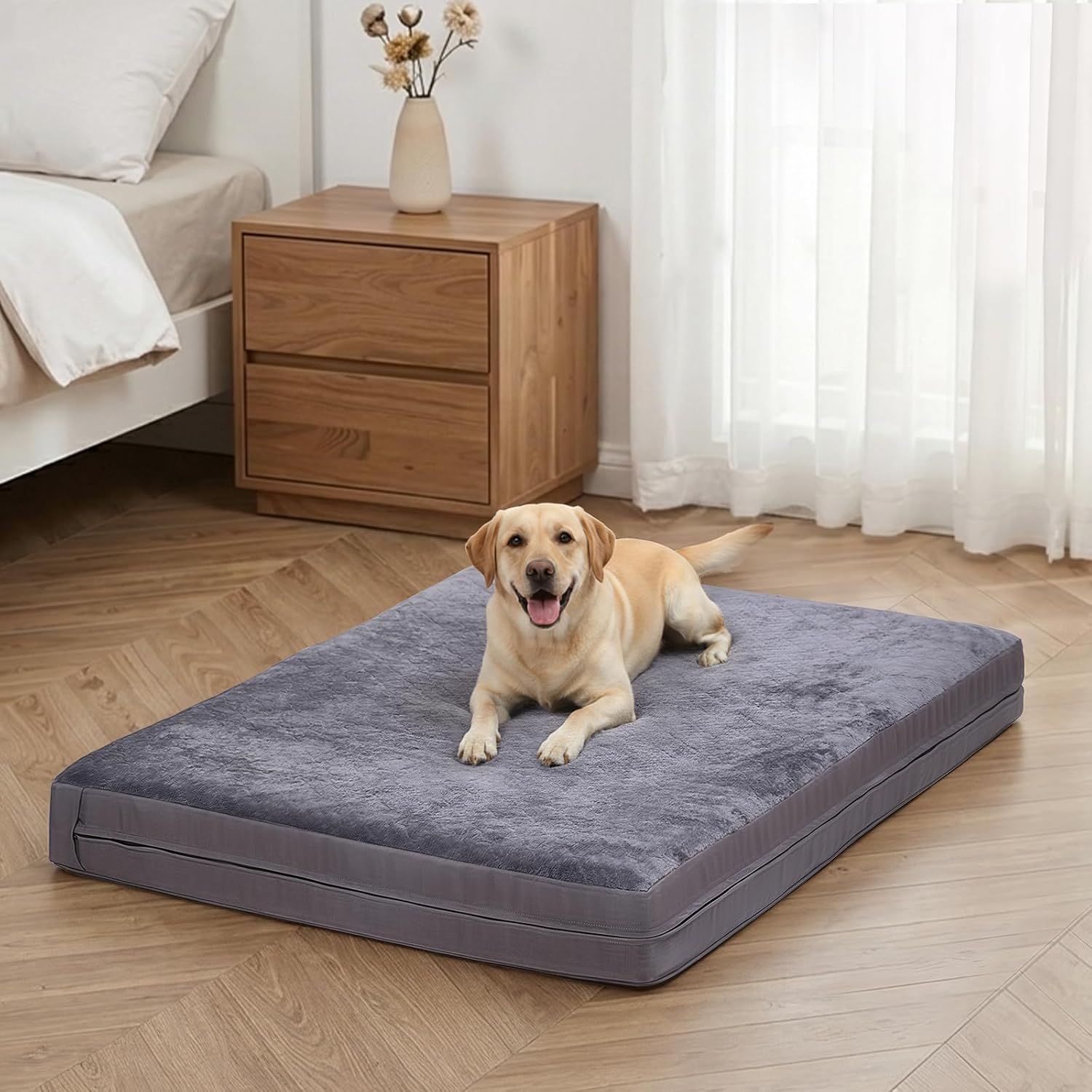
Every lab household needs one pad that is allowed to get ruined. This is that pad. It is 35 by 22, waterproof, washable, and reversible, which means you flip it, hose it, or throw it in the machine and move on with your day.
Thirty-five by 22 is crate sizing, not sleeping-sprawl sizing. A 75 pound lab fits in a crate pad of this footprint because a crate is supposed to be snug. That is the point. Do not buy this as a main bed for a free-roaming lab and then complain that he hangs off it.
Where it earns its keep: the car, the kennel run, the muddy season, and the week after a stomach bug. It sits under the good bed as a second layer, or it lives in the crate so the orthopedic bed upstairs stays clean.
GOLOPET Large Dog Heating Pad, 36x24
At 36 by 24, this pad covers most of a large dog bed. The normally open function means it runs when it is powered, so plan for how you will switch it on and off rather than expecting a timed cycle to do it for you.
This is a senior-dog product, full stop. Penny's hips are stiff in the morning, and warmth before she gets up makes the first walk of the day easier. It is not a bed, it has no foam, and it will not support a joint. What it does is add heat.
Rules, and I mean these. Lowest setting. Under a washable cover or inside a bed with a removable cover. Never for a dog who chews cords, and never unsupervised with a puppy. If your lab is under three, put this money toward a durable bed instead.
Should you buy the Rainmr orthopedic dog bed?
Yes, and it is the first one I would buy for a full grown lab. The 48 by 30 footprint is honest sizing, the 7 inch base gives a heavy dog somewhere to sink, and the waterproof liner under a washable microsuede cover is exactly how a bed should be built for a senior or an adult who has accidents.
What it is not: chew proof. If Duke were two years old again, this cover would not have survived the month. For a dog past the shark phase, it is the best combination of size, foam, and washability in this group, and it is the bed I would point a lab owner to first.
Should you buy the XL orthopedic dog bed?
Yes, if the size matches your dog. At 42 by 30 with a 7.5 inch base it is a good fit for a female lab like Penny, or a male who sleeps compact, and it makes an excellent second bed upstairs or in the car. Two beds in two rooms is genuinely better for a lab's joints than one bed in one room.
If your lab is a big sprawling male, measure him first. Nose to tail plus 12 inches is the rule, and if that number comes out past 42, go longer.
Should you buy the waterproof crate pad?
Yes. It is the least glamorous purchase here and the one you will use most often. Crate, car, kennel, post-vet mess, muddy winter, it handles all of it, and it goes in the washing machine without drama. Buy two so one is always clean.
Just do not confuse it with an orthopedic bed. It is a liner with a job, and that job is protecting the bed that actually supports joints.
Should you buy the GOLOPET heating pad?
For a senior lab, yes, with rules. Lowest setting, under a washable cover, supervised, never near a cord chewer. Warmth before a stiff dog gets up in the morning is one of the few cheap comfort wins in this category.
For a puppy or a young chewer, no. That is not a durability opinion, it is a safety one. Redirect the chewing into a toy and spend the money on a bed that survives.